Reviewed · PRIVATE
Porto private afternoon tour, discover the most iconic attractions
This private 4-hour Porto tour is interesting because it strings together the city’s most famous sights into one efficient, vehicle-supported circuit. I like that it balances big landmarks with day-to-day places, like a real market you can actually walk through. I also like the focus on memorable visuals, from São Bento Station’s famous tiles to panoramic viewpoints. One consideration: several headline interiors need separate tickets, including Livraria Lello and the Clérigos Tower climb.
The standout for me is the guide quality. You do not just get facts, you get history tied to what you are seeing, which makes stops like the Cathedral and the Golden Church feel personal instead of like a checklist. The tone is practical, and the pacing works well for an afternoon that needs both highlights and breathing room.
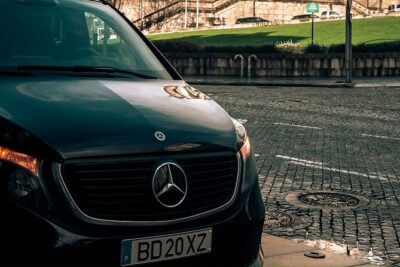
Logistically, it is a smart setup. You get hotel pickup plus a comfortable vehicle with Wi-Fi and bottled water, so you spend less time coordinating and more time walking at each stop. It also runs in English, with mobile tickets issued for the visit day.
Key highlights worth knowing before you go
- Hotel pickup plus smooth transport so you lose less time to getting around
- A guide who connects sights to story, especially around Porto’s architecture
- São Bento Station tiles, one of the easiest big wow moments in the city
- Clérigos Tower viewpoints if you buy the ticket and tackle the steps
- Iconic churches and viewpoints, including the Golden Church and Serra do Pilar
- Optional add-ons for Douro sunset cruising, wine tastings, and fado
Entering Avenida dos Aliados and Praça de D. Pedro IV
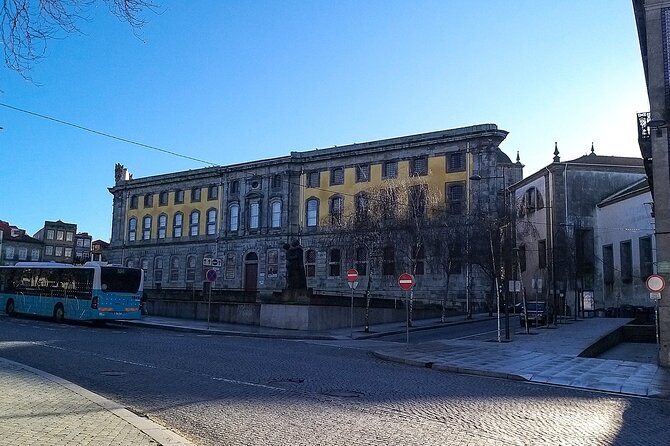
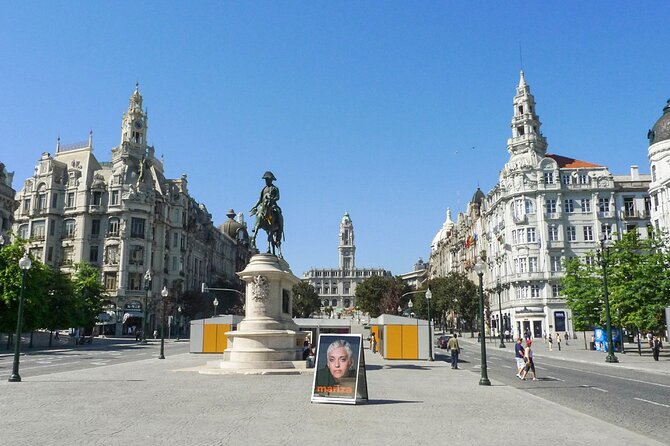
You start in the Porto city center at Avenida dos Aliados, the grand wide boulevard that feels like the city’s “front door.” The avenue is lined with buildings from the 1920s through the 1940s, and it helps set the tone: Porto is not only old stone, it is also modern energy and civic pride.
Right nearby is Praça de D. Pedro, where the square merges into Avenida dos Aliados. In front of the Palácio das Cardosas, you see the statue of D. Pedro IV, the Liberator, anchoring the whole area with a sense of national history. This is a good opener because it gives you instant orientation, you get your bearings fast before the medieval stuff takes over.
A few other ways to explore Porto
- Discover Porto’s Highlights on a 2-Hour Private Electric Tuk Tuk
★ 4.5 · 1,860 reviews - Porto PRIVATE TOUR With Locals: Highlights & Hidden Gems
★ 5.0 · 984 reviews - Porto: Private tour in the Douro (1 to 4 people) on a boat just for you
★ 5.0 · 744 reviews
Mercado do Bolhão: the working market feel in about 15 minutes
Then you head to Mercado do Bolhão, Porto’s most emblematic market. It dates to 1850 and has a distinctive two-story structure with neoclassical architecture that makes it look more monumental than you might expect.
Inside and out, the focus stays practical: fresh produce and specialized stalls. You will see sections built around fishmongers, butchers, horticultural goods, and florals, all wrapped around the market’s role as daily supply, not a performance for tourists. If you want to taste the difference between Porto’s tourist center and everyday life, this is the stop that does it fastest.
The time is tight, around 15 minutes. That is enough to look, soak up the atmosphere, and spot what you want to return for on your own later. Admission here is free, so you can walk in without thinking about ticket decisions.
Praça da Batalha and Fernandine Wall energy
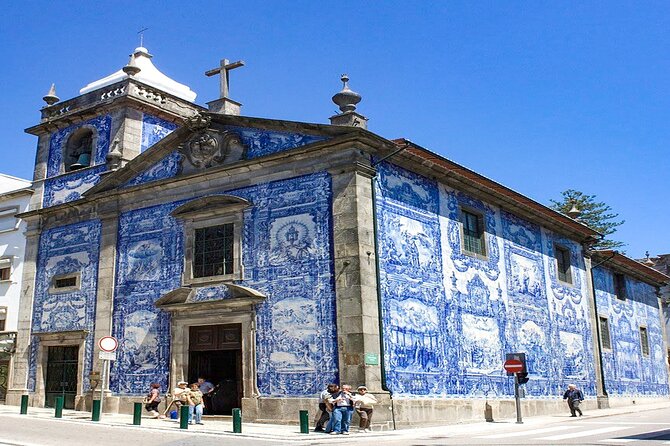
Next comes Praça da Batalha, a historic square with deep roots in Porto’s past. The name ties to a much older conflict, a defeat around the 10th century linked to Almançor, and the square’s importance grew as it was urbanized around 1861.
From here, the tour leans into Porto’s “built defense” story with the Fernandine Wall. Construction began in the 14th century under D. Afonso IV, replacing an older wall to face the city’s expansion. It was almost complete around 1370, then finished later in the reign of D. Fernando, which is where the wall’s name comes from.
Even when you are only seeing portions from street level, it helps you read the city. Medieval Porto makes more sense when you understand the pressure of growth and the need to fortify. Expect this area to feel more like a walkable web of old streets than a single grand monument.
Catedral do Porto: layers you can still read today
A highlight in the old core is Catedral do Porto, a construction that began in the 12th and 13th centuries and expanded over time. The key idea is continuity: renovations and expansions happened over centuries, but the cathedral kept its medieval structure as its backbone.
You also get specific points of interest, including the Gothic chapel of São João Evangelista and its cloister. There is an enlarged chancel, plus the Chapel of the Blessed Sacrament with a silver altar. In short, you see Porto’s religious architecture as a living thing, not a frozen museum.
The cathedral visit is brief, about 10 minutes. That means you should use that time strategically, focus on the most distinctive elements you care about, and do not try to absorb everything in one pass.
Another way to spend your time in Porto:
- The Unvanquished Tour in Porto City Center
★ 5.0 · 26,497 reviews - From Porto: Douro Valley w/ Boat Tour, Wine Tasting & Lunch
★ 4.7 · 19,061 reviews - Complete Douro Valley Wine Tour with Lunch, Wine Tastings and River Cruise
★ 5.0 · 12,920 reviews - Porto: Live Fado Show with Glass of Port Wine
★ 4.8 · 6,498 reviews
São Bento Railway Station: tiles first, questions later
São Bento Railway Station is one of those places where you do not need a long explanation to understand why people stop. It was built in the early 20th century on the site of the former Convent of São Bento de Avé Maria from the 16th century.
The station’s design includes a glass and iron structure credited to architect Marques da Silva. But the real star is the vestibule’s 20,000 hand-painted tiles by Jorge Colaço, depicting the evolution of transport and scenes from Portuguese life and regional history.
You can enter for free, and the stop is about 10 minutes. That is perfect for a quick “look up, then look around” rhythm. If you want a deeper session, you can always come back later, but for a tour that also hits churches and bridges, this is one of the smartest uses of time.
Café Majestic and the Belle Époque reset
After the tiles, the tour takes a tempo shift at Café Majestic. Opened in 1921, this café sits on Rua Santa Catarina and captures the Belle Époque era in its Art Nouveau interior.
The vibe is elegant, with marble, gilded mirrors, and intricate woodwork, so it feels like stepping into an older Porto. It also stays practical: you can take a moment for traditional pastries and coffee while you watch the neighborhood movement outside.
In the same area, you will spot the Palladium clock nearby, a decorative clock with carillon bells and four statues that perform every three hours. The four figures relate to Porto’s story, including Saint John, Prince Henry the Navigator, Almeida Garrett, and Camilo Castelo Branco.
This segment is short, about five minutes for the clock area. Think of it as a visual palate cleanser between heavier architecture stops.
Clérigos Tower and the 240-step payoff
Clérigos Tower is one of Porto’s most emblematic monuments, and this tour treats it like a real anchor point. It is a Baroque work by Nicolau Nasoni, built in the early 18th century, and the climb is famous for a reason.
The tower visit is time-efficient, but the climb itself is the main event: 240 steps up to panoramic views over Porto and the Douro River. If you like viewpoints, this is one of the few places where the effort is directly rewarded with a big city view.
A fun bonus that helps the stop stick in your mind: the tower appears in the 2021 Hollywood film Suicide Squad. Admission is not included, so if you want to climb, you should plan to pay for the ticket separately.
Livraria Lello: Art Nouveau drama, ticket required
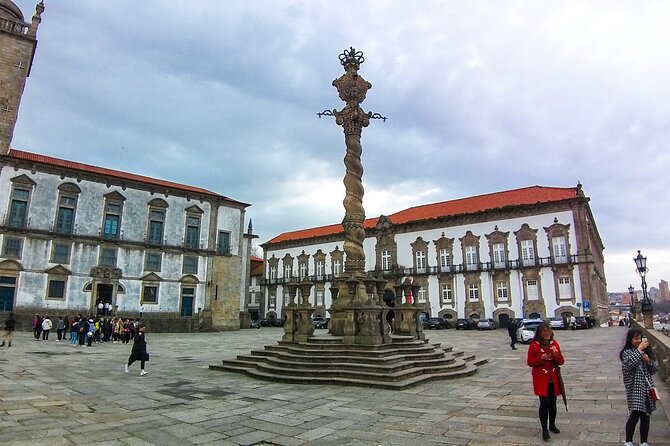
Right after the tower is Livraria Lello, housed in a building opened in 1906. The exterior is a standout Art Nouveau façade with neo-Gothic details, and it has been classified as a building of public interest.
Inside, the library leans into spectacle with painted plaster that imitates wood and a dramatic staircase connecting levels. There is also a huge stained-glass skylight with the library monogram and motto, which turns the space into a bright, atmospheric room.
This is a short stop, around 10 minutes. If you want the full experience, budget time for a slower walk inside on your own later, because the tour window is designed for quick highlights. Admission is not included, and there is a specific Gold Ticket option with priority access and book purchase mentioned in the add-on list.
Igreja do Carmo and Carmelites: Baroque façades plus the Hidden House
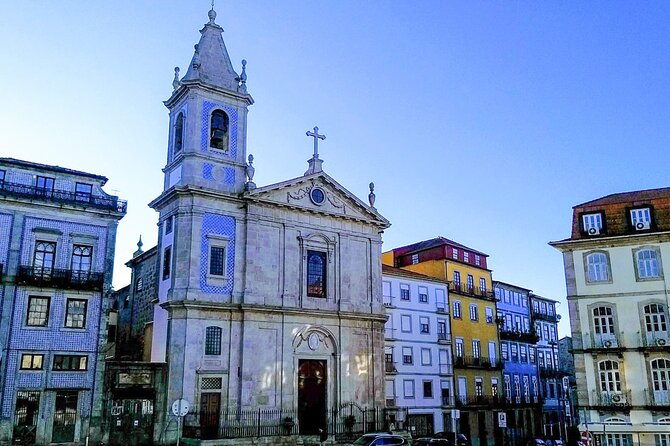
Then the tour moves to Church of Carmo and the Church of the Carmelites, two Baroque churches that anchor the same street scene. The Church of Carmo is known for its impressive exterior tilework, while the Carmelites church has an ornate and striking façade.
The best part here is what happens between them. There is a Hidden House wedged in the gap, a small architectural solution created for a densely built area. It is the kind of thing you might miss if you did not know exactly where to look, and that is why this stop is worth having a guided circuit.
This segment is free to visit and lasts about 10 minutes. It is also a nice reminder that Porto’s beauty is not only in major squares, it is in tight urban puzzles.
Ponte, palms, and the Douro angle: from Palácio da Bolsa to bridge icons
As the tour pushes toward the river side, you get a sense of Porto’s trading past and its engineering swagger. One major cultural stop in the historic center is Palácio da Bolsa, headquarters of the Porto Commercial Association.
The building is neoclassical, designed by Joaquim da Costa Lima in 1842. It was built on the site of the old São Francisco Convent, destroyed in a fire during the siege of Porto. The big draw inside is the Arab Room, and the palace functions as a cultural and conference space too.
From there, the tour shifts to the skyline machines. You will see and learn about multiple bridges that connect Porto with Vila Nova de Gaia, each with its own story.
You get a look at Ponte D. Maria Pia, created to replace an earlier suspension bridge and considered Gustave Eiffel’s first major masterpiece on the site. It was inaugurated in 1877 and stayed in service for 114 years, supported by a lattice-pillar structure carrying a single-track rail deck.
Admission is listed as free for this segment, and the timing is brief, around 15 minutes. Even from a viewpoint, it helps to understand why bridge design matters here: Porto grew alongside waterways, and the bridges are how the city physically stitched itself together.
The Maillart-type Ponte line and other modern crossings
The tour also includes later bridge chapters. Ponte D. Maria Pia is 19th-century engineering flair, and then you move to more modern scale.
Ponte In fante (the bridge inaugurated in 2003) is described as a Maillart-type arch bridge with a deck 371 meters long and 20 meters wide. It has a span of 280 meters and is noted for being one of the most slender in its typology, with experts considering it especially light in appearance.
You also hear about Arrábida Bridge, which opened in 1963 and was for a time the longest reinforced concrete bridge in the world. It sits about 70 meters above average water level and has bronze sculptures on top of the four large supporting pillars.
These modern crossings are not the kind of place you stand for long. Instead, they help you understand how Porto’s identity keeps evolving, and how the Douro remains the central organizing feature of the region.
Jardim do Morro and Mosteiro de Serra do Pilar viewpoint time
If you want calm after major monuments, Jardim do Morro is the release valve. It is a public park with panoramic views over Porto, and it pairs well with the nearby monastery area.
The tour then reaches Mosteiro da Serra do Pilar in Vila Nova de Gaia. The monastery is part of the Order of Saint Augustine, construction began in 1538, and different stages over time changed the original design. The church and cloister are known for their circular shapes, which is part of why it is described as remarkable in European classical architecture.
The monastery is also a National Monument since 1910 and a UNESCO World Heritage site since 1996, together with Porto’s Historic Center and Luís I Bridge. Admission is not included here, but you still get a short visit window, about 10 minutes.
This is a valuable stop because it changes your angle. Porto’s riverfront views are good, but Gaia’s side can feel quieter, and the circular monastery layout gives you a different sense of proportion.
When the tour turns into fortifications and coastal protection
As you move along the coastal-defense story, the tour includes Fortress São João Baptista. It was built at the end of the 16th century to protect the coast and the entrance to the Douro, with extra fortifications added in the 17th century and an access gate added in the 18th.
Then you get Castelo do Queijo, Fort São Francisco Xavier. Built in the 17th century to defend against North African pirates, it sits on a rocky hill shaped like cheese, which is how it earned its nickname. One of the more playful names in the list, but the purpose is serious.
Both of these stops are short, between 10 and 15 minutes depending on the segment. Admission varies, and some are listed as not included. The main win is the understanding of why Porto and its river mattered militarily too, not just commercially.
Leixões, Serralves, and Casa da Música for a Porto beyond the postcards
The tour also makes room for Porto’s modern cultural edges. You may visit Leixões Cruise Terminal, an area that supports increasing cruise operations. The notes highlight how the new cruise pier opened in April 2011, and how passenger and ship numbers grew in the following years.
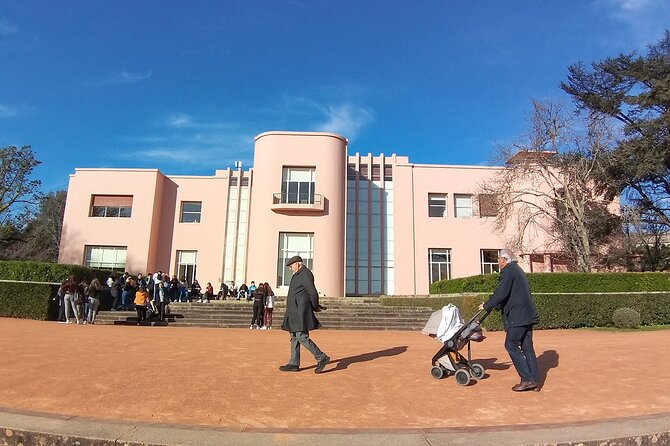
For the arts and design side, Serralves is a key stop. Parque de Serralves covers 18 hectares and includes gardens, a traditional farmhouse, and even a forest. The Serralves foundation house is described as one of Europe’s best Art Deco examples and hosts exhibitions and events.
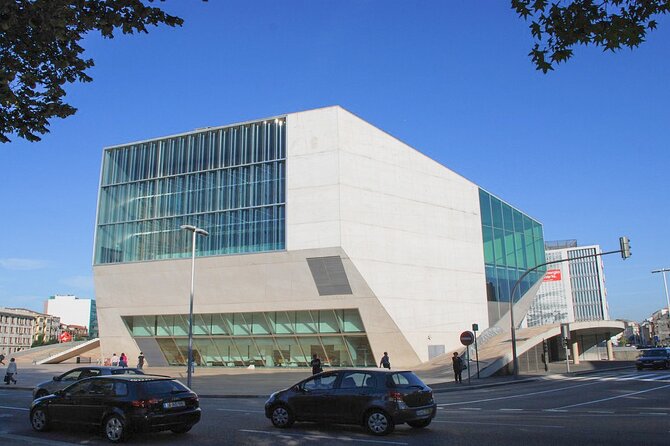
Then you have Casa da Música, Porto’s main concert hall in the Boavista area. It opened in 2005 and is tied to contemporary architecture, designed by Rem Koolhaas.
These are good additions because they prevent the tour from becoming only religious and medieval. Porto today has a strong creative identity, and these stops show that without taking you far outside the half-day scope.
Optional extras for more time on the Douro and at dinner tables
This tour also offers optional add-ons if you want to turn your afternoon into a full Porto day.
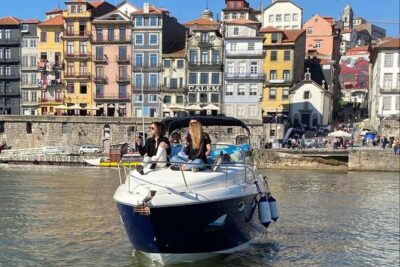
A private Douro River Cruise is offered as a sunset experience. It is priced around €360 to €460 depending on the setup, runs about 2 hours, and is described as a relaxing way to see Porto and Vila Nova de Gaia with the Douro’s six-bridge panorama in the background. If you want romance or just big light for photos, this is the most time-friendly upgrade.
There is also an optional Port Wine Cellars tour, Exclusive Dona Antónia. It lasts about 1 hour 30 minutes, includes a tasting of five Port wines, and is priced around €32 to €41 per person. The focus here is learning the story of Dona Antónia Adelaide Ferreira and tasting multiple ports at the end.
If you want the classic evening plan, there is an optional Fado Night and Traditional Dinner with transport included, about 2 hours 30 minutes, starting at 20:00, priced around €80 per person. There is also a standalone fado show option around 1 hour with scheduled times at 18:00 and 19:30, priced about €20 to €26 and including a Port wine tasting.
Price and value: what $185.43 buys you in real terms
At $185.43 per person for about 4 hours, this is not a budget city walk. The value comes from three places.
First, you get hotel pickup and luxury vehicle transport with Wi-Fi, bottled water, and refreshments. That matters in Porto because the city has steep angles and tight streets, and saving transport time buys you more actual sightseeing time.
Second, the tour is private for your group, so the experience is flexible. If you want to linger for a minute near a tower view or spend a bit more time looking at tiles, you can usually do it without slowing down strangers.
Third, your big-cost items are manageable. Many major stops are free or short with separate ticket options, and the tour clearly lists which entries are not included. If you plan your ticket budget (like Clérigos Tower and Livraria Lello), you can control total spending instead of getting surprised later.
The rating supports that this is not just a smooth ride. With an average rating of 4.9 and a 100% recommendation rate, the biggest praised aspect is the guide, including how well they explain what you are looking at.
Quick guide to who should book and who should skip
This tour fits you best if you want a “greatest hits” Porto afternoon with minimal planning. It also fits if you enjoy architecture, religious monuments, and engineering landmarks, because the mix here is unusually broad for one half-day.
You might want to skip if you are only interested in one neighborhood theme, like purely Ribeira river life, or if you prefer long museum time without short stops. This is built for momentum and iconic moments, not for hours of slow browsing.
Should you book this Porto private afternoon tour?
I would book it if your goal is to see a lot of Porto, fast, without turning your trip into logistics. The combination of a guided narrative plus efficient pacing makes the city feel coherent, not like scattered photo stops.
Do it now if you can, since it is commonly booked about 50 days in advance. If the weather looks shaky, plan to confirm closer to the date, because this experience needs good weather for the best flow.
If you want to maximize your money, decide upfront what you want to pay separately for, like Clérigos Tower and Livraria Lello. Then you will know whether you want the sunset Douro cruise upgrade too.
FAQ
How long is this Porto private afternoon tour?
It runs for about 4 hours.
Does the tour include hotel pickup?
Yes. Pickup is offered from your hotel.
Is the tour offered in English?
Yes, it is offered in English.
Is this a private tour?
Yes. It is private, and only your group participates.
What’s included in the tour price?
The price includes transportation in luxury vehicles, Wi-Fi, bottled water and refreshments, and personal accident and civil liability insurance.
Are attraction tickets included?
Not all of them. Tickets for places like Livraria Lello and the Clérigos Tower are listed as not included, while some stops such as Mercado do Bolhão and São Bento Railway Station are free.
Are optional activities available?
Yes. Options include a private sunset Douro cruise, the Exclusive Dona Antónia port wine cellar tour, and fado experiences (with or without dinner, depending on the option).
Can I cancel for free?
Yes. You can cancel up to 24 hours in advance for a full refund, and the tour requires good weather.
Is it suitable for most travelers?
Most travelers can participate, and service animals are allowed.
Recently reviewed around Porto
- BRAGA E GUIMARÃES Private Historic Tour from Porto★ 5.0 · 7 reviews
- Porto: Private Tour on a Luxury Yacht on the Douro River★ 5.0 · 9 reviews
- Douro Valley in off road – Private Tour★ 5.0 · 3 reviews
- Porto Private Walking Food Tour With Secret Food Tours★ 5.0 · 31 reviews
- Porto Private Custom Tour with a Local: Highlights & Hidden Gems★ 5.0 · 51 reviews
- Santiago de Compostela and Cathedral Private Tour From Porto★ 4.5 · 6 reviews
- Porto, Private Tour in the Douro and Sea or Sunset★ 5.0 · 24 reviews
- Private Tour: Porto to Lisbon: visit Aveiro,Coimbra,Fatima,Obidos★ 5.0 · 5 reviews
Private, compared.
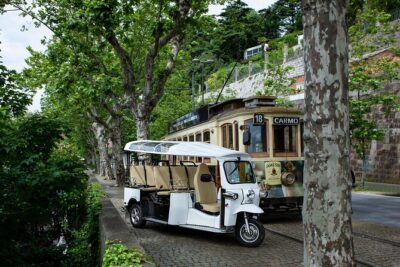
Discover Porto’s Highlights on a 2-Hour Private Electric Tuk Tuk
Read our review →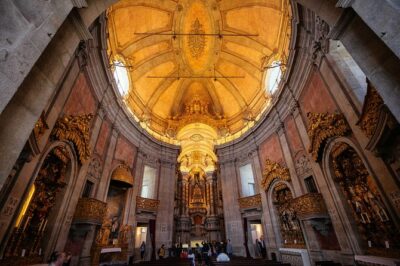
Porto PRIVATE TOUR With Locals: Highlights & Hidden Gems
Read our review →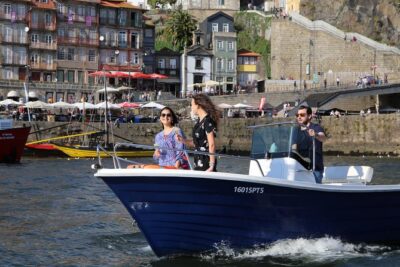
Private tour in the Douro (1 to 4 people) on a boat just for you
Read our review →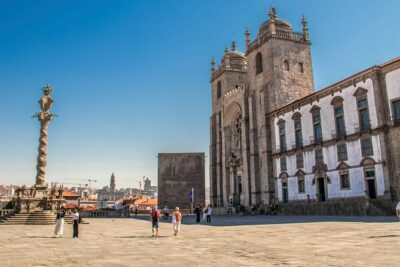
Historic Porto by Private Electric Tuk Tuk to Top Landmarks
Read our review →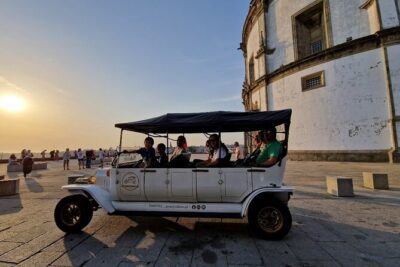
Private Tour of the Historic City in a Classic Ford T
Read our review →
Porto Private Food and Drink Tasting Tour with Local
Read our review →