
Reviewed · WALKING TOURS
Porto Historic Center: Small Group Walking Tour & Cathedral
Porto’s historic center is a lot like a good novel, lots of chapters in a small space. This tour is interesting because it strings those chapters together into one walkable route, with big “wow” moments like the São Bento azulejos and a bridge-top panorama you can actually enjoy on foot. I love the way the pace stays human in a steep city, and I love how the guide, Magda Laires Pinheiro Monteiro, answers questions and keeps the story grounded in real Porto details. The main consideration is simple: it’s a 3-hour hike through hills and stairs, so comfortable shoes and a moderate fitness level matter.
The payoff is that you don’t just see famous sights, you learn how they connect. You’ll go from the bookshop vibe near Livraria Lello to the Clérigos Tower viewpoint, then into the Cathedral’s gilded woodwork and down into the Ribeira atmosphere by the river. If you hate walking, or you need wheelchair-friendly routes, you’ll likely want a different plan.
Key takeaways before you go
- Magda’s Porto perspective: Local, question-friendly guiding with practical advice for what to do next
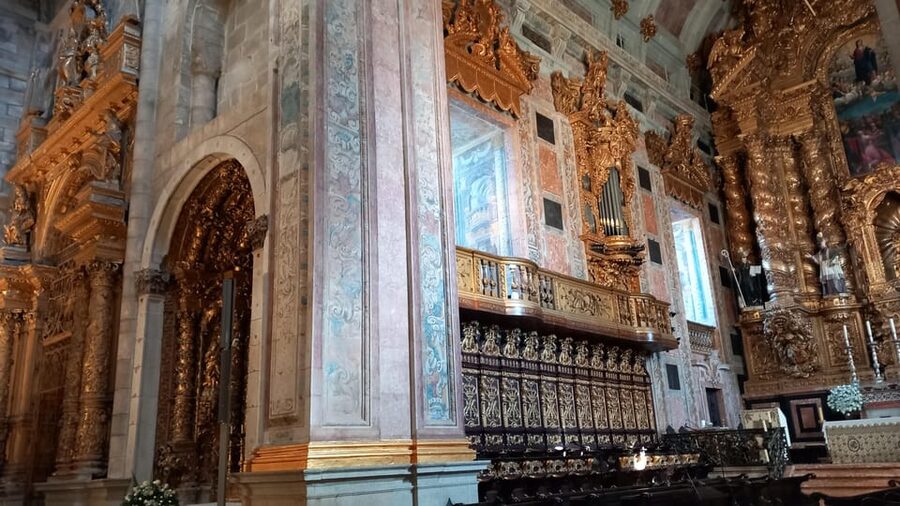
- Cathedral interior focus: Time spent on the Romanesque feel and the gilded woodwork altarpiece
- São Bento tile reading: You learn how to spot the story told through azulejos, not just look at them
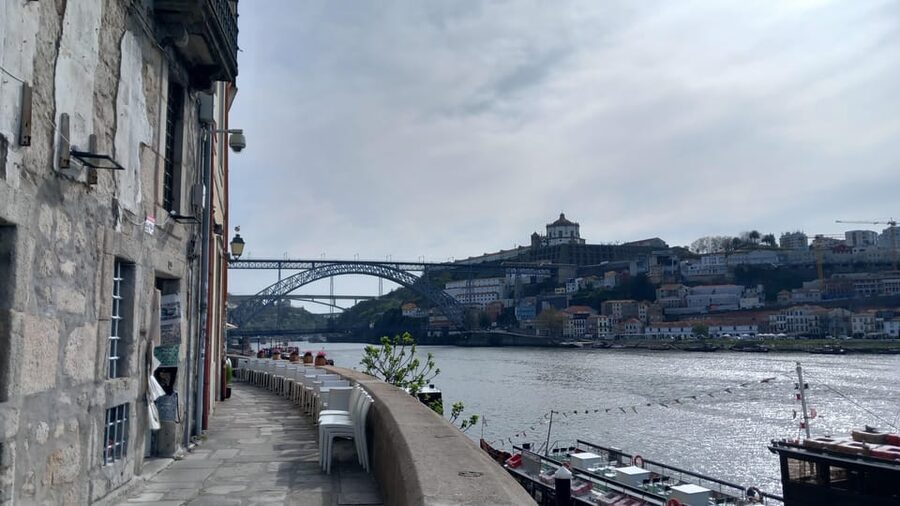
- Bridge-top views: D. Luís Bridge top level gives you a postcard view over the river area and walls
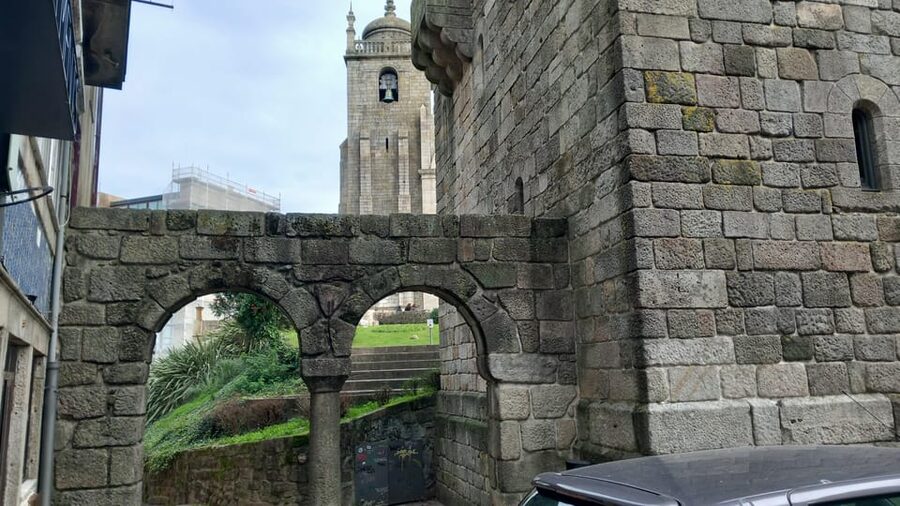
- A true Ribeira descent: Walk the medieval stairway feel down to Cais da Ribeira for the real mood
Porto in 3 hours: why this route feels efficient
Some Porto tours bounce you from highlight to highlight like a checklist. This one feels different because it builds a clear flow. You start in the Civic center area near Porto Town Hall, then work your way through architecture that shows different eras, from church towers and tile art to the Age of Discoveries world. You end with the Ribeira riverfront feeling that most visitors dream about, not the quick photo stop.
What I like most is the balance of “inside” and “outside.” You get indoor time at the Porto Cathedral and visits around churches, but you also get long enough outdoor stretches to actually take in the city. And because it’s a small group, limited to 10 participants, you’re less likely to get stuck behind a wall of strangers while trying to hear the guide.
The price, $81 per person for a 3-hour guided walk, looks reasonable when you factor in what’s included: a local guide, skip-the-line access to the Cathedral of Porto, and time at São Bento Station plus the medieval neighborhood feel. It’s not a bargain-tour price, but it’s also not trying to be one. It’s paying for guide-led context on the spots that can otherwise feel like random landmarks.
More walking tours in Porto:
- Porto Walking Tour, Lello Bookshop, River Cruise and Cable Car
★ 5.0 · 3,354 reviews - Experience Porto’s Charm: 3-Hour Guided Walking Tour
★ 5.0 · 2,432 reviews - Porto: 3-Hour Guided City Highlights Walking Tour
★ 4.8 · 2,050 reviews
Meeting at Porto Town Hall, then lining up the whole story
Your tour meeting point is in front of the Câmara Municipal do Porto (Porto Town Hall), beside the statue of writer Almeida Garrett. The guide is identified by a green card with her name, so you can spot her fast and avoid the typical early stress.
From there, the guiding style matters. You’ll hear the story of Carmo and Carmelitas, those “twin churches” people associate with Porto’s religious and neighborhood history. This isn’t trivia for trivia’s sake. It’s the kind of background that helps you make sense of why certain churches sit where they do, and why the city’s identity feels so tied to faith and local communities.
A quick bonus: you’ll pass by the area where Livraria Lello & Irmão sits. You don’t just see it from the curb. You’ll have a guided visit there, which is handy because it’s one of those places that can feel confusing if you walk in cold. Even if you’re not a die-hard book person, the shop is part of Porto’s personality, and a guide can point out the details worth noticing.
Practical note: wear comfortable shoes. This is a walking tour in Porto, and Porto is steep. Even when the pace is steady, the hills are real, which is why moderate fitness is mentioned for a reason.
Livraria Lello and why a guided stop is worth it
Livraria Lello isn’t only about famous photos. What makes it a good stop on this kind of route is timing and framing. If you hit it early enough, you still have energy to look closely, and the guide can help you connect it with the city’s older intellectual side.
A guided visit here also keeps you from turning it into a time-waster. With a small group, you’re less likely to lose time waiting, and you’ll move on with momentum to the next big vertical landmark, the Clérigos area.
Clérigos Tower and Church: Porto’s vertical identity
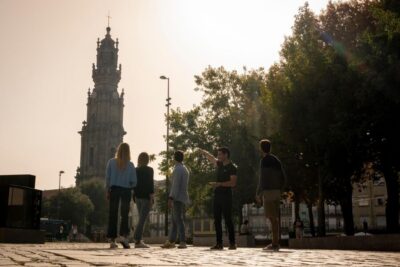
Up next is the Clérigos Tower, followed by Clérigos Church. This is one of the best “orientation” moments in the city because a tower gives you a visual anchor. Porto is all slopes and stairways, and a prominent landmark helps your brain map distances.
The tour includes a guided visit to the tower and then a visit to the church. Even if you don’t climb anything, the guiding context is useful. You’ll hear how this area fits into Porto’s skyline and why it became such a defining point.
What I like here is that the tour doesn’t treat the tower as a one-minute photo stop. You get time for explanation, so it feels like you’re learning the city, not just collecting pictures.
A few other ways to explore Porto
- Douro Valley: Historical Sites, Wine Experience, Lunch & Cruise
★ 5.0 · 5,133 reviews - Porto: Historic City Center Walking Tour
★ 4.7 · 1,172 reviews - Porto: An Intimate Fado Show in a Historical Tavern
★ 4.8 · 1,093 reviews - Porto: Historical Center Walking Tour
★ 4.8 · 898 reviews
São Bento Station tiles: how to read azulejos like a local
At São Bento Station, you’ll focus on the azulejos. Tile art in Portugal is easy to admire and hard to fully understand without context. A guided visit turns that wall of blue-and-white into something you can actually “read,” with history told through images.
In practical terms, this stop is also smart because it’s a dramatic change of pace. After hills and streets, you get a moment where the city’s story is presented as art you can study calmly. You’re not rushing across the station. You’re taking it in while learning what the scenes can mean for the history of Porto and the country.
This is also a great “rain option,” in the sense that you’re in a covered, indoor setting. If weather shifts, this part of the tour still holds up.
D. Luís Bridge top level: the view you earn on foot
Now for the big walking payoff: the scenic walk across the top level of D. Luís Bridge. The bridge is one of Porto’s most striking structures, and being on the top level gives you a wide view over the river zone.
Expect panoramic sightlines that include Serra do Pilar monastery, the Fernandine city wall area, and the typical Rabelo boats. Those details matter because they connect the bridge to how Porto functioned. This was not just a pretty crossing. It was a link between neighborhoods, defenses, and the river economy.
Also, the tour is timed so you get the view without feeling like you’re standing there indefinitely. You walk, you look, you learn, you move on.
Serra do Pilar and the riverfront frame
Right after the bridge view, you’ll also get Mosteiro da Serra do Pilar sightseeing. Even if you only have a short amount of time, a monastery placement gives you a sense of how Porto used higher ground for spiritual life and for commanding views.
This spot acts like a visual frame. You’ve just crossed the bridge, and now you’re getting the “why here” for the view you’re seeing. If you’re the type who likes to understand city layouts instead of only taking pictures, you’ll appreciate it.
Porto Cathedral: Romanesque calm and gilded woodwork drama
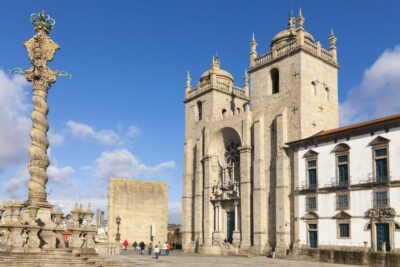
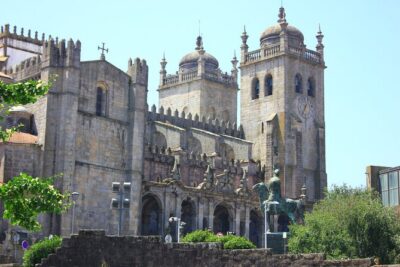
Then you reach the Cathedral of Porto, a stark Romanesque-style church where the mood changes quickly from outdoor energy to interior stillness.
The headline inside is the exquisite gilded woodwork altarpiece. That detail is exactly what makes a Cathedral stop worth including on a short itinerary. You’ll go beyond exterior architecture and see the type of ornamentation that shows how Portuguese religious art aimed to be emotionally powerful.
A key practical point: this tour includes skip-the-line access to the Cathedral of Porto. That matters because church lines can stretch out when you’re on a timed schedule. Since you’re only on the ground for about 3 hours total, saving time at the entry keeps the whole experience from feeling rushed.
One thing to plan around: the Cathedral is closed on Christmas and on Easter Days, so the tour can’t run on those dates.
Down into the Ribeira: medieval alleys to Cais da Ribeira
After the Cathedral, you’ll start the descent toward the Ribeira District. This is where Porto stops feeling like a museum and starts feeling like a lived-in place.
Expect medieval alleys and stairways that create that layered, slightly chaotic charm people associate with Porto. You’re going down toward the riverfront at Cais da Ribeira, which is your classic postcard finish, and it’s a fitting end to a route that’s been climbing and explaining historic layers all morning or afternoon.
What I like about ending here is that Ribeira rewards slow walking, and the small group format lets you take it at a human pace. You can enjoy the riverfront scenes and then decide what to do next based on your energy level.
Casa do Infante, Palácio da Bolsa, and the Discoveries connection
Once you’re near the river area, the tour adds more big-name landmarks, but in a way that aims to connect meaning, not just names.
You’ll pass by and learn about the old Royal Customs House, known as Casa do Infante. This is tied to the Age of Discoveries theme, and the point isn’t only that Portugal sailed far. It’s that Porto was a working gateway. Customs and trade connected the city to ships, goods, and the wider world.
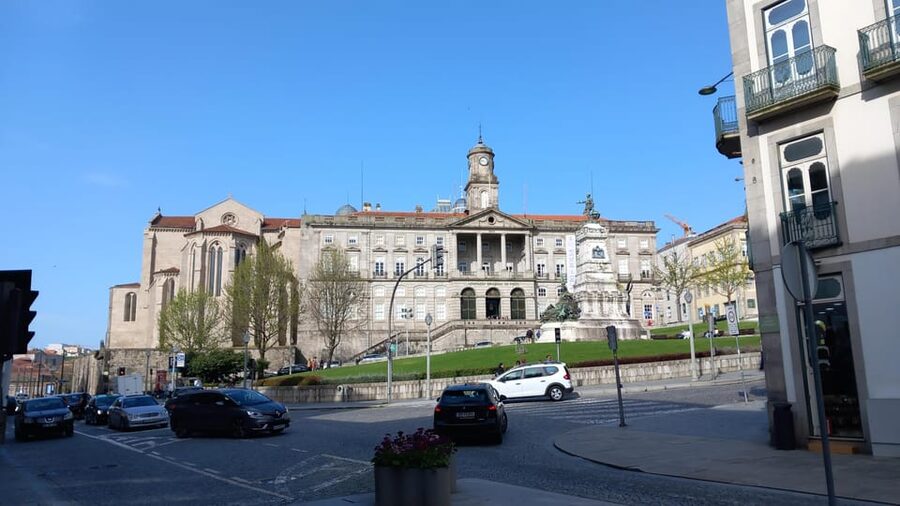
From there, you’ll visit Palácio da Bolsa. It’s one of those places that can look impressive from outside, but it’s the kind of stop where having a guide can help you notice details you might otherwise miss.
Next is the Monument Church of St Francis at the Infante D Henrique Square area. Again, you get guided support, so you’re not just reacting with your camera. You’re seeing why these buildings were important and how they shaped what Porto became.
And because these sights are grouped near each other, you don’t feel like you’re constantly changing transportation plans. It’s a walk-centered experience built for understanding the old center.
Group size, languages, and the pacing you should expect
This is a small group, limited to 10 people. That matters in Porto, because narrow streets and stairways can create bottlenecks if there are too many people. A small group also makes question time realistic, which is where the best tours earn their value.
The guide works in Portuguese, French, and English. If you’re traveling with friends who speak different languages, you can still get a unified experience because the guide is set up for multiple groups.
In terms of pace, the tour is described as a well-paced walk where the hills do not dominate the experience. Still, it’s honest about the physical side. You should plan for stairs and slopes.
Price and value: where your $81 goes
At $81 per person for about 3 hours, you’re paying for three main things.
First, you’re paying for a guide who can connect dots across the city. This isn’t only about point-and-shoot sights. It’s about understanding why the Cathedral, tile art, and major churches matter together.
Second, you’re paying for time saved. Skip-the-line entry to the Cathedral plus an express security check avoids wasting your limited time.
Third, you’re paying for a route that includes both major highlights and the “in-between” neighborhood feel, especially the Ribeira descent. A lot of tours only do the famous landmarks. This one also makes the medieval alley atmosphere part of the story.
If you love structure, context, and not having to plan a route yourself, the value holds up well. If you already know Porto deeply and want maximum time at just one museum, you might prefer a longer self-guided day.
Who should book this Porto historic center walk
This tour is a strong fit if you:
- Want a short, organized introduction to Porto’s major sights
- Like churches and historic architecture, not only river photos
- Enjoy tile art enough to want context for what you’re seeing
- Prefer small group guiding with real conversation
It’s also a good choice if you want someone to help you plan the rest of your day. Magda is known for sharing tips for where to eat and what to see next, which can be extremely useful when you have limited time.
Who should skip it
You should skip this tour if you:
- Need accessibility support for mobility impairments or wheelchair use
- Don’t want a steep-town walking route
The tour also notes restrictions like no luggage or large bags, and electric wheelchairs are not allowed. If you travel light, that’s easier. If not, you may want to choose a different style of visit.
Should you book it?
I think this is a good booking for first-time Porto visitors who want a curated historic-center walk that ends in the Ribeira riverfront mood. The biggest reasons to say yes are the São Bento tile stop with interpretive guidance, the Cathedral’s gilded woodwork focus with skip-the-line entry, and the bridge-top panorama that links monuments to how Porto actually works.
Book it when you want a smart, guided 3-hour start and you plan to keep exploring after. Don’t book it if walking up and down hills for a few hours sounds miserable, or if accessibility is a must-have.
If you’re on the fence, the key question is how you like to travel: do you enjoy guided context and a tight route, or do you prefer long unstructured wandering? This one is clearly built for the first style.
FAQ
Where does the tour start?
You meet in front of the Câmara Municipal do Porto (Porto Town Hall), beside the statue of writer Almeida Garrett. The guide is identified by a green card with her name.
How long is the Porto historic center tour?
It lasts about 3 hours.
What is included in the price?
A local guide is included, along with entrance tickets and skip-the-line access for the Cathedral of Porto. The visit also includes São Bento Train Station and the medieval neighborhood area.
What is not included?
Foods and drinks are not included, and there is no hotel drop-off.
Is skip-the-line access included for the Cathedral?
Yes. The experience includes entrance tickets (skip-the-line) to the Cathedral of Porto, plus express security check.
Is the tour suitable for people with mobility impairments or wheelchair users?
No. It is not suitable for people with mobility impairments or wheelchair users, and it also does not allow electric wheelchairs.
Is the Cathedral visit affected by holidays?
Yes. The Cathedral of Porto is closed on Christmas and on Easter Days, so the tour cannot take place on those days.
Recently reviewed around Porto
- Tour Porto: Adventure in Electric Bike Tour★ 4.3 · 11 reviews
- Porto: Tuk tuk Tours with Port Wine Tasting★ 4.5 · 65 reviews
- Tour Porto: Classic Adventure in Electric Tuk Tuk★ 4.7 · 33 reviews
- Tour Porto: Classic Car + A Toast with Port Wine★ 5.0 · 3 reviews
- The Beautiful Story of Porto: Guided Tour with Entry Tickets★ 4.8 · 111 reviews
- From Porto or Aveiro: 516 Arouca Suspended Bridge Tour★ 5.0 · 3 reviews
- Rent an Electric Bike with Bosch motor★ 4.5 · 3 reviews
- Self-Guided Bike to Surf”N”Food Pack★ 4.6 · 13 reviews
Walking Tours, compared.
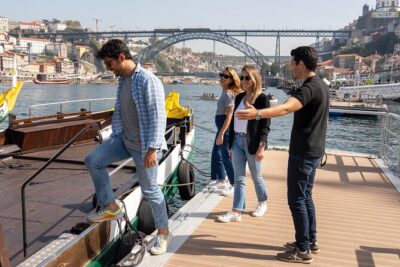
Porto Walking Tour, Lello Bookshop, River Cruise and Cable Car
Read our review →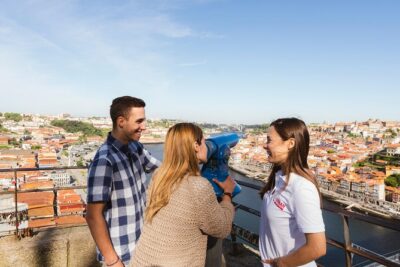
Experience Porto’s Charm: 3-Hour Guided Walking Tour
Read our review →

Walking Tour, Lello Bookshop, Boat and Cable Car
Read our review →Browse the lists this tour appears in