
Reviewed · WALKING TOURS
Experience Porto’s Charm: 3-Hour Guided Walking Tour
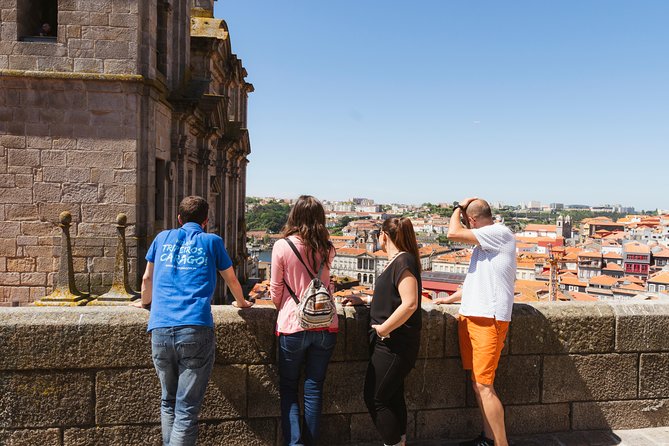
Porto’s charm is easy to love, but this 3-hour walk is interesting because it connects big-name sights with the story of how the city got built, fought over, and rebuilt. You’ll move through the UNESCO World Heritage-listed historic center and end up with river views that explain why people fall for Porto fast.
I like that the tour is guided by real storytellers, including names like João, Diogo, Maria, Ana, Ramon, Igor, Fatima, and more. I also like the photo-and-orientation focus, especially the stops around Porto Cathedral and Dom Luis I Bridge, so you leave with clear mental maps.
One drawback to consider: it’s a walking tour with some hill climbs, and it runs in rain, so you’ll want comfortable shoes and rain gear. Also, entrance fees are not included, so if you want to go inside every stop, you’ll need to plan extra time and tickets.
Key highlights worth your time
- UNESCO core route that links Roman roots to Moorish and later European influence
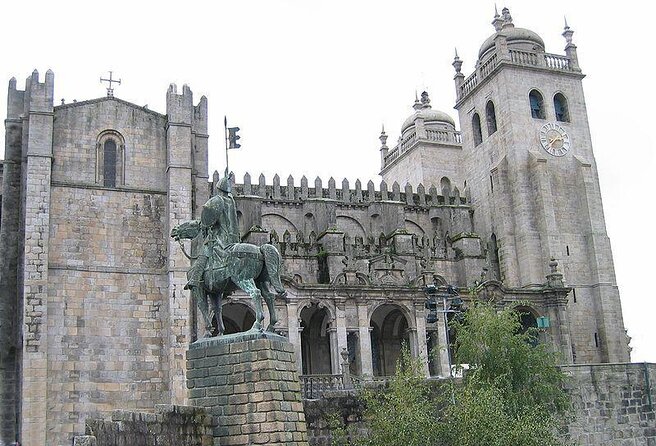
- Photo stops at Porto Cathedral and Torre dos Clérigos without turning the day into a ticket line
- São Bento Station tile panels in a quick, high-impact stop (and totally worth the look)
- Clérigos Tower and Lello & Irmão area for Baroque architecture and bookshop legend
- Ribeira Square time for river energy, not just a quick walk-by
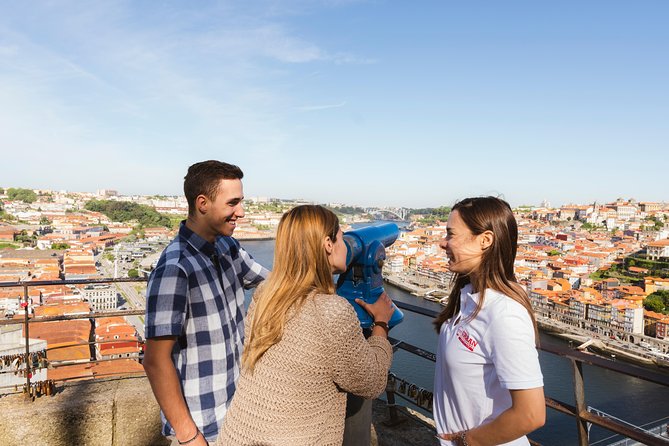
- Dom Luis I and the Duoro viewpoint with context about rabelo boats and port-making in Gaia
Porto’s Charm Walk: the quick hit of a big city
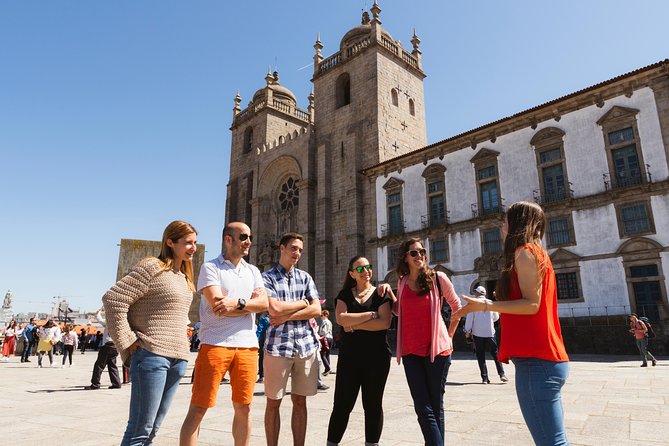
This tour is built for people who want the highlights and the why behind them, without spending your whole day in museums. You get a guided route that starts in the historic center and layers Roman, Moorish, and later Portuguese history into what you actually see on the street.
The pacing is also practical. You’re not just marching from one monument to the next. You stop enough times to hear the story, take photos, and recover a bit before the next climb.
Most of all, the guide is the product here. When the tour works at its best, it feels like walking with someone who’s been telling these stories forever. On this route, you’ll hear names like João, Diogo, Maria, Ana, Ramon, Igor, Fatima, and others, and the common thread is clear explanations in English plus a friendly, animated style.
More walking tours in Porto:
- Porto Walking Tour, Lello Bookshop, River Cruise and Cable Car
★ 5.0 · 3,354 reviews - Porto: 3-Hour Guided City Highlights Walking Tour
★ 4.8 · 2,050 reviews - Porto: Wine Tasting with Tapas Walking Tour
★ 4.4 · 1,541 reviews
How the 3 hours really feel on foot
The tour runs about 3 hours, with a maximum group size of 15. In real life, it often stays small enough that you can ask questions and actually hear the answers.
You will walk, and Porto has hills. Even when it’s manageable, you’ll still want supportive shoes. If you’re the type who gets tired on stairs, go slower on the climbs and let the guide know your pace. Some guides are used to matching how quickly people move, which makes a big difference over a few hours.
Timing matters too. The itinerary includes multiple short stops, many around 10 minutes, plus a longer stop in Ribeira. So you won’t see everything in depth. Think of this as orientation plus a set of best-in-class snapshots.
And yes, it operates in rain. That’s not a throwaway line. The route and timing are set up so you can keep moving even when the weather turns, sometimes using sheltered options such as indoor or underground shortcuts.
Starting point and the way the tour is structured
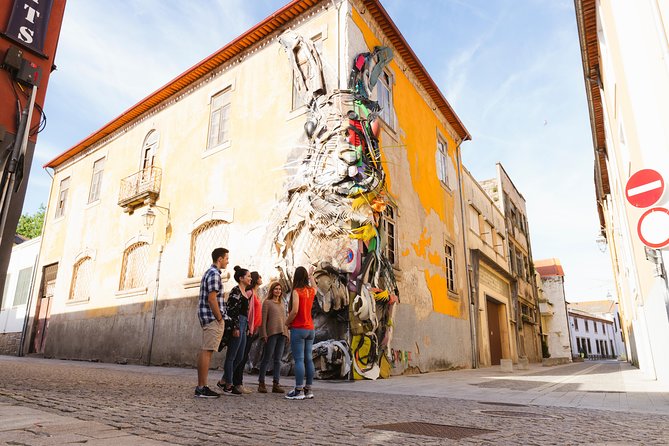
You meet at R. de Alexandre Herculano 251, in central Porto, near public transportation. The tour ends back in the city around Ribeira Square, so you’re positioned well for dinner afterward.
You’ll get a general briefing before the walk starts, and you check in about 15 minutes early. The ticket is mobile, which means you can keep everything simple on your phone.
Also, entrances are not included. That doesn’t mean you’ll only look at closed doors. It means the tour is designed around what you can see and learn while you’re there, with optional upgrades if you want to go inside later.
UNESCO center basics: Roman walls, Moorish influence, and later trouble
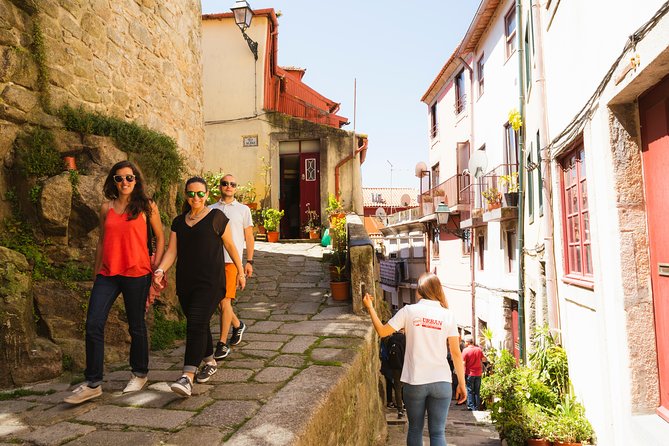
You’ll begin inside the UNESCO World Heritage-listed historic center and get the big historical thread first. The guide connects Porto’s earliest life as a Roman outpost with later Moorish rule and the shock of the 19th century, when the city was heavily damaged during French conflict.
Then you see evidence of older structure as you move. The route includes Romanesque-style walls and the visual language of medieval Porto, so the history isn’t floating in the air. It lands in brick, arches, and street corners.
One of the more interesting parts is how the guide ties architecture to invasions and power shifts. You’ll also hear about Castilian involvement in the region, which helps explain why Portuguese history can feel so tangled when you look at buildings built by different rulers across centuries.
A few other ways to explore Porto
- Porto: Guided Tour by Tuk-Tuk & Optional Douro River Cruise
★ 4.5 · 5,980 reviews - Porto: City Highlights 3-Hour Guided Electric Bike Tour
★ 4.8 · 3,092 reviews - Douro Valley-Expert Guide-Boat-Lunch-Tastings-Offer wine bottle
★ 5.0 · 1,104 reviews - Porto: Guided Tour and Tasting of 3 Port Wines at Poças
★ 4.6 · 1,074 reviews
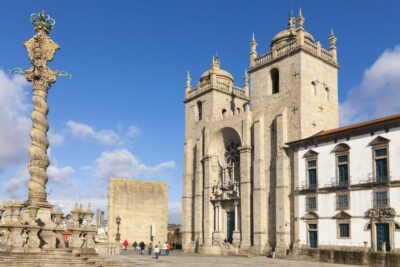
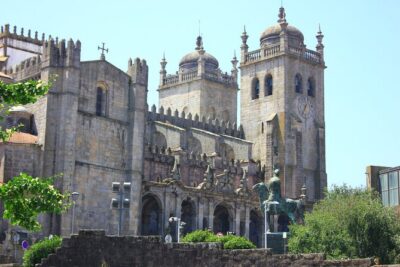
Porto Cathedral: quick exterior photos with context
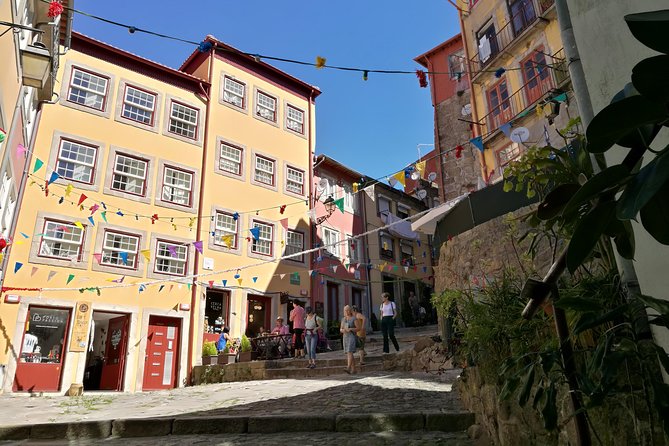
Porto Cathedral (Catedral do Porto) is one of those places you recognize even if you do not know the facts yet. The tour gives you time in the heart of the historic area to see the building and take photos.
Because entrance fees are not included, you mostly enjoy this stop as an architectural and storytelling moment from the outside. That said, you still get enough context from the guide to notice details you might otherwise ignore.
The Cathedral also works well as a “first anchor.” After you see it, the rest of the center stops make more sense. You start understanding where the city’s power clustered, and why the streets bend the way they do.
Santa Clara tiles and Aliados Avenue to Liberdade Square
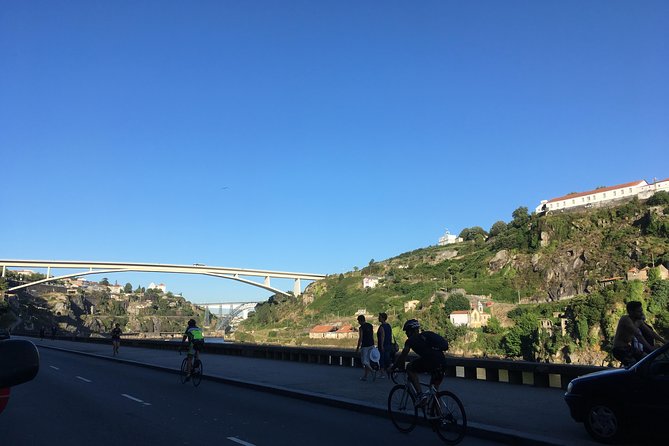
As you continue walking, you move through streets where Baroque architecture shows up alongside Moorish-style tilework. A stop near the Church of Santa Clara is built around those colorful tile patterns, which can look like pure decoration until you learn what they signal culturally.
Then you head toward Aliados Avenue and Liberdade Square. This is where the tour shifts from medieval mood to a more lived-in, everyday Porto. It’s a good change of pace, and you get a sense of how locals move through the city, not just tourists posing for photos.
The practical value here is simple: you learn where the city’s energy gathers. After this tour, you’ll know where to aim when you want cafes, people, and a bit of city buzz.
King Peter IV monument: the Porto angle on Brazil
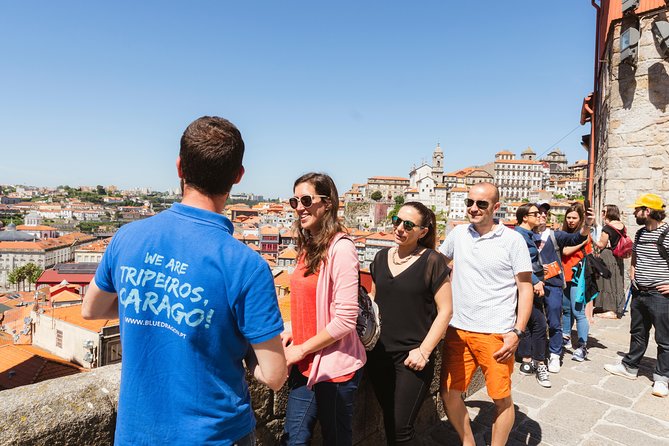
One stop you don’t just walk past is the monument to King Peter IV of Portugal. The guide connects him with a nickname people associate with liberation and also with the fact that he was the first ruler of Brazil.
This is a smart inclusion because it connects Porto to Portugal’s wider story. You’re not stuck in old stones and old wars. You get a bridge between what’s in Porto today and the political reality that shaped the Portuguese world.
Even if you’re not a history buff, the guide’s framing helps you read the monument in context rather than as a random statue. It adds a layer of meaning without adding a long museum wait.
São Bento Station: the tile panels stop you should not skip
São Bento Railway Station is one of the most famous interior sights in Porto, and it’s famous for its tile panels. The tour includes a short stop here, usually around 10 minutes, which is enough time to spot the stories told in blue and white ceramic.
This is one of those stops where the guide’s narration can do a lot of work. You’ll come away understanding why the tiles matter and what they depict, not just that they look pretty.
Because the station stop is short and free, it’s a high value moment. It also breaks up the walk nicely, giving you a sheltered pause in the middle of the center.
Clérigos Tower and Lello & Irmão: Baroque punch and bookshop legend
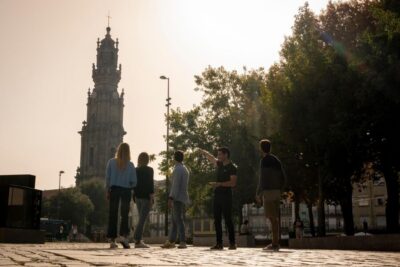
Torre dos Clérigos is the Porto trademark for many people, and the tour handles it the right way for a walking route. You get time around it for photos and architectural appreciation, with an explanation of its Baroque design.
The tower is designed by Nicolau Nasoni, and the buildings became national monuments in 1910. That’s the kind of detail a guide makes easy to remember because you can look up and connect the design to the explanation.
The tour also brings you near Lello & Irmão Bookstore. This is where the story about Hogwarts staircases comes in, because J.K. Rowling lived in Porto and the bookstore’s staircase is often cited as inspiration. Even if you do not plan to buy tickets to go inside, the exterior stop helps you understand why people chase this place.
Entrance costs for some stops are not included on this tour, so if you want to go inside the bookstore or other monuments, plan for that separately.
Cafe break near Santa Catarina Street: rest, then keep moving
Around Santa Catarina Street you’ll get a cafe stop, timed so you can sit for a bit and reset your energy. Cafe Majestic is the famous landmark in the area, though the tour’s break is not automatically about paying the highest prices.
This is a practical break built into the schedule. It’s not a detour to nowhere. It helps you keep walking without that end-of-tour collapse that hits when you skip a planned pause.
If you like simple strategies, here’s one I follow: order something small, taste it, and use the time to recharge your legs and ask your guide what to do next. The best guides turn a coffee stop into planning time.
Mercado do Bolhão: fresh local life and quick market browsing
Mercado do Bolhão is one of Porto’s emblematic markets. The tour pauses for about 10 minutes, giving you a peek into a neoclassical market hall and the way it’s organized by product areas.
This is not a full market tour with shopping lists. It’s more like a reality check: Porto isn’t just monuments. It’s also meat counters, fish stalls, flowers, produce, and the daily rhythm of buying and selling.
You’ll also see the shops around the market area. That matters because it teaches you where the local side of the city sits, not just the tourist postcard zone.
Ribeira Square: river air, historic streets, and dinner positioning
Ribeira Square and the Ribeira neighborhood are included with a longer stop, about 30 minutes. This is where Porto’s river life becomes the main event.
You’re walking along the UNESCO-listed river zone, with restaurants and bars nearby, and it feels like the city finally exhales. This is also a great “choose your own dinner” moment. You get enough time to find a vibe, then you can decide what kind of meal you want without rushing.
I love this kind of time budget. It’s long enough to enjoy the river energy, but short enough that the day still feels like a guided tour, not an all-day hangout.
Dom Luis I Bridge and the Duoro viewpoint: why these views matter
The route finishes with Dom Luis I Bridge time. You’ll have a brief look, designed and built between 1881 and 1888, linking Porto and Gaia. The guide also connects it to Gustave Eiffel’s influence, since the bridge is associated with an Eiffel protege who added an Eiffel touch.
Standing here with the Duoro in view is more than scenery. The guide’s explanation helps you understand why the bridge is a symbol of connection between the city and its wine economy.
You’ll also learn about rabelo boats, the traditional wooden boats that once transported grapes to the cellars. Even if you see fewer boats than you expected, the story gives the river a job. Porto’s waterfront stops being just a pretty background and becomes part of the economic engine.
Cais de Gaia and port cellars: the wine story you can actually picture
After the bridge area, the walk moves toward the Gaia side, where Cais de Gaia lines up with cellars. Port production is a huge part of Porto’s identity, and this tour gives you the basics of fortified wine production in a way that matches what you’re seeing along the river.
Because the tour is short, it does not turn into a tasting marathon. It gives you enough to understand the logic of the cellars and why the city layout makes sense.
If you want to go further later, you’ll have a head start. You’ll already know what you’re looking for when you visit a cellar on your own, instead of wandering in with no sense of how the process works.
Who should book this walking tour
This tour fits best if you want:
- A first-day orientation so your second day is easier to navigate
- Top Porto highlights without paying entrance fees for every monument
- A story-driven route where architecture connects to history
- A guide-led pace that works even when weather is bad
It may not be ideal if you want long interior visits, because entrance fees are not included and many stops are designed around exterior viewing and street-level learning. Also, if you are very sensitive to walking hills, go in with good shoes and expect some climbing.
On the guide front, this is the part I’d pay attention to. When the guide is energetic and the English is clear, the tour feels like a highlight of the trip. Multiple guides associated with the experience, like João, Diogo, Maria, Ana, Ramon, Igor, and Fatima, are described as engaging, helpful, and able to manage rain conditions.
Should you book Porto’s Charm?
Book it if you want a high-value orientation walk that covers Porto’s must-see locations in about 3 hours, with a real guide telling you what you are looking at. At $35.07 per person, the price feels fair for a guided route that hits UNESCO center sights, São Bento tiles, Ribeira atmosphere, and Dom Luis I, plus a planned cafe pause.
Skip it or consider a different format if you want a heavy interior day with long ticketed visits, because entrances are not included and the focus is on street-level viewing.
My simple decision rule: if you like getting your bearings fast and leaving with a mental map of Porto, this is a strong pick.
FAQ
How long is the Porto walking tour?
It lasts about 3 hours.
Where does the tour start and end?
It starts at R. de Alexandre Herculano 251, 4000-053 Porto, Portugal, and ends around Bluedragon City Tours in the same area, with the walk finishing in the Ribeira Square area.
How much does it cost?
The price is $35.07 per person.
Is the tour offered in English?
Yes, it is offered in English.
Are entrance fees included?
No. Entrance fees are not included, even though some stops are free to view from the outside.
What is the group size?
Each tour has a maximum of 15 travelers.
Does the tour run in bad weather?
Yes. The tour operates in the rain, so check conditions and wear rain-appropriate clothing.
Do I need comfortable shoes?
Yes. There is a small amount of walking involved, and comfortable shoes are strongly recommended because Porto has hills.
Recently reviewed around Porto
- Tour Porto: Adventure in Electric Bike Tour★ 4.3 · 11 reviews
- Porto: Tuk tuk Tours with Port Wine Tasting★ 4.5 · 65 reviews
- Tour Porto: Classic Adventure in Electric Tuk Tuk★ 4.7 · 33 reviews
- Tour Porto: Classic Car + A Toast with Port Wine★ 5.0 · 3 reviews
- The Beautiful Story of Porto: Guided Tour with Entry Tickets★ 4.8 · 111 reviews
- From Porto or Aveiro: 516 Arouca Suspended Bridge Tour★ 5.0 · 3 reviews
- Rent an Electric Bike with Bosch motor★ 4.5 · 3 reviews
- Self-Guided Bike to Surf”N”Food Pack★ 4.6 · 13 reviews
Walking Tours, compared.
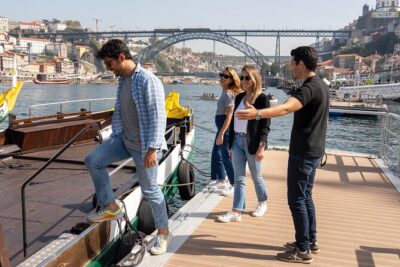
Porto Walking Tour, Lello Bookshop, River Cruise and Cable Car
Read our review →
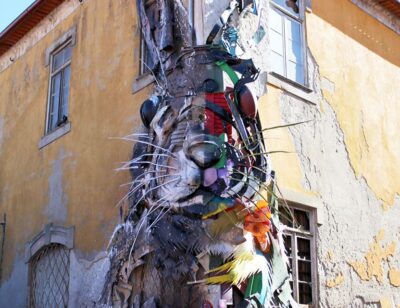

Walking Tour, Lello Bookshop, Boat and Cable Car
Read our review →
Port and Douro Wine Walking Tour with 9 Tastings
Read our review →Browse the lists this tour appears in