
Reviewed · WALKING TOURS
Porto and Gaia: Walking Tour of Douro’s Two Riversides
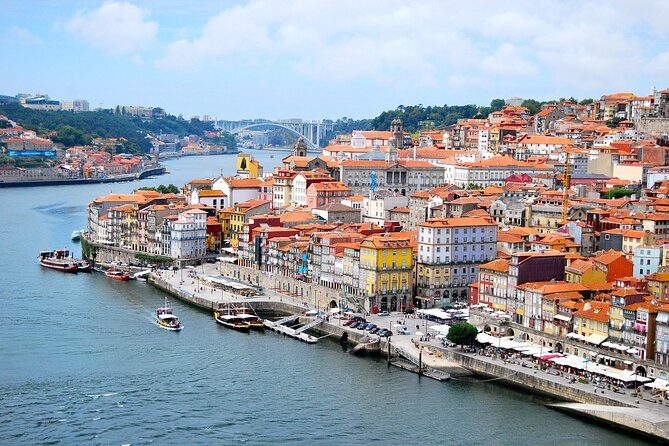
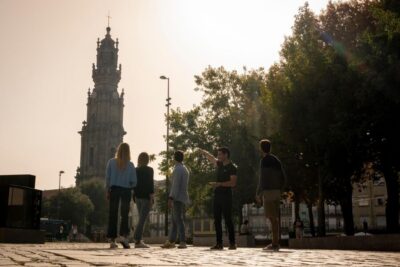
Porto and Gaia feels like two chapters of the same story, told side by side along the Douro River. This walk packs big names, sacred corners, old neighborhoods, and modern street art into a tight loop you can actually finish in one morning or afternoon.
I especially like how the tour ties Portugal’s Age of Discoveries to what you see on the ground, starting at Henry the Navigator. I also love the “two banks, one city” rhythm, where you cross the Dom Luis Bridge and instantly feel the shift from Porto’s age-old streets to Gaia’s wine culture and UNESCO views.
One thing to consider: this is a walking tour with multiple guided stops, so comfortable shoes matter, and it is not suitable for wheelchair users.
Key points to know before you go
- Small group of up to 10 means it stays personal and you can ask questions.
- English or Spanish live guide keeps the story clear from start to finish.
- Historic Porto plus Vila Nova de Gaia makes the trip feel complete without a long day.
- Serra do Pilar Monastery is UNESCO-listed, and the viewpoint factor is a big reason to cross the river.
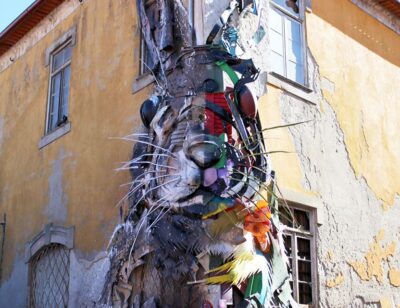
- Urban art meets traditional religious sites in Gaia, including the Half Rabbit sculpture and Corpus Christi Convent.
- Port wine storytelling without a winery visit helps you understand what makes Port different before you spend money on bottles.
Jardim do Infante Dom Henrique: starting with Henry the Navigator in the right place
The tour begins at Jardim do Infante Dom Henrique, at the foot of the statue with a blue umbrella. That detail matters because this area can be busy, and you do not want to waste time hunting for your group when you are about to walk a lot in a short window.
What makes this first moment smart is the way the tour frames Porto not as a pretty backdrop, but as a launch pad. You start by connecting Henry the Navigator (Infante of Sagres) to Porto, including the idea that his story helps explain how Portugal expanded across four continents during the Age of Discoveries.
You also get a quick lesson in how Portuguese history often shows up in architecture and institutions, not just museums. For example, right in the same square you will find Porto Stock Exchange (Palácio da Bolsa), which is more than a landmark. It is part of the city’s long relationship with trade, money, and global ambition.
If you like tours that start with context rather than facts dumped in your lap, this start works. You are primed to notice the next buildings and to understand why the city grew where it did.
More walking tours in Porto:
- Porto Walking Tour, Lello Bookshop, River Cruise and Cable Car
★ 5.0 · 3,354 reviews - Experience Porto’s Charm: 3-Hour Guided Walking Tour
★ 5.0 · 2,432 reviews - Porto: 3-Hour Guided City Highlights Walking Tour
★ 4.8 · 2,050 reviews
From Palácio da Bolsa to Igreja de São Francisco: where power and faith meet
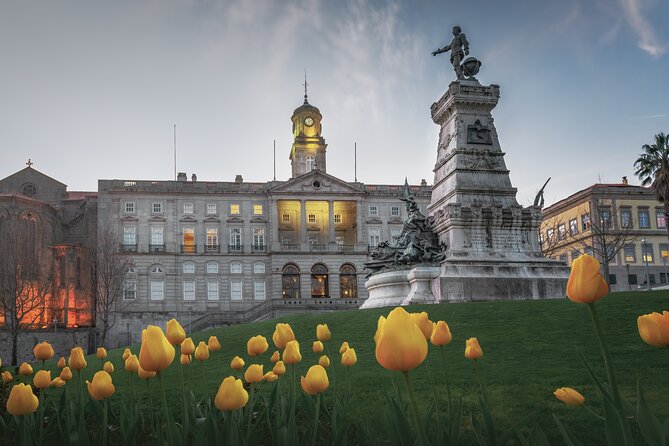
Next stop is Palácio da Bolsa, with a guided visit around 15 minutes. This is one of those Porto scenes where you can see why the city learned to flex its influence: it is tied to the first stock exchange in Portugal, and the building itself is an architectural highlight.
Then you head to Monument Church of Saint Francis (Igreja de São Francisco) for another guided 15 minutes. Faith is a defining part of Portuguese history and culture, and this church is described as one of the most beautiful in Portugal. Even if you are not the type who loves church interiors, the payoff here is understanding how devotion shaped art, community, and daily life in older centuries.
Two things make these stops work well on a single walking tour:
- You get variety without losing the thread. Trade and faith are both big drivers of what a city values.
- The guide’s timing keeps you moving. You are not stuck in one place for so long that the rest of Porto starts to blur.
One practical note: expect some standing and stair or doorway moments. If you get tired fast, plan to slow your pace slightly, but still follow the group closely.
Casa do Infante: the personal side of Portugal’s seafaring era
After seeing the big institutional buildings, the tour shifts to the human story at Casa do Infante. This is another guided stop (about 15 minutes) and it is where the narrative tightens around Henry the Navigator and the idea of Porto as the seed of imperial Portugal.
This part matters because it helps explain why the city is so proud of its origins. When you connect a place to a person, you remember details better, and the streets stop feeling generic.
You will also hear how Portugal’s global reach connects back to local roots, not some faraway fantasy. That framing makes the later medieval Porto sections more meaningful, because the Douro and the city’s walls are not random scenery. They are part of how power, goods, and people moved.
If you like history told as a story you can follow, this segment is a strong anchor before you move into Porto’s older neighborhoods and the riverfront.
Cais da Ribeira, Ribeira and Barredo: walking medieval Porto’s old spine
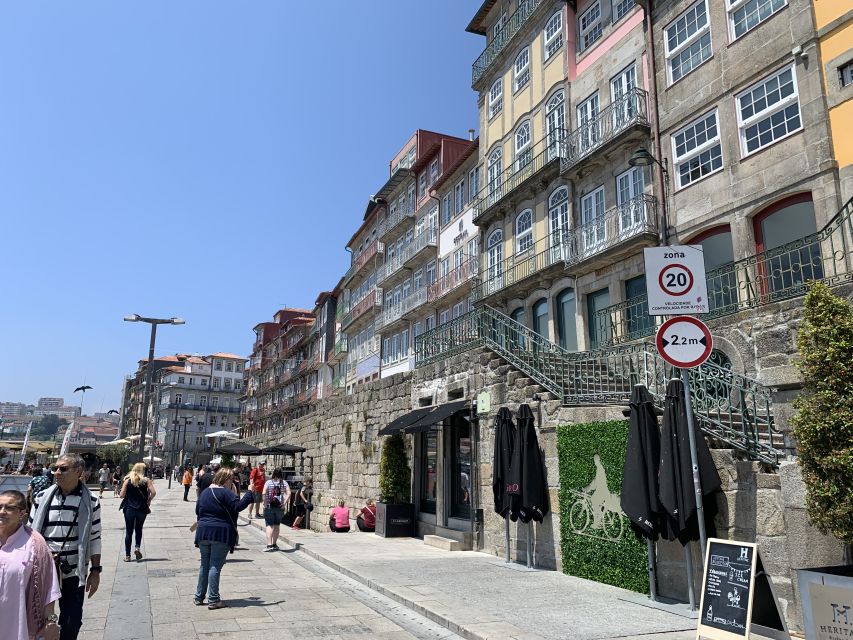
Now the tour gets into the streets that feel like the city’s memory. You will pass through Ribeira and Barredo, described as Porto’s oldest neighborhoods, and you will hear how these areas shaped daily life in earlier times and how they are changing under tourism and gentrification.
You also visit Cais da Ribeira for a guided stop (around 15 minutes). This is the river edge, and it is where Porto’s identity becomes obvious. You are in the place where the city formed, because Porto was born on the Douro River’s banks. That line might sound like a slogan, but the walking route makes it tangible.
The guide also covers the medieval city in practical terms: walls, gates, customs, and why the river mattered as the life source of the city. You will hear the kind of stories that make medieval Porto feel less dusty, including bridges, invasions (including French invasions), royalty, legends, and even heroes and villains.
Here is what I think you will appreciate most about this segment: you are not just seeing old buildings. You are hearing what people used to do and how the river shaped survival and commerce.
Also, because this is still Porto proper, you might notice how viewpoints pop up naturally as you walk. The guide’s route helps you get those angles without you having to guess where to stand.
Another way to spend your time in Porto:
- The Unvanquished Tour in Porto City Center
★ 5.0 · 26,497 reviews - From Porto: Douro Valley w/ Boat Tour, Wine Tasting & Lunch
★ 4.7 · 19,061 reviews - Complete Douro Valley Wine Tour with Lunch, Wine Tastings and River Cruise
★ 5.0 · 12,920 reviews - Porto: Live Fado Show with Glass of Port Wine
★ 4.8 · 6,498 reviews
Dom Luis Bridge and the Alminhas: crossing with a story in your pocket
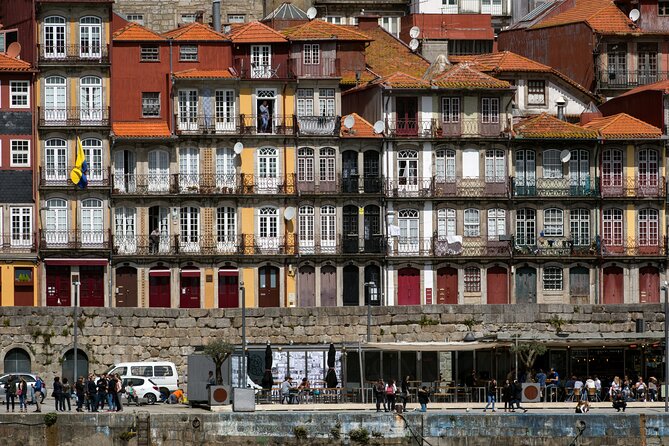
At Alminhas of the Bridge, you get another guided moment (about 15 minutes). Alminhas are small religious shrines, and on a bridge they feel like a statement: protection, faith, and safe passage in a place where travel mattered.
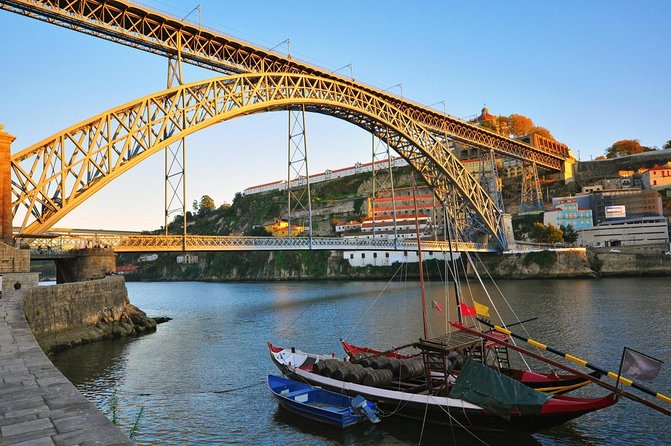
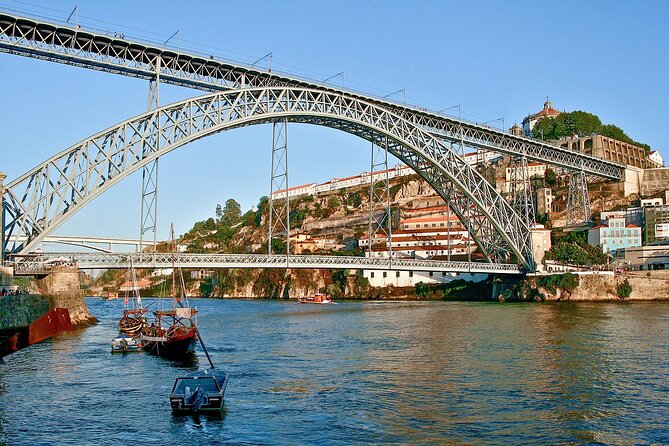
Then comes Dom Luis Bridge (guided around 15 minutes). Crossing the Douro on foot is one of the best ways to understand Porto and Gaia as inseparable. Even though they are technically separate municipalities, the tour treats them like one human unit, because daily life, trade, and the wine economy link them tightly.
The guide’s bridge story package is part of the fun. You hear about bridges, past invasions, and the way power shifts show up in the built environment. It makes the walk feel like more than movement, like you are stepping through chapters.
There is also a practical pacing moment: after the bridge segment, you do a short on-foot portion (around 10 minutes) before arriving in Vila Nova de Gaia. This keeps momentum up and prevents that classic issue where you cross, then get tired and lose focus.
If you do not like heights, you can still manage Dom Luis Bridge. Just keep your eyes on your footing and let the guide point out the views when it is time.
Vila Nova de Gaia: UNESCO Serra do Pilar, wine cellars, and modern street art
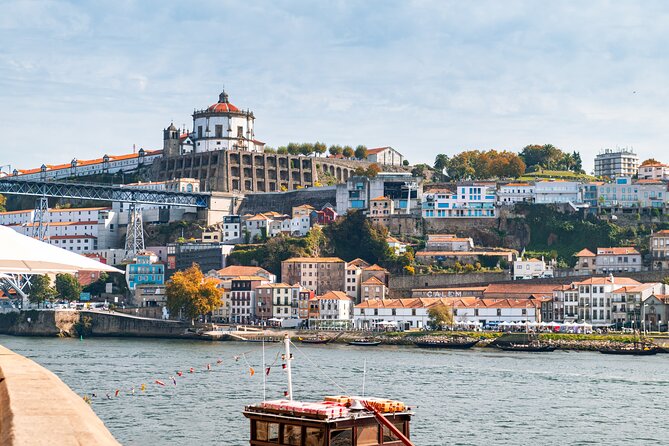
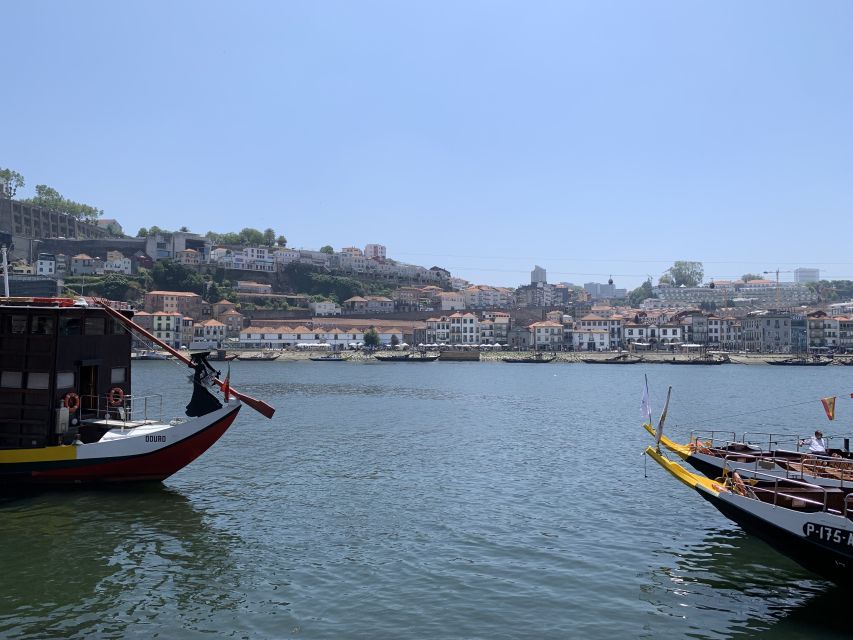
Once you reach Vila Nova de Gaia, the vibe changes in a good way. Gaia is where the tour slows down enough to show you what the river fed, particularly the connection to Port wine.
You are guided through key sights for about 15 minutes, including the idea of famous wine cellars (you will talk about them rather than visit a winery). You also see Serra do Pilar Monastery, which the tour notes as a UNESCO World Heritage Site. If you like viewpoints, this is the kind of place where UNESCO status makes sense, because the setting helps you understand why people settled and built here.
Then you shift to the contrast that makes Gaia feel current. You will see modern urban art, including the striking Half Rabbit sculpture, and you also visit Convento de Corpus Christi (guided around 15 minutes). The convent comes with legends and is a classic religious landmark, so the back-and-forth between old and new is the point.
This is also where the tour does something clever: it does not pretend modern street art is separate from tradition. Instead, it frames the street as a living space, where today’s artists and old religious sites both shape the city’s identity.
Even if you are not an art person, that contrast helps you read the city fast. You will leave with a sharper sense of what Gaia is trying to be now, not just what it was.
Port wine, explained the way a guide should: not just a souvenir bottle
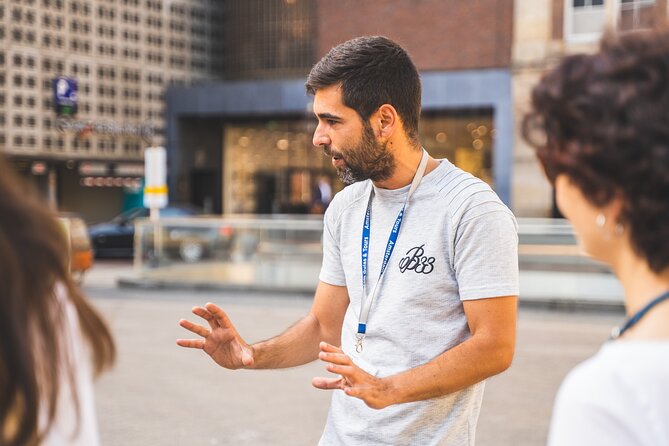
You will learn about the story of Port wine without doing a winery tour. The tour specifically says it will explain why Port wine is special and why it is not simply “just wine” and not simply “Port,” meaning there is a unique identity and method behind it.
You might think that sounds like sales talk, but on this walk it works better because it is tied to place. Port wine exists because the Douro River and the trading world built the system, and Gaia became the side of the river where the story reaches its next chapter.
If you are planning to buy a bottle later, this kind of explanation is useful. You can ask better questions in a shop, and you will understand why certain bottles feel different from regular table wine.
It also keeps your time focused. This tour is 2 hours, and it uses that time for history and viewpoints, not for long tastings.
Price and value for a 2-hour loop across the Douro
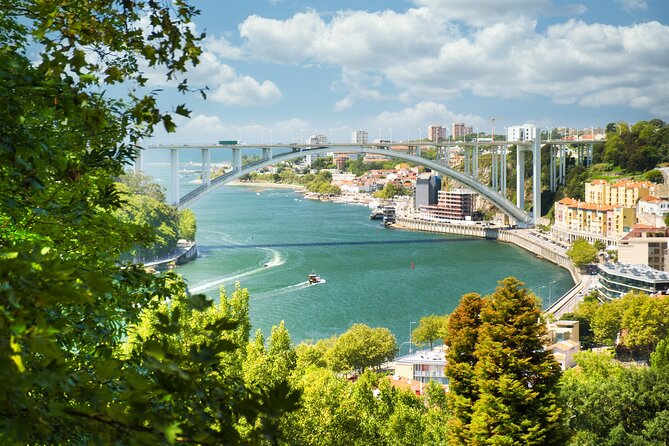
At $32 per person for about 2 hours, the value comes from three things you do not get from a casual self-guided walk.
First, you get a live guide who connects buildings to a bigger story, from Henry the Navigator to medieval Porto and then across to Gaia. Second, you get multiple guided stops, so you are not just walking by interesting spots with no context. Third, you get the full Porto-and-Gaia arc, including UNESCO Serra do Pilar and the religious and modern contrast sites, all in one stretch.
Not included are food and drinks, which keeps the cost lower and keeps you moving. If you need a snack later, just plan it after the tour. You do not want to start eating mid-walk and then regret it once you start climbing and crossing.
If you are short on time, this is the kind of tour that helps you avoid the usual mistake in Porto and Gaia. Many people spend all their energy in one side of the river. This gives you both banks with a coherent narrative, which is what makes it feel worth the money.
Who should book, and who should skip it
This tour is best for you if you want history with practical grounding, not a long museum day. The small group size (limited to 10) helps it feel conversational, and the English or Spanish guide format makes it easier to follow along.
It is also a good choice if you like walking routes that include both sides of a major feature, the Douro River, and you want the bridge crossing to be part of the story instead of just a photo moment.
Skip it if you need wheelchair access. The tour is marked as not suitable for wheelchair users, and it involves walking throughout the route.
One more timing thought: the tour can be canceled when there are fewer than 4 participants, so if you are traveling on a very specific date, keep a backup plan in mind.
Should you book Porto and Gaia: Walking Tour of Douro’s Two Riversides?
Yes, if you want a smart, fast introduction to Porto and Gaia that connects key landmarks to the bigger story of Portugal. This walk is especially strong for Henry the Navigator, medieval Porto’s river-driven growth, and Gaia’s blend of UNESCO heritage and modern street art.
Also, if you like tours where the guide’s role is central, this one fits. One account highlighted a guide named Eric, nicknamed Oso, as a standout, and that matches the overall setup: this tour lives or dies on the storytelling.
I would book it when you have 2 hours to spare and you want to feel oriented fast, before you start exploring on your own. If you only want one side of the river, or you hate walking, you may be happier with a slower, single-neighborhood plan.
FAQ
How long is the Porto and Gaia walking tour?
The tour lasts 2 hours.
Where does the tour start?
It starts at Jardim do Infante Dom Henrique, at the foot of the statue with the blue umbrella.
Where does the tour end?
It finishes at Cais de Gaia 19, 4400-245 Vila Nova de Gaia, Portugal.
What is included in the price?
The tour includes a friendly, knowledgeable guide fluent in English or Spanish, plus a walking tour through historic neighborhoods of Porto and Gaia.
What is not included?
Food and drinks are not included, and there is no hotel pick-up or drop-off.
How big is the group?
The group is small, limited to 10 participants.
What languages is the live guide available in?
The tour offers live guidance in English or Spanish.
Is the tour suitable for wheelchair users?
No. It is not suitable for wheelchair users.
What is the cancellation policy?
Free cancellation is available up to 24 hours in advance for a full refund.
Can I reserve without paying right away?
Yes. The tour offers reserve now & pay later, so you can book your spot and pay nothing today.
Recently reviewed around Porto
- Tour Porto: Adventure in Electric Bike Tour★ 4.3 · 11 reviews
- Porto: Tuk tuk Tours with Port Wine Tasting★ 4.5 · 65 reviews
- Tour Porto: Classic Adventure in Electric Tuk Tuk★ 4.7 · 33 reviews
- Tour Porto: Classic Car + A Toast with Port Wine★ 5.0 · 3 reviews
- The Beautiful Story of Porto: Guided Tour with Entry Tickets★ 4.8 · 111 reviews
- From Porto or Aveiro: 516 Arouca Suspended Bridge Tour★ 5.0 · 3 reviews
- Rent an Electric Bike with Bosch motor★ 4.5 · 3 reviews
- Self-Guided Bike to Surf”N”Food Pack★ 4.6 · 13 reviews
Walking Tours, compared.
Porto Walking Tour, Lello Bookshop, River Cruise and Cable Car
Read our review →
Experience Porto’s Charm: 3-Hour Guided Walking Tour
Read our review →
Walking Tour, Lello Bookshop, Boat and Cable Car
Read our review →Browse the lists this tour appears in