
Reviewed · WALKING TOURS
Porto: Azulejos Tiles Walking Tour
Porto’s azulejos turn plain street scenes into visual storytelling. I like that you focus on real buildings you can still see today, and I love learning how the tiles were made and why certain patterns show up where they do. One heads-up, the tour is talk-heavy, so if you prefer quiet strolls, bring a short list of questions.
This is a 2.5-hour walking route through Porto’s historic center, a UNESCO World Heritage Site, with tile stops that range from churches to tile depots, shops, and the train station area. In practice, it helps you spot details fast, so the rest of your Porto time feels less like wandering and more like reading the city.
You meet at Igreja do Carmo by a tiled facade, then walk toward Avenida dos Aliados and finish near São Bento train station. Wear comfortable shoes, and plan on taking photos, because a lot of the fun is looking closely at colors, borders, and repeating panels.
Key points at a glance
- Real azulejos on real facades, not just a quick photo stop
- History tied to technique, so patterns make sense as you walk
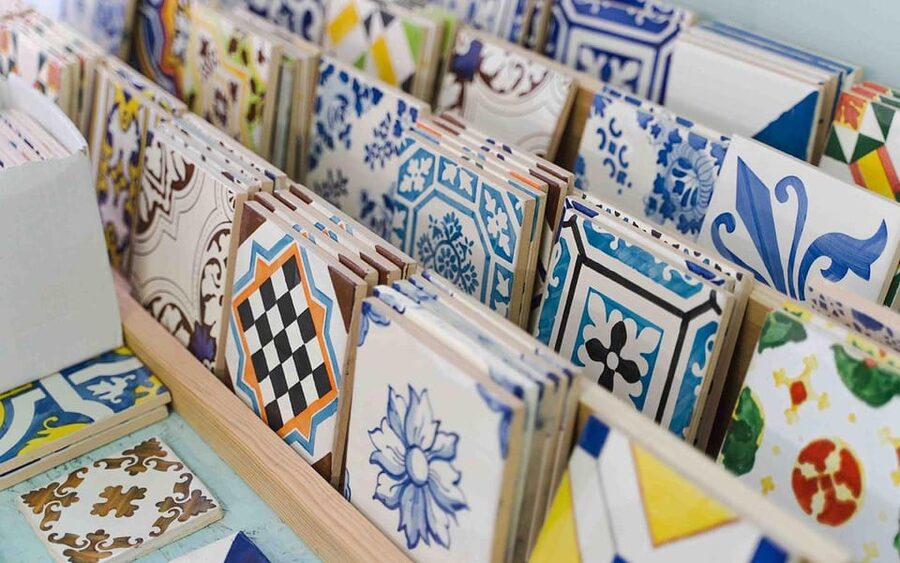
- Multiple tile types, from billboard-style panels to intricate church decoration
- Stops that include depots and stores, where production and design connect
- A finish near São Bento, so you can keep seeing azulejos right after the tour
- Guides you might see named Susana or Nuno, often praised for making details click
Porto azulejos are the whole point, and this tour teaches you how to see them
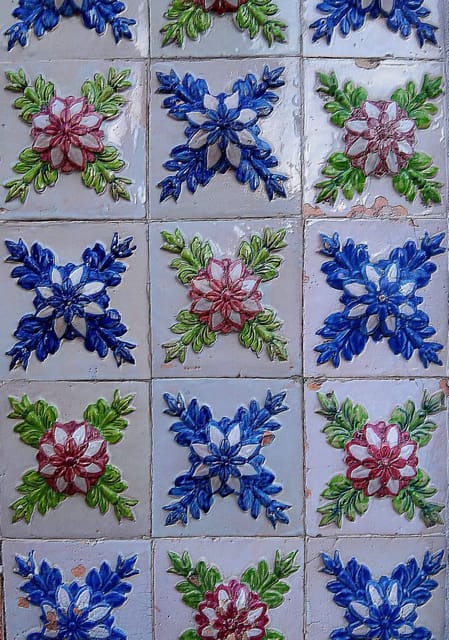
If you care about art, architecture, or just good street-level detail, azulejos are one of Porto’s best entry points. They cover churches, warehouses, shopfronts, and public spaces, so you’re not stuck scanning museums from the outside. This tour is designed to train your eye, so you start noticing the craft behind the look.
The big value here is how the guide connects design to purpose. You’ll learn about different techniques and applications as you walk, like how tiles get used as decoration versus how they function as a consistent surface across a building. That might sound academic, but it changes what you pay attention to, right away.
Another plus is that the tour stays in the historic center, the part of Porto people come to see for its UNESCO-level streets and architecture. Instead of treating tiles as random souvenirs, you get the city-wide story: why certain motifs appear, how factories shaped production, and how the tiles spread into everyday life.
More walking tours in Porto:
- Porto Walking Tour, Lello Bookshop, River Cruise and Cable Car
★ 5.0 · 3,354 reviews - Experience Porto’s Charm: 3-Hour Guided Walking Tour
★ 5.0 · 2,432 reviews - Porto: 3-Hour Guided City Highlights Walking Tour
★ 4.8 · 2,050 reviews
Starting at Igreja do Carmo, then moving into Porto’s tile rhythm
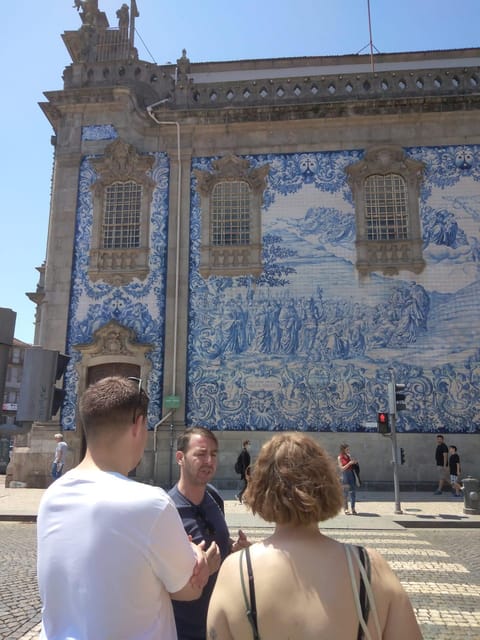
You start at Igreja do Carmo, by a tiled facade, which is a smart setup. You begin with the thing the tour is about, so within minutes you know what the guide wants you to look for. Meeting in this area also makes it easier to connect the tour with the rest of your morning or afternoon plans.
From there, the route moves through the historic core with a focus on azulejos as an urban feature. You’ll see tiles on churches and other prominent buildings, then you’ll switch gears to tile-related spaces like depots and stores. That mix matters because it shows azulejos as both art and industry, not only as pretty decoration.
The pace is built for walking and stopping often, so be ready to slow down for close inspection. Bring your camera, but also take a minute without it, because tiles reward slow looking. I find that if you force yourself to see the patterns first, photos later turn out better.
Igreja do Carmen: where religious tiles set the tone
One of the early stops is Igreja do Carmen, with about 10 minutes there. Even with a short visit window, church facades can teach you a lot, because they often use tiles for clear visual hierarchy: borders, icons, and repeated design frames.
The guide’s job here is to help you read what you’re seeing. You might notice how some tile work looks like it belongs to a specific place and function, while other elements look like they were adapted to fit a larger architectural surface. Either way, you start forming a mental map of the city’s tile language.
A practical tip: keep an eye on the color palette and the edge details. Those borders and transitions often reveal whether you’re looking at a decorative panel style or a more integrated facade treatment. Small details like that can make the rest of the tour much easier.
Bank of Materials: seeing how tile production connects to the street
A highlight stop is Bank of Materials, where you spend around 20 minutes. This is one of the points where the tour shifts from viewing to understanding. When a guide talks about production and design choices, you want a place where tiles and materials feel close to hand.
That’s the purpose of including a site like this. It helps you connect the dots between factories, designs, and what eventually appears on buildings. If you’ve ever wondered why two facades can both be covered in tiles but feel totally different, stops like this help explain the difference through technique and application.
You’re not just learning names and dates. You’re picking up how to tell which work looks like it was built as a long-form facade treatment, and which work reads more like a targeted panel. Once you understand that distinction, Porto’s streets start feeling less random.
Another way to spend your time in Porto:
- The Unvanquished Tour in Porto City Center
★ 5.0 · 26,497 reviews - From Porto: Douro Valley w/ Boat Tour, Wine Tasting & Lunch
★ 4.7 · 19,061 reviews - Complete Douro Valley Wine Tour with Lunch, Wine Tastings and River Cruise
★ 5.0 · 12,920 reviews - Porto: Live Fado Show with Glass of Port Wine
★ 4.8 · 6,498 reviews
Churches, depots, and stores: the best way to learn technique is to compare
The tour is built around comparisons, and that’s where the best tile education happens. You visit churches, then you move on to tile depots and stores, and later you connect it all to the train station area. Each stop works like a different “chapter” in the same story.
Here’s what you can expect as you walk. Some tile surfaces look almost like billboard-style visuals, while others cover buildings with intricate patterns. You’ll also hear about how tile manufacturing and design influenced what you see, including the role of different techniques. The guide talks through why certain looks became popular, and how they got applied in real settings.
A note on listening: one recent comment flagged the tour as a bit longwinded. That doesn’t mean it’s bad, just plan for a steady flow of information. If you love details, it’s a gift. If you prefer short answers and lots of quiet time, you’ll want to keep your attention tight and ask direct questions when you can.
How the UNESCO historic center changes your perspective as you walk
This walking tour takes place through Porto’s historic center, which is part of a UNESCO World Heritage Site. That matters because tiles are not just decorative add-ons, they are part of how Porto presents itself and communicates identity.
As you move, you’ll see that azulejos can be used as a visual marker for important buildings and public spaces. They also help unify streetscapes where architecture varies. In other words, tiles act like a readable layer over the city.
If you’re the type who likes to understand what you’re seeing, this format is worth it. The guide’s commentary keeps you from treating azulejos like a scavenger hunt where you only look for the most famous images. Instead, you start noticing pattern logic, placement logic, and how design fits into city life.
The route toward Avenida dos Aliados, then the finish near São Bento
The tour finishes around Avenida dos Aliados, and the route ends near São Bento train station. That pairing is useful, because São Bento is one of Porto’s most iconic spots for azulejos, and finishing near it gives you an easy way to keep your tile focus going after the guide wraps up.
Even if you’ve seen photos of São Bento’s tile work, your brain will be in a better mode after this tour. You’ll know what details to look for, and you’ll understand why the tiles feel so integrated into the building. It’s the “last page” that makes the earlier stops click.
Timing-wise, you’ll still need to watch the clock. This is a walking tour, not a sit-down lecture, so if you’re planning another ticketed activity right after, build in buffer time. Wear shoes that won’t punish your feet by the second half.
Duration, walking pace, and what to bring for a 2.5-hour tile focus
The tour is listed at 2.5 hours, and the included details describe it as a guided walking tour of about 3 hours. Either way, you’re looking at a short, concentrated walk with multiple stops, so plan it like a compact half-day activity.
Bring comfortable shoes and water. A camera helps, but so does a habit of looking at tiles from a few angles, including from slightly farther back when needed. If you’re the kind of person who enjoys detail, you’ll be stopping often, and that’s normal on this route.
Language options are English and Portuguese, and the tour includes a live guide. That matters because tile descriptions can get technical, and a real person can answer follow-ups rather than just pushing you along.
Price and value: why $53 can feel like a bargain in Porto
At $53 per person, you’re paying for a guided, focused walk that covers churches, depots, stores, and the train station area. For Porto, that’s solid value because the cost buys you more than sightseeing. It buys you interpretation, and interpretation is what turns azulejos into something you understand, not just something you photograph.
Also, the tour includes skipping the ticket line. The listing doesn’t spell out which specific ticket lines apply, but it’s still a practical time-saver if your schedule is tight.
If your plan is to spend a few days in Porto and you want your time to feel more meaningful, this kind of tour often pays off. You start to identify patterns and recognize techniques without needing to search for explanations later. Then, when you see tiles around town after the tour, you’ll have a framework for what you’re looking at.
Who should book this Porto azulejos walking tour
This tour is a great fit if you like art, architecture, design details, or city history presented through something you can visually inspect. It’s especially good for first-time Porto visitors, because it gives you a fast way to understand why the city looks the way it does.
I also think it works well for travelers who like to ask questions mid-walk. Guides such as Susana and Nuno are described as enthusiastic and able to answer questions easily, and that makes the experience feel interactive rather than scripted.
One caution: it is marked as not suitable for children under 8, and it is also marked in a way that could be tricky for people with mobility impairments, even though wheelchair accessibility is listed. If mobility is a concern, check with the operator directly before you go. Finally, plan for walking and stopping, not a slow shuffle.
Should you book this Porto tile tour?
Book it if you want Porto to feel understandable quickly. You’ll leave with a better eye for azulejo placement, technique, and how tiles relate to Porto’s historic center, and the finish near São Bento helps you keep the momentum.
Skip it if you only want postcard photos and prefer a quiet walk with minimal explanation. Also skip it if you know you dislike guided talking sessions, because this experience is heavy on context and detail.
If you’re on the fence, I’d make your decision based on one question: do you want to learn how the tiles work, not just where to find them? If yes, this tour is a strong match.
FAQ
How long is the Porto azulejos tiles walking tour?
The duration is listed as 2.5 hours, and the included details describe it as a guided walking tour of about 3 hours.
Where do I meet the guide?
You meet at Igreja do Carmo, by a tiled facade.
Where does the tour end?
The tour ends next to São Bento train station, with the finish point listed around Avenida dos Aliados.
What’s included in the tour price?
It includes a guided walking tour, visits that cover churches, depots, stores, and the train station area, plus insights into the history of Porto’s tiles and their production, with observation of tile patterns and panels.
What languages are offered?
The live tour guide is available in English and Portuguese.
Is this tour suitable for young children?
It is not suitable for children under 8 years old.
Is the tour wheelchair accessible?
Wheelchair accessibility is listed, but the tour is also marked as not suitable for people with mobility impairments. If you need accessibility support, check with the operator before booking.
Can I pay later or cancel if my plans change?
Yes. It offers reserve now and pay later, and it also offers free cancellation up to 24 hours in advance for a full refund.
Recently reviewed around Porto
- Tour Porto: Adventure in Electric Bike Tour★ 4.3 · 11 reviews
- Porto: Tuk tuk Tours with Port Wine Tasting★ 4.5 · 65 reviews
- Tour Porto: Classic Adventure in Electric Tuk Tuk★ 4.7 · 33 reviews
- Tour Porto: Classic Car + A Toast with Port Wine★ 5.0 · 3 reviews
- The Beautiful Story of Porto: Guided Tour with Entry Tickets★ 4.8 · 111 reviews
- From Porto or Aveiro: 516 Arouca Suspended Bridge Tour★ 5.0 · 3 reviews
- Self-Guided Bike to Surf”N”Food Pack★ 4.6 · 13 reviews
- Porto: Guide Boat tour with tasting of 4 Port wines★ 4.9 · 15 reviews
Walking Tours, compared.
Porto Walking Tour, Lello Bookshop, River Cruise and Cable Car
Read our review →
Experience Porto’s Charm: 3-Hour Guided Walking Tour
Read our review →


Walking Tour, Lello Bookshop, Boat and Cable Car
Read our review →Browse the lists this tour appears in