
Reviewed · WINE TOURS
Private Tour to Lamego and Viseu, the Dão wine region
Lamego and Viseu are the kind of places that reward slow looking, and this private route ties them together with great timing, comfortable transport, and smart photo stops along the Douro. You get architecture (Baroque and Gothic) plus the Dão wine region in one day without the usual travel stress.
What I like most is the mix of big-ticket sights and smaller details you can actually enjoy. I’m especially drawn to the Sanctuary of Nossa Senhora dos Remédios staircase, and I also love how Lamego and Viseu cathedrals show layers from different centuries, not just one style frozen in time.
One possible drawback: the day includes some walking, and the sanctuary is famous for a staircase with 686 steps, so plan footwear and pace accordingly.
Key highlights to know before you go
- Private, luxury transport from Porto with Wi-Fi, bottled water, and refreshments, so you start relaxed at 8:00 am.
- Douro bridge stops that explain how the region’s routes evolved, including a footpath connection created after later rehabilitation.
- Lamego’s UNESCO-level feeling without the crowd pressure, with a National Monument castle and a cathedral that mixes Romanesque roots with later facelifts.
- Nossa Senhora dos Remédios with a fully decorated climb and a church designed as a cousin to Bom Jesus in Braga.
- Viseu Cathedral with a fortified look and clues of earlier temple structures beneath later building phases.
- Optional Dão tastings and museum time if you want a more wine-and-art flavored finish.
Why this Lamego and Viseu route works so well from Porto
This is a private day trip that runs roughly 8 to 10 hours, starting at 8:00 am with pickup offered in Porto. It’s long enough to feel like you left the city, but not so long that you’re stuck in transit the whole time.
The route also makes practical sense. You’ll see major sights in the towns themselves, then top it off in Viseu with optional wine and museum stops. And because it’s private, your pace is easier to control, whether you want more photo time at viewpoints or fewer stops.
Value wise, the base price is $304.85 per person, and that number matters when you compare what you get included. Transport is in luxury vehicles with Wi-Fi, bottled water, and refreshments, plus insurance coverage is included. Several key sights also list free admission in the time you spend there, so your paid extras are mainly for optional upgrades.
More port and wine tastings in Porto:
- From Porto: Douro Valley w/ Boat Tour, Wine Tasting & Lunch
★ 4.7 · 19,061 reviews - Complete Douro Valley Wine Tour with Lunch, Wine Tastings and River Cruise
★ 5.0 · 12,920 reviews - Porto: Live Fado Show with Glass of Port Wine
★ 4.8 · 6,498 reviews
Douro bridge lessons: a quick start that sets the scene
Before you hit Lamego, you’ll make two stops focused on bridges over the Douro, and yes, they are surprisingly interesting.
The first bridge connects roads across the river and was originally built by King D. Luís I at the end of the 19th century. Later, the wooden deck deteriorated and the bridge was deactivated around the mid-20th century, but rehabilitation work brought it back to a new use. The big idea here is that the old structure became part of a network of footpaths along the Douro, so you’re looking at how infrastructure can be repurposed instead of discarded.
The second bridge was built in 1934 and was intended for rail use, but the works weren’t completed for trains, so it was adapted for roads. What you’ll notice is the masonry construction, unlike the iron bridges common in that era. Even if you only spend a short time here, it gives you context for how people move through this region, and why views from river crossings matter so much for vineyards.
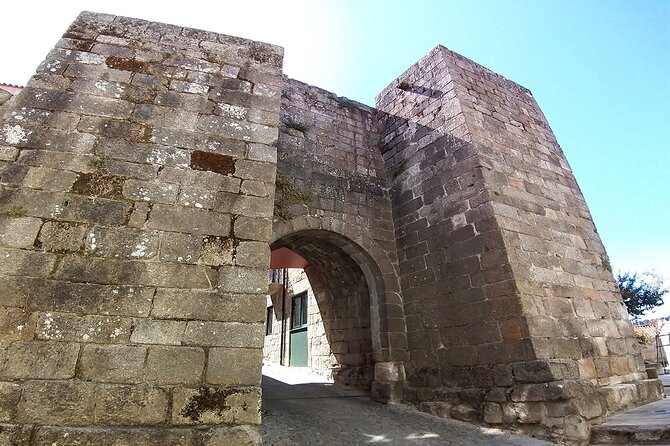
Castelo de Lamego: medieval walls with layers you can read
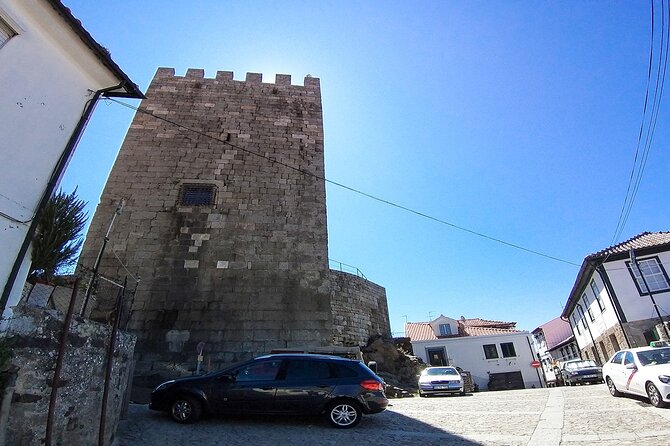
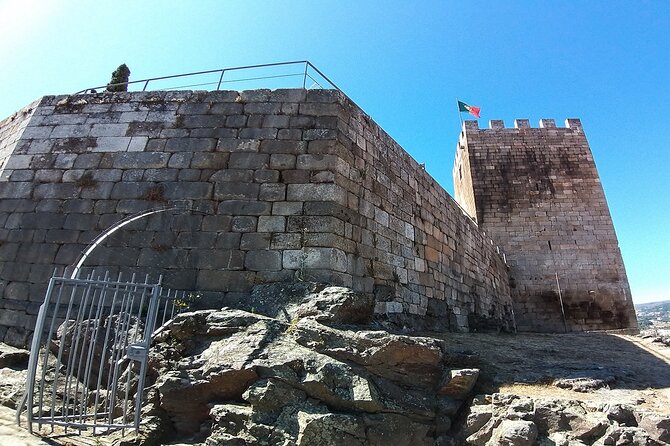
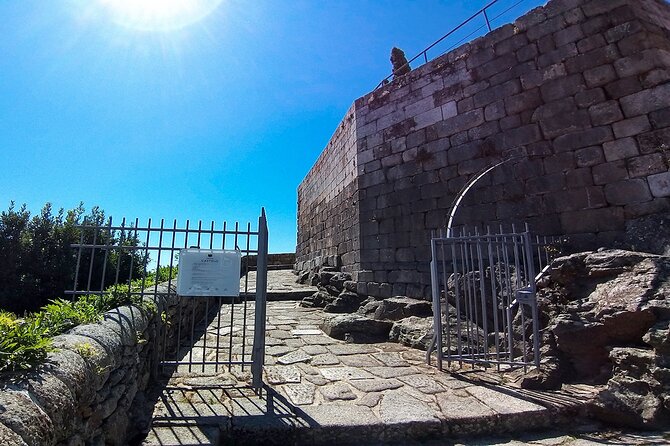
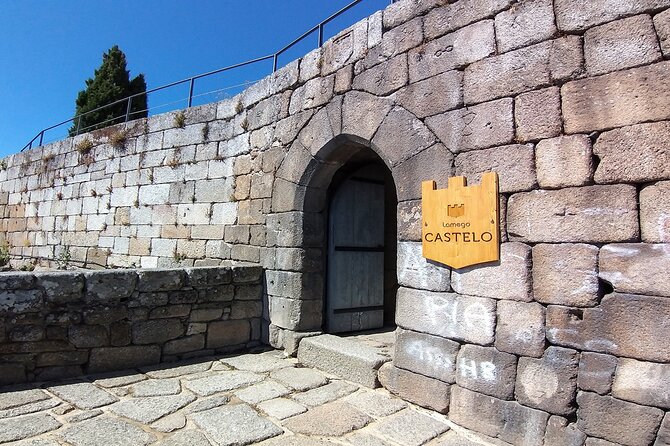
Lamego Castle is a National Monument (classified in 1910) and the site’s story goes back before the medieval structure you see today. The castle began in the 12th century, under Portuguese rule, on top of earlier forts used by the Lusitanians. Later you also had Visigoths between the 5th and 7th centuries, and then Muslim rule from the 18th century until Christian reconquest times, so the hill has been contested and used for a long time.
What I like about this stop is the setting. It’s a mountain castle at 543 meters above sea level, surrounded by a walled perimeter and designed with an irregular plan that matches the terrain. There’s a keep area where municipal palaces were located in the 16th and 17th centuries, so you get a feel for how the site evolved when its military function faded.
The time is short, about 30 minutes, and admission is listed as free. That’s the right rhythm for a private tour, because you’ll also need energy later for the sanctuary staircase.
Practical note: even if the castle visit is brief, keep an eye on uneven ground. Comfortable shoes help, especially if the weather turns slippery.
Lamego Cathedral: Romanesque roots plus a big facelift story
Next comes Lamego Cathedral, which dates from the 12th century, likely tied to D. Afonso Henriques. Then reality hits: the building was repeatedly reconstructed across the 14th, 16th, 17th, and 18th centuries, so the original Romanesque profile got reshaped over time.
The main façade, built in the early 16th century by architect João Lopes, is where you’ll probably spend your attention. It combines flamboyant Gothic forms with early Renaissance influences, which is a nice change from a purely Gothic or purely Romanesque look. Inside, the ceilings were painted in the first half of the 18th century by Italian painter-architect Nicolau Nasoni, with an architectural framing theme around biblical episodes.
You also get the chance to see the cathedral’s 16th-century cloister and two chapels from the same period. The stop is about 30 minutes, and admission is listed as free, which makes it a solid use of time.
If you like church interiors, this is one of the better “high impact” stops of the day because the art and the design blend together. If you don’t, at least you’ll get the façade and a quick overview without it turning into a long indoor detour.
A few other ways to explore Porto
- Discover Porto’s Highlights on a 2-Hour Private Electric Tuk Tuk
★ 4.5 · 1,860 reviews - Porto PRIVATE TOUR With Locals: Highlights & Hidden Gems
★ 5.0 · 984 reviews - Porto: Private tour in the Douro (1 to 4 people) on a boat just for you
★ 5.0 · 744 reviews - Historic Porto by Private Electric Tuk Tuk to Top Landmarks
★ 4.5 · 735 reviews
Nossa Senhora dos Remédios: the 686-step climb and why it feels special
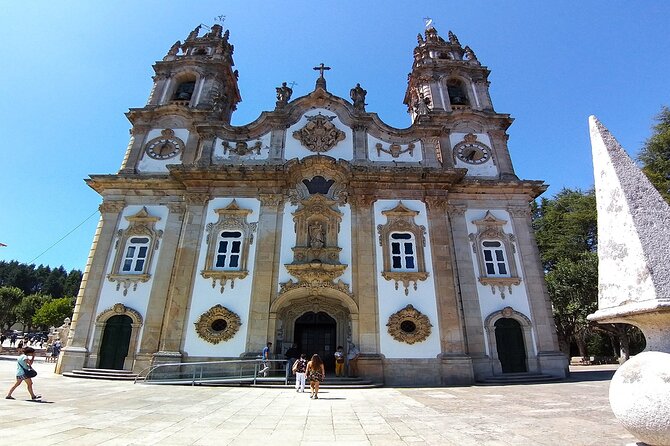
This is the signature experience of Lamego. The Sanctuary of Nossa Senhora dos Remédios is described as one of Portugal’s most incredible sanctuaries, and the “why” is obvious once you understand the staircase.
The staircase has 686 steps, rising to the church at the top of the mountain. It’s fully decorated, and along the climb you’ll find fountains, chapels, obelisks, and other monuments. The sanctuary’s 18th-century church replaced an earlier 14th-century chapel, and the design is described as a version of Bom Jesus in Braga.
You’ll also notice that Nicolau Nasoni left his mark on parts of the sanctuary, including a granite fountain near the sanctuary. That detail matters because it shows this isn’t just about steps, it’s about crafted design across the whole ascent.
The stop is about 30 minutes, and admission is listed as free. Also, there’s a helpful point for planning: the climb is described as accessible to many people, so you should not assume it’s only for athletes. Still, you’ll want sensible shoes and a slow pace if you plan to go all the way up.
Se Cathedral de Viseu: Gothic grandeur with evidence of older temples
Now you move to Viseu, and the highlight is Se Catedral de Viseu. From the outside, the cathedral has large towers and gives the impression of a fortified church on a promontory. Even when you see it from a distance, it’s a reference point for the city.
It’s also one of the oldest buildings there. The cathedral was built on the site of an earlier temple structure from the Suevo-Visigothic era, and archaeological excavations have recently revealed parts of that older structure. That means the cathedral is not just “old,” it’s literally layered on top of earlier sacred space.
In the 12th century, it began to take shape with early Portuguese kings, including D. Afonso Henriques. Then there was a major renovation in the 13th century during D. Dinis. The works lasted years, so you’re seeing elements from different periods rather than a single uniform build.
Expect around 30 minutes here, with admission listed as free. The main value is time efficiency. You get the outside presence, then a feel for how the centuries stacked up under your feet.
Palácio dos Condes de Anadia: an 18th-century estate with real Baroque flavor
After cathedrals, you shift to a palatial world at the Palácio dos Condes de Anadia. This is an 18th-century building that belonged to one of Portugal’s richest families, tied to the Counts of Anadia. The exterior is Baroque, with intricate carvings and decorations, and the interior is just as grand.
Inside, you can expect ornate ceilings, frescoes, and furniture from the 18th and 19th centuries. There’s also a chapel dedicated to Saint Francis of Assisi.
One key detail: the guided tour of the palace is optional, and the ticket is not included in the base price. The data lists a palace admission ticket of €10, and there’s also an option that bundles the palace with wine tasting for €25.
Is the palace worth the extra cost? For me, the answer is yes if you enjoy interiors and want a change of pace after churches. The palace experience is where the day becomes less about looking up and more about enjoying rooms, decorative ceilings, and a sense of how the elite lived.
If you’d rather spend money on wine, you can skip this ticket and still get the rest of the day’s sightseeing.
Viseu wine route add-ons: Casa do Santar, the Solar do Vinho do Dão, and tastings
Once you’ve done the palace area, the tour offers optional add-ons tied to the Dão wine region. This is where you can tailor the day toward wine without turning it into a full wine tour.
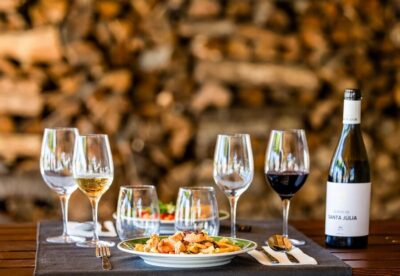
One optional stop is Casa do Santar at Santar Vila Jardim, described as a historic wine estate in the Dão region. The estate dates back to the 16th century and is known for high quality wines, especially Dão reds made with the local Touriga Nacional grape variety. You’ll see a 17th-century mansion, a chapel, and a vineyard, then you’ll learn about winemaking history and taste Casa de Santar’s wines. This option is listed at €22.50, with about 1 hour and wine tasting included.
Another optional option is Solar do Vinho do Dão, connected to the Regional Wine Commission. In practice, it acts like a reception center for visitors on the Dão wine route, with a small wine cellar feel. You’ll get information, leaflets, and a way to start thinking clearly about where to taste in town. The counter provides a glass, and there are eight highlighted references for tasting at either no cost or a symbolic price.
If you’re the type who likes to taste and then shop smart later, this stop is a great bridge between sightseeing and wine. It also helps because wine tastings can feel overwhelming if you don’t know where to start.
There’s no pressure to pick every add-on. You can choose one wine option and keep the rest of the day focused on architecture.
Grão Vasco Museum: art and altarpieces if you want an indoor reset
If you like art, there’s an optional stop at Museu Grão Vasco in Viseu. It’s in the historic center and located in the former bishops’ palace next to the cathedral.
The museum’s main collection is described as a set of altarpiece paintings connected to the region and other deposits, by Vasco Fernandes (also known as Grão Vasco) and his collaborators. It also includes objects and figurative supports meant for liturgical practices, covering works from the Romanesque to Baroque periods.
The museum is listed at 30 minutes as an optional stop, with an admission cost noted as €4. It’s a good choice if you want a break from outdoor walking and you enjoy religious art, especially if you’ve already seen the cathedrals and want more context.
Timing, comfort, and what to pack for an 8 to 10 hour day
This tour starts at 8:00 am and is designed for roughly 8 to 10 hours. That means you’ll want to treat it like a full day, not a quick add-on from Porto.
You get help with comfort because the transport is in luxury vehicles with Wi-Fi, bottled water, and refreshments. Still, once you reach the sights, your comfort depends on you. Bring comfortable shoes, and if you go up the sanctuary staircase, plan for a steady pace.
Also remember that the palace visit and most wine or museum extras are optional and not included in the base. If you’re budgeting, decide early what you want to pay for: palace only, wine only, or a mix.
For lunch, there’s an optional typical lunch listed at €25 (starter, main, drink, dessert, coffee) with red or white wine included. If you skip lunch, you might want snacks, but the plan details here are mainly built around transport and admissions, not full meals.
Price and value: what you’re really paying for
At $304.85 per person, this private tour isn’t a cheap “bus ride and hope” day. You’re paying for:
- Private transport with high-comfort vehicle features, including Wi-Fi plus bottled water and refreshments
- A guided sequence across Lamego and Viseu
- Several stops with free admission during your visit time, including the castle, Lamego Cathedral, Nossa Senhora dos Remédios, and Viseu Cathedral
- The option to upgrade with paid extras like the palace ticket and wine tastings
The value equation works best if you actually use the included time well. If you plan to skip multiple paid add-ons, you’ll still get a strong day of architecture, viewpoints, and the sanctuary climb.
If you plan to add palace plus wine tasting plus museum, the total will rise. But you’ll also get a day that feels more like a curated experience than a checklist.
Who this tour suits best, and who should reconsider
This is a great fit if you want a private, architecture-forward day with a practical timeline and comfortable transportation. It’s especially good for couples and small groups who enjoy cathedrals, sanctuaries, and historic towns, and who want the Dão wine region without committing to a long vineyard day.
You might reconsider if you know you dislike stairs or walking uphill. The sanctuary experience centers on 686 steps, even if access is described as possible for many people. Also, if you hate optional decision points, you’ll want to choose ahead which paid add-ons matter to you, since the palace and wine options are not included.
Should you book this Lamego, Viseu, and Dão Wine day trip?
I’d book it if your ideal Porto day includes castles, church architecture, and a real sense of local rhythm in Lamego and Viseu. The base itinerary gives you several free admission stops, and the transport perks make the long day feel less tiring.
Skip or delay if you want a fully wine-heavy schedule. This tour gives you access to wine options, but the core is built around architecture and historic sites. Also, if weather is important for you, note that the experience requires good weather, and the plan can change if conditions are poor.
If you’re deciding between “do it on your own” and “get a guide plus comfort,” this is one of those days where a private driver and a timed route can save you real effort, especially with the sanctuary and the extra Viseu art and wine choices.
FAQ
What time does the tour start?
The start time is 8:00 am.
Is pickup offered, and where does it begin?
Pickup is offered in Porto, and the meeting point is the start location in Porto.
How long is the tour?
It runs about 8 to 10 hours.
What is included in the price?
Transport in luxury vehicles, Wi-Fi, bottled water and refreshments, personal accident and civil liability insurance, and other options can be added to the booking.
What costs extra during the day?
Extra tickets can include the Grão Vasco Museum, and the Palace of the Counts of Anadia ticket. There are also optional wine estate visits and optional lunch, each with separate prices.
Is this a private tour or shared group?
It is a private tour, with only your group participating.
What is the cancellation rule?
You can cancel for a full refund up to 24 hours before the experience start time. The experience also requires good weather, and if canceled due to poor weather you’ll be offered a different date or a full refund.
Recently reviewed around Porto
- BRAGA E GUIMARÃES Private Historic Tour from Porto★ 5.0 · 7 reviews
- Porto: Private Tour on a Luxury Yacht on the Douro River★ 5.0 · 9 reviews
- Douro Valley in off road – Private Tour★ 5.0 · 3 reviews
- Porto Private Walking Food Tour With Secret Food Tours★ 5.0 · 31 reviews
- Porto Private Custom Tour with a Local: Highlights & Hidden Gems★ 5.0 · 51 reviews
- Santiago de Compostela and Cathedral Private Tour From Porto★ 4.5 · 6 reviews
- Porto, Private Tour in the Douro and Sea or Sunset★ 5.0 · 24 reviews
- Private Tour: Porto to Lisbon: visit Aveiro,Coimbra,Fatima,Obidos★ 5.0 · 5 reviews
Wine Tours, compared.
Douro Valley w/ Boat Tour, Wine Tasting & Lunch
Read our review →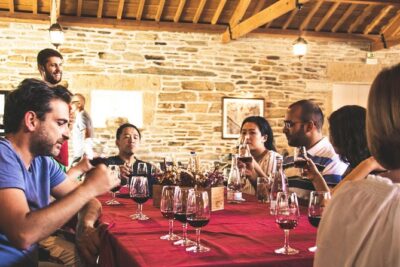
Complete Douro Valley Wine Tour with Lunch, Wine Tastings and River Cruise
Read our review →
Wine Tour with Lunch, Tastings & River Cruise
Read our review →
Historical Sites, Wine Experience, Lunch & Cruise
Read our review →
Authentic Small Group Douro Wine Tour with Lunch & River Cruise
Read our review →
Cálem Cellar Tour, Interactive Museum & Wine Tasting
Read our review →
Douro Valley Small-Group Tour with Wine Tasting, Lunch and Boat
Read our review →Browse the lists this tour appears in