
Reviewed · BRAGA DAY TRIPS
Private Tour to Guimarães and Braga, two incredible cities
This private day links Guimarães and Braga, so you get medieval streets, early Portuguese roots, and the UNESCO Bom Jesus sanctuary in one stretch. I like how it feels truly tailored, with a guide/driver who can adjust what you focus on, and I like the smooth luxury transport with Wi-Fi and bottled water. One consideration: several key entries are optional or extra, including the Dukes of Braganza palace and cathedral sections.
Starting at 8:00 am from Praça da Liberdade, you can also be picked up from many Porto and Gaia downtown hotels or B&Bs. The format stays private, meaning it’s only your group, so you can set a comfortable pace.
Most stops are short and scenic, but you’ll still be walking on old-stone surfaces, so sturdy shoes help. And since the itinerary depends on the outdoors viewpoint and mountain area, the experience requires good weather.
Key highlights to plan around
- Private, tailor-made route with a licensed guide/driver who can shift priorities to your interests
- Guimarães highlights that explain Portuguese origins, from monastery-linked sites to the castle viewpoint
- Braga’s historic core, including medieval squares, arches, and the Santa Barbara Garden wing
- Bom Jesus on Penha mountain area, reached with the option of the funicular
- Comfort focused transport with Wi-Fi, bottled water, and refreshments
- Optional ticket costs for major museums and church areas, plus lunch if you choose it
Why Guimarães and Braga work so well together
Guimarães and Braga sit in the same northern Portugal universe, but they each feel different. Guimarães leans medieval and foundational, like the place where Portuguese identity starts getting its story told in stone. Braga feels more layered, a city where Romanesque, Gothic, and later styles overlap, and where you end the day with a dramatic mountain devotion site.
What I really like about this tour format is that it is not just a list of monuments. You are guided through meaning: why a church was founded, what a battle memorial points to, and why certain streets connect specific landmarks. That’s the difference between snapping photos and actually understanding what you’re looking at.
The tour is designed to keep the day moving without feeling like a stopwatch sprint. Most stops are around 10 to 20 minutes, with a couple longer museum-style breaks you can opt into. If you want a day that balances walking, views, and explanation, this is a solid fit.
More Braga and Bom Jesus trips:
- From Porto: Braga and Guimarães Full-Day Trip
★ 4.6 · 3,951 reviews - Best of Braga and Guimaraes Day Trip from Porto
★ 4.5 · 2,552 reviews - Porto: Guimarães & Braga Tour with Entry Tickets and Lunch
★ 4.8 · 602 reviews
The 8:00 am start from Porto, plus pickup that saves time
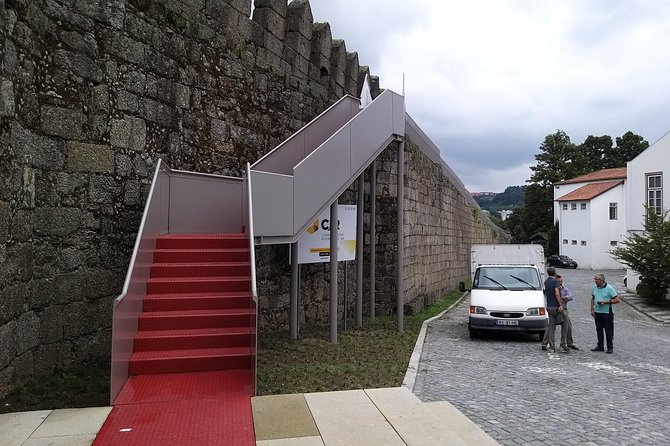
The day begins at 8:00 am, with Praça da Liberdade 19 in Porto as the meeting point. If you’re staying centrally, you can be picked up from many hotels and B&Bs in both Porto and Gaia downtown areas, then you head out together in the vehicle.
That early departure matters for two reasons. First, it gives you better light and often calmer streets in historic centers. Second, it reduces the chance that you get stuck fighting traffic later in the day when you’re trying to reach the mountain area around Braga.
Since the tour ends back at the meeting point, you’re not dealing with the hassle of transfers at night. You can plan dinner in Porto without a second ride scramble.
Luxury transport details that actually make a difference
This is not the kind of tour where you feel squeezed into a tiny van for hours. The vehicles are described as executive and designed for maximum comfort, with Wi-Fi, bottled water, and refreshments included. There’s also mention of personal accident and liability insurance.
Those are not just marketing points. Wi-Fi helps when you want to quickly check opening times, translate a sign, or map your next stop. Water and refreshments keep you from getting cranky at the exact moment you’d otherwise blame the day. It also makes the long sit between cities feel less dull.
If you’re the kind of traveler who likes a smooth transition between towns, this transport setup supports that. If you’re travel-light and prefer to keep things minimal, it still beats the usual “bring your own everything” approach.
Guimarães stop-by-stop: churches, squares, and medieval street links
Your Guimarães half starts with sights tied to the older spiritual and political heart of the town.
More Guimarães day trips:
- From Porto: Braga & Guimarães with Lunch Small Group Tour
★ 4.8 · 545 reviews - Braga & Guimarães Small Group Tour: Lunch & All Tickets Included
★ 5.0 · 517 reviews - From Porto: Viana do Castelo, Braga and Guimarães Day Tour
★ 4.7 · 475 reviews - Porto: Guimaraes & Braga Small Group Tour with Lunch and Tickets
★ 5.0 · 408 reviews
Igreja de Nossa Senhora da Oliveira: the pre-Romanesque roots
Stop 1 is Igreja de Nossa Senhora da Oliveira. The site’s occupation goes back before the Romanesque period, with roots connected to a pre-Romanesque monastery founded by Mumadona Dias in 949. The church is classified as a National Monument.
What to pay attention to: how this is not just a pretty church stop. It is a timeline marker. When a place is linked to the mid-900s, you’re looking at centuries of Portuguese story layered into one location.
Admission is listed as free, so it’s a low-cost, high-meaning start.
Largo da Oliveira: Old Town Hall in a living heritage building
Stop 2 is Largo da Oliveira, with the Antigos Paços do Concelho, or Old Town Hall. Work began in the 14th century, continuing toward the mid-15th century. Today, the building houses a delegation related to cultural and landscape heritage within the regional tourism structure.
This stop is worth your attention if you like seeing how historic civic buildings keep being useful. Not every monument stays alive, but this one keeps a public function.
Padrao do Salado: a Gothic memorial tied to a battle
Stop 3 is the Padrao do Salado, a Gothic porch built in the 14th century as a memorial of the Salado Battle.
A memorial like this can be easy to walk past. The key is to look at how it signals power and memory in stone. It’s one of those “small structure, big story” stops.
Admission is free.
Praca de S. Tiago: an ancient square with medieval features
Stop 4 is Praca de S. Tiago, an old square that still keeps medieval character.
Squares are where you get your bearings. In Guimarães, it’s also where the day’s pace naturally resets. You’re not just collecting buildings, you’re returning to the town’s street rhythm.
Free entry.
Rua de Santa Maria: the medieval street that stitches landmarks together
Stop 5 is Rua de Santa Maria, often described as the most medieval street in Guimarães. The street is tied to early urban development that connected the monastery (now converted into the Museum Alberto Sampaio) with the castle.
This is one of the most “walkable history” moments on the route. If you enjoy mapping place relationships in your mind, you’ll love this segment.
It’s also listed as free.
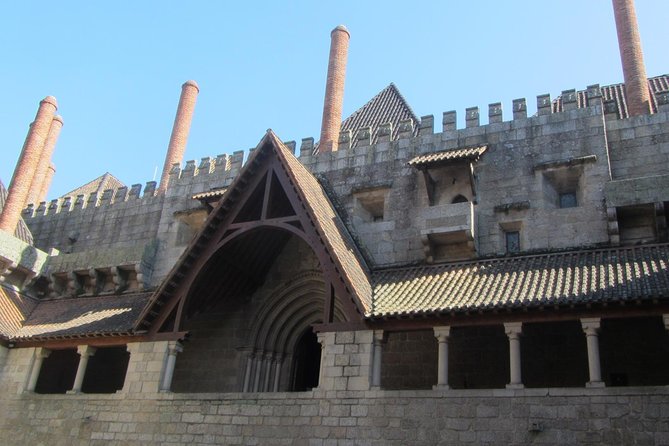
Paco dos Duques de Braganca: palace museum (optional add-on)
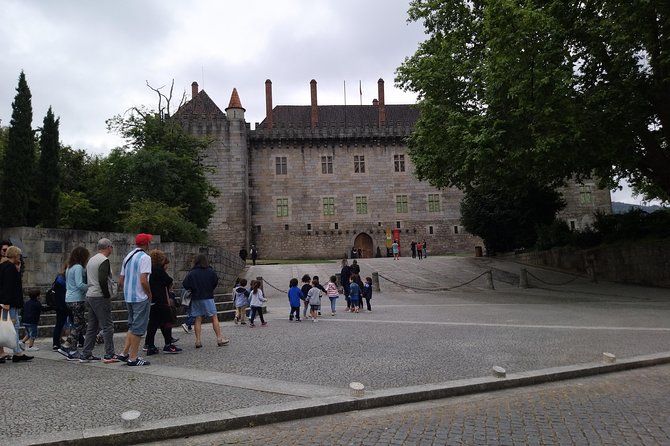
Stop 6 is Paco dos Duques de Braganca, a 15th-century palace. It was once the residence of the Dukes of Braganza and is now a museum showing regional history. This entry is optional, with a listed optional price of €6 per person in the day plan, while the add-on pricing section also lists a €5 per person option for the palace.
Practical advice: if you like museum time and want to go beyond exterior architecture, this is the main paid-feeling break in Guimarães. If you prefer outdoor wandering and views, you can skip it and keep the day lighter.
Romanesque church and castle viewpoints: the Guimarães “payoff” zone
After the medieval core, you shift toward the landmark structures that connect to the town’s identity.
Igreja de Sao Miguel do Castelo: small church, big importance
Stop 7 is Igreja de Sao Miguel do Castelo, a 12th-century Romanesque church. Even though it is small, it’s considered important because it’s linked to the early period of Portuguese nationality. It is classified as a National Monument.
Admission is free. Even if you are not a die-hard church architecture person, this is a meaningful pause.
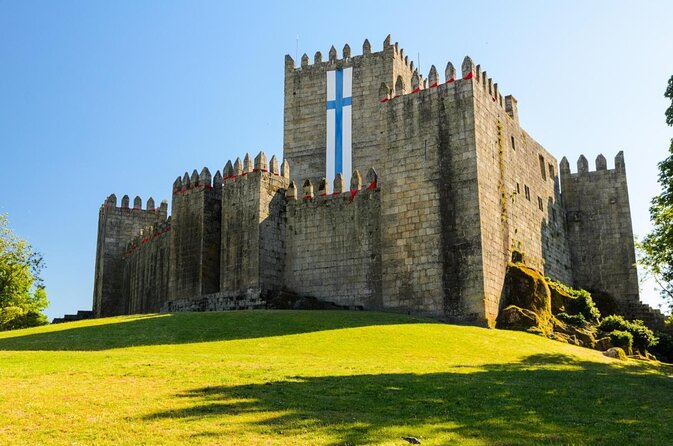
Guimarães Castle: medieval walls and strong views (optional add-on)
Stop 8 is Guimarães Castle, described as a medieval castle built in the 10th century and connected to the Portuguese nation’s birthplace story. The viewpoint over the city is a highlight.
The castle is optional, listed at €2 per person.
If you take one paid optional thing in Guimarães, this is a good candidate. You’ll likely feel the value in the views and the sense of standing inside the historic layout.
Braga old town: squares, civic buildings, and the Santa Barbara Garden wing
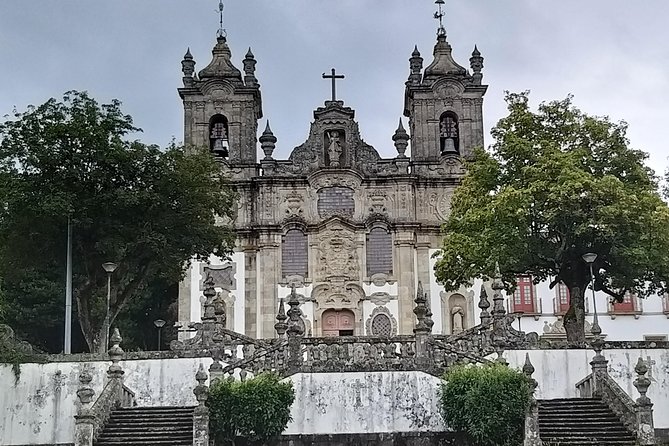
Once you cross into Braga, the vibe becomes more layered, more ecclesiastical, and more “city-center stroll.”
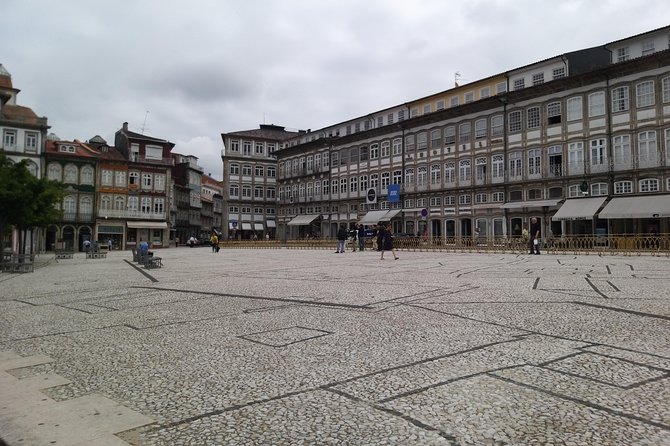
Largo do Toural and Arco da Porta Nova: the old heart and the New Door
Stop 9 is Largo do Toural, considered the heart of Braga today. Historically, it sat outside the main village door in the 17th century, serving as a cattle fair and a product market area.
Stop 10 is Arco da Porta Nova, the New Door. The arch you see today took its configuration in the 18th century, sitting at the top of Souto Street, the commerce artery.
These two stops work together. Toural helps you feel the town’s social center, while Porta Nova shows how gateways guide the flow between town and trade.
Both are listed as free.
Largo do Paco: long construction, now University and public library
Stop 11 is Largo do Paco, where a building construction stretch is given from the 14th to the 20th centuries. Today, it houses the rectory of the University of Minho and a public library.
This is a “look at how history stays active” stop. You get a sense of the city’s long timeline, not just one era.
Free.
Santa Barbara Garden: a preserved medieval palace wing
Stop 12 is Santa Barbara Garden, facing the garden with a preserved medieval wing of the archiepiscopal palace, dated to the 14th and 15th centuries.
This is one of those stops where you slow down without forcing it. Gardens and palace wings are a change of pace after heavy church and castle context.
Free entry.
Torre de Menagem and the cathedral area: choose how deep you go
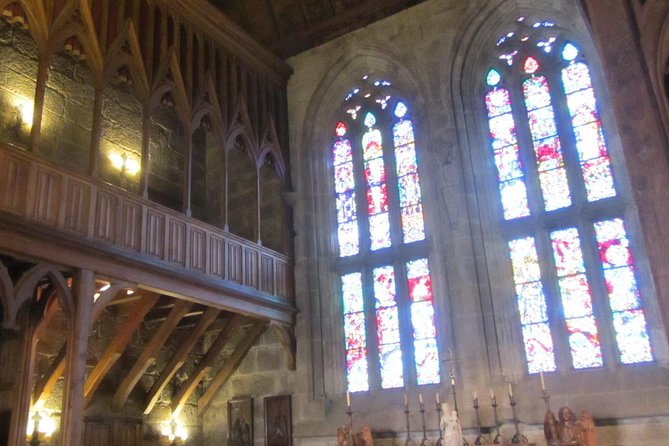
Braga’s medieval defense story and its cathedral grandeur both show up here. Your day can stay balanced if you choose only what matches your interests.
Braga Tower (Torre de Menagem): the remaining fortress core
Stop 13 is Braga Tower, or Torre de Menagem. What remains is the donjon and some spread pieces, tied to a 14th-century construction campaign when military building intensified across the region.
This stop is marked as optional with admission not included, but no specific price is listed in the day details you provided.
If you like fortifications and want a defensive perspective, it’s worth adding. If you’d rather spend time inside the cathedral complex, you can skip this and keep your schedule smooth.
Santa Maria de Braga Cathedral: major styles in one landmark (optional)
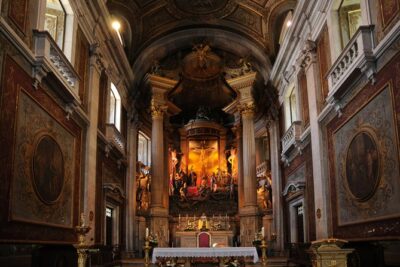
Stop 14 is Santa Maria de Braga Cathedral, a historic landmark dating back to the 12th century. The design includes a mix of Gothic, Baroque, and Romanesque styles. The main cathedral entry is listed as optional, and the day plan notes €4 per person for admission.
In the add-on pricing list, you also have separate ticket options for the cathedral experience areas:
- Braga Cathedral Museum treasury: €3 per person
- Chapels and High Choir: €2 per person
- Braga Cathedral: €3 per person
So you can go simple or choose specific sections, depending on your interests.
Practical advice: if church architecture and artwork are your thing, pick the cathedral areas that match what you want to see. If you’re more about exterior architecture and quick interior stops, choose one cathedral ticket level and stop there.
A quick note on timing
This section is one of the reasons the day is scheduled around 8 to 10 hours. Cathedral areas can stretch if you linger. The good part is you have a private setup, so you can manage pace without turning it into a forced speedrun.
Bom Jesus on Penha mountain: funicular option and UNESCO sanctuary
Your final big set piece is Bom Jesus do Monte, which sits on Penha mountain and is UNESCO World Cultural Heritage (since 08 July 2019), built through multiple architectural interventions. The day also includes a viewpoint element over the area of Guimarães and the Penha mountain region.
Bom Jesus funicular: optional lift with a short ride
Stop 15 is Bom Jesus Funicular (the Lift of Bom Jesus). It’s described as a funicular with two booths that move on parallel tracks, counterbalancing one another along a course of 274 meters. Each booth can hold up to 39 people including the driver. It is noted as the first funicular built in the Iberian Peninsula, in a 19th-century design.
This is optional, listed at €2 per person, and ticket admission is not included.
If you dislike long uphill walks, the funicular can be a big comfort win. If you enjoy walking and views and want to save money on tickets, you can skip it and still enjoy the sanctuary area.
Bom Jesus do Monte sanctuary: multi-century devotion complex (free)
Stop 16 is Bom Jesus do Monte itself. You get the sanctuary as a major spiritual and architectural climax, with a history of devotion believed to begin in the 14th century, and with the current sanctuary construction starting in the 18th century and lasting into the 19th.
This sanctuary stop is listed as free.
The value here is in the scale and the story of development. Even if you do not consider yourself a religious traveler, the complex is still an architectural journey through time.
Optional ticket costs and lunch: what you should budget
This tour is priced at $198.25 per person, and most of the day is built around free stops with a few optional paid entrances.
Here’s what you’ll want to plan for, based on the add-ons listed:
- Palace of the Dukes of Braganza (museum): optional, listed at €6 per person, and the add-on list also shows €5 per person for this palace museum
- Guimarães Castle: optional, €2 per person
- Torre de Menagem (Braga Tower): optional, admission not included (price not shown in the details provided)
- Braga Cathedral: optional, €4 per person noted in the day plan
- Separate cathedral-related tickets:
- Treasury of Braga Cathedral Museum: €3 per person
- Chapels and High Choir: €2 per person
- Braga Cathedral: €3 per person
- Bom Jesus Funicular: optional, €2 per person
Lunch is not included by default. A typical lunch package is offered at €30 per person, described as starter, main course, drink, dessert, and coffee, with wines included.
Gratuities are not included, and they’re left to individual discretion.
Budget thinking: if you add only the two classic paid choices, the castle and the funicular, you’ll keep costs under control while still getting the big-ticket experiences. If you add palace and cathedral areas too, the total can rise, but you’re also stacking in museums and interior art.
What the $198.25 private price buys you, beyond convenience
For many people, the decision is simple: should I pay extra for private comfort? With this tour, the value is not only the car.
You get:
- Licensed guide/driver time, which matters when you want explanations at each stop
- A private group, so your day follows your pace and interests rather than someone else’s
- Luxury vehicle comfort with Wi-Fi, water, and refreshments
- Insurance included in the package
Also, the tour is described as being booked about 65 days in advance on average. That’s a signal you should plan ahead if you want a specific date and a private schedule.
If you are traveling with family, someone who needs fewer surprises, or you just hate rushing, private often pays off emotionally. Your feet will still do the work, but you get fewer timing stresses.
Who this private tour suits best
This is a strong pick if you:
- Want a full-day historic circuit without the hassle of trains and local transfers
- Enjoy a guided story rather than a self-guided checklist
- Care about early national origins and the church and fortress layers in both cities
- Prefer flexibility, especially when you want to linger, step into one optional museum, or skip another
It’s also a good choice if you want a friendly, English-speaking day. The tour is offered in English.
Most travelers can participate, and service animals are allowed. Still, the number of medieval street surfaces means you should plan for walking, even if it’s in short bursts.
Should you book this Guimarães and Braga private tour?
Book it if you want a one-day hit of medieval Portugal that stays guided, comfortable, and adjustable. The route makes sense: start in Guimarães with foundational monuments, shift into Braga’s squares, gardens, and cathedral zone, then finish with Bom Jesus on Penha mountain.
Skip or rethink if you know you only want one or two paid entries and you hate ticket add-ons. You can still enjoy plenty with free stops, but the best sights in both cities have optional ticket layers.
My practical call: if you’re spending more than one day in the Porto area and you want a high-value day trip with less stress, this is a very reasonable way to do Guimarães and Braga in one clean, private sweep.
FAQ
How long is the Guimarães and Braga private tour?
It runs about 8 to 10 hours.
What is the starting time and meeting point in Porto?
The tour starts at 8:00 am and meets at Praça da Liberdade 19, 4000-322 Porto, Portugal.
Do you offer pickup from hotels or B&Bs?
Yes. Pickup is offered for hotels and B&Bs in Porto and Gaia downtown areas, and the tour ends back at the meeting point.
Is the tour private?
Yes. It is a private tour/activity, and only your group participates.
What is included in the price?
Transport in luxury vehicles is included, with Wi-Fi, bottled water, and refreshments. The tour also includes personal accident and liability insurance. The tour is guided by a licensed guide/driver.
What about lunch?
Lunch is not included. A typical lunch package is offered for €30 per person (starter, main course, drink, dessert, and coffee with wines).
Which major sights require extra tickets?
Some add-ons are optional and not included, including the Palace of the Dukes of Braganza, Guimarães Castle, parts of the Braga Cathedral area, and the Bom Jesus funicular. Exact ticket prices are listed in the tour details you provided.
Is free cancellation available?
Yes. You can cancel up to 24 hours in advance for a full refund. The experience requires good weather, and if it’s canceled due to poor weather, you’ll be offered a different date or a full refund.
Recently reviewed around Porto
- Porto Luggage Storage★ 4.0 · 9 reviews
- Private Transfer Porto-Lisbon with 2 (two) Visits on the Way★ 5.0 · 31 reviews
- Half-Day Walking Tour Tasting Local Food in Porto★ 5.0 · 78 reviews
- Porto Old Jewish Quarters Half-Day Walking Tour★ 4.5 · 21 reviews
- Porto Private Walking Tour with a Local★ 5.0 · 6 reviews
- Porto Highlights Small-Group Walking Tour★ 4.5 · 20 reviews
- Porto Highlights: The best of Porto City Walking Tour★ 4.5 · 34 reviews
- Porto Legends, the Underground Experience★ 4.0 · 73 reviews
Braga Day Trips, compared.
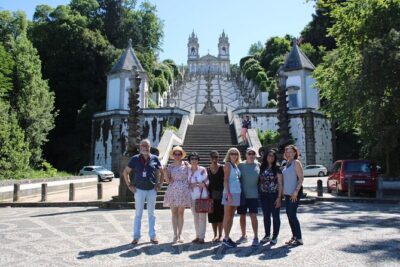
Best of Braga and Guimaraes Day Trip from Porto
Read our review →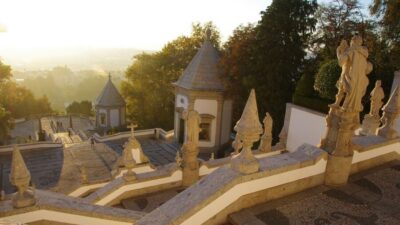
Guimarães & Braga Tour with Entry Tickets and Lunch
Read our review →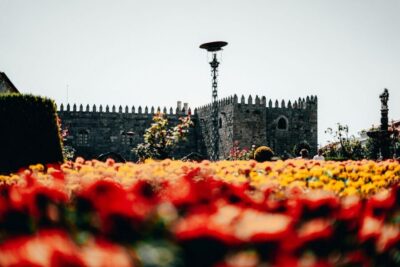
Braga & Guimarães Small Group Tour: Lunch & All Tickets Included
Read our review →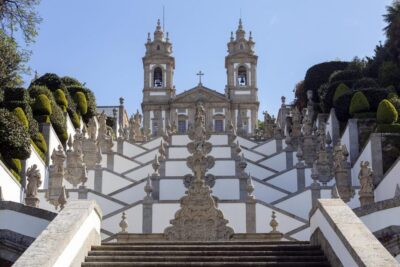
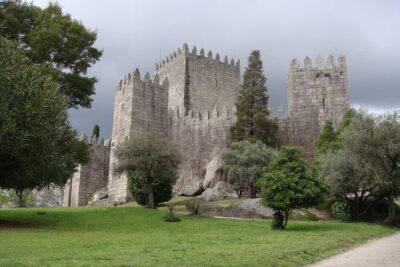
Guimaraes & Braga Small Group Tour with Lunch and Tickets
Read our review →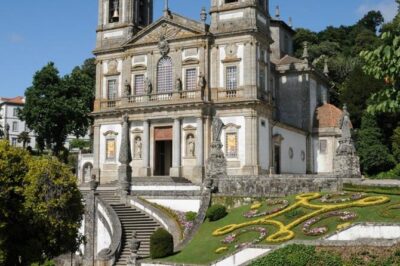
Browse the lists this tour appears in