
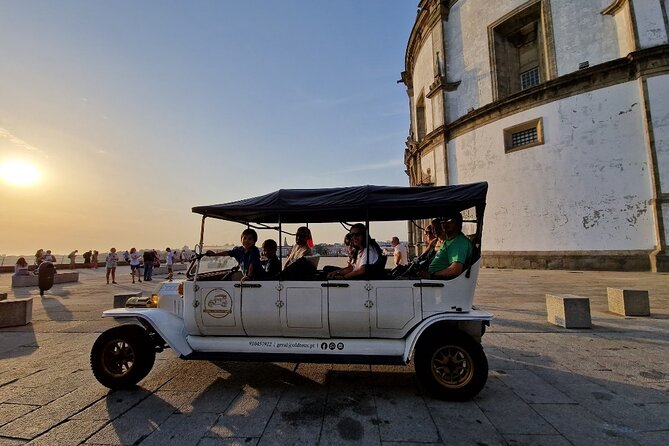
Reviewed · HISTORICAL TOURS
Porto:Private Tour of the Historic City in a Classic Ford T
Porto is the kind of city that demands two things from your plan: good viewpoints and a way to dodge hills. This private tour puts you in a classic Ford T style vehicle and keeps the pace relaxed, so you can see a lot without turning your calves into a souvenir. I particularly like that the route mixes major landmarks with quieter angles, and that pickup can meet you right in the historic center.
Two other things I love: the stops are timed so you get time to look, not just point. And the guides share stories that make the buildings feel less like postcards and more like real neighborhoods. One possible drawback to consider is that car access can be limited in central Porto due to city restrictions, so your route may focus on the places the vehicle is allowed to reach rather than driving deep into the busiest core.
Quick highlights that make this tour worth your time
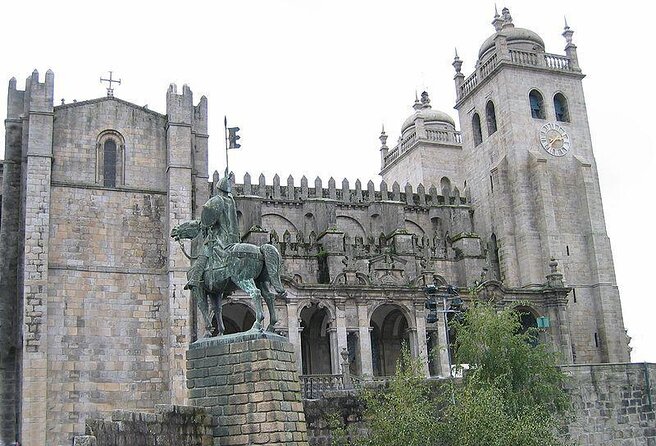
- Classic Ford T style ride that can get you to viewpoints other tours struggle with
- Two 10-minute miradouro breaks for photos and skyline viewing
- Old Porto plus Gaia viewpoints for the best river-and-bridge angles
- Iconic stops without long lines since many stops are exterior or viewpoint focused
- Guides who work for your group (private booking, max 7 people per car)
A vintage Ford T ride that saves your legs in Porto
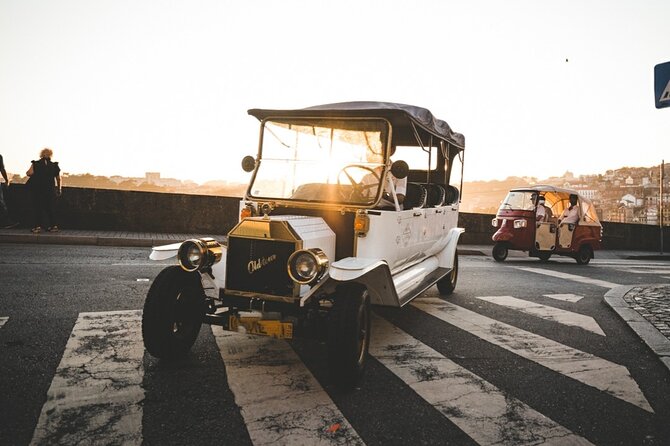
Porto is gorgeous, but it is also steep. Streets climb, stairs appear, and you can burn half a day doing what is essentially getting from one viewpoint to the next. The smart move is to use a car tour as your orientation tool, then come back later on foot for anything that really hooks you.
This experience is built around that idea. You get a private tour, with a car that feels like a time machine, not a bus seat. And because it is one vehicle for your group (up to 7 people), your guide can adjust in real time. That matters in Porto, where a 5-minute detour can turn into a great photo angle.
The Ford T style touch is more than decoration. It changes the vibe. People slow down, you talk more, and the city feels less like a checklist. Even the practical stuff, like pickup and drop-off in the historic center, makes the first day in Porto feel smoother.
A few other ways to explore Porto
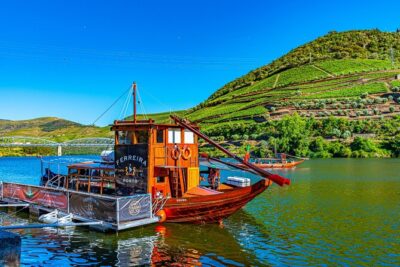
- Douro Valley: Historical Sites, Wine Experience, Lunch & Cruise
★ 5.0 · 5,133 reviews - Porto: Historic City Center Walking Tour
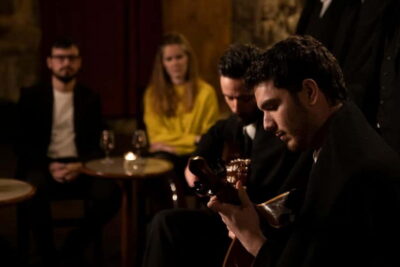
★ 4.7 · 1,172 reviews - Porto: An Intimate Fado Show in a Historical Tavern
★ 4.8 · 1,093 reviews
How the 1-hour route works, from culture squares to river bridges
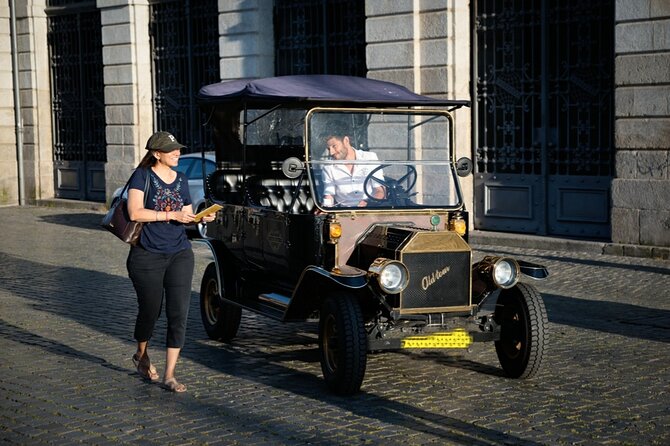
The tour is about 1 hour on average, with time built in for short viewpoint stops. You also get pickup offered anywhere in the historic center or at the mentioned points, and the guides are identified as Oldtour. The car itself is described as black, white, or dark green, which makes meeting it fairly painless.
Think of the itinerary like a quick loop:
1) Start with central Porto culture and historic squares
2) Shift to medieval defenses and river-side fragments
3) Cross into Gaia for the big skyline and bridge views
4) Finish in the historic cluster around towers, churches, and a final miradouro
Because the time is short, you are not meant to go museum-deep at every stop. Instead, you get the look, the context, and the best angles. If you want to add interior visits later, plan on buying tickets separately, since most additional monument or museum entries are not included.
São João Theatre: neoclassical Porto on your easy wheels
Your first cultural hit is São João Theatre. It is one of Porto’s major arts landmarks, and it is not subtle. Opened in 1898, it shows off a neoclassical style, plus an interior known for frescoes and a dramatic, polished look that catches the light in the main hall.
Why this stop works in a short tour:
- It gives you a sense of Porto’s identity beyond food and river cruises.
- You see how the city invests in public culture, not just commerce.
- It is located in the heart of Porto, so it anchors the tour early.
This is also a good place to ask your guide what to photograph first. A good guide will point you toward the angle that shows the architecture clearly without you getting stuck in a crowd.
Praça da Batalha: the historic square that also acts like a hub

Next up is Praça da Batalha, one of Porto’s most emblematic squares. The name connects to battles and local festivities over time, and the square sits in the historic center with major landmarks nearby, including Teatro Nacional São João and the Igreja da Santíssima Trindade.
What I like about this stop for first-timers:
- It is lively, with cafes and shops nearby.
- It is a practical starting point for walking off the tour later.
- It links you to neighborhood streets like Rua de Santa Catarina and to São Bento Station area, depending on where you keep exploring.
Even if you do not stop for coffee, the square gives you something valuable for later: a mental map. Porto is easier when you know where the big landmarks connect.
Another way to spend your time in Porto:
- The Unvanquished Tour in Porto City Center
★ 5.0 · 26,497 reviews - From Porto: Douro Valley w/ Boat Tour, Wine Tasting & Lunch
★ 4.7 · 19,061 reviews - Complete Douro Valley Wine Tour with Lunch, Wine Tastings and River Cruise
★ 5.0 · 12,920 reviews - Porto: Live Fado Show with Glass of Port Wine
★ 4.8 · 6,498 reviews
Fernandina Wall and Porta da Ribeira: medieval defenses plus a river payoff
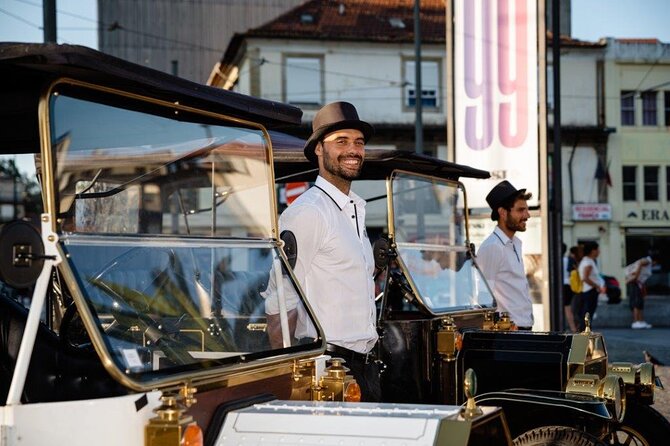
Then you get into Porto’s older protective layers with the Fernandina Wall, built between the 14th and 15th centuries during King Ferdinand’s reign. This was the city’s medieval security system, roughly 3 kilometers long, with towers, gates, and fortifications meant to defend Porto from threats.
The best part here is not only the history. It is that you get both:
- a sense of how the city guarded itself, and
- a strong view payoff, since remnants can show the Douro River and the city.
A named highlight is Porta da Ribeira, which lets you appreciate the wall’s grandeur in a spot tied to the river area. If you have ever wondered why Porto’s waterfront feels layered, this is one answer.
Serra do Pilar Monastery in Vila Nova de Gaia: circular church views that feel unreal
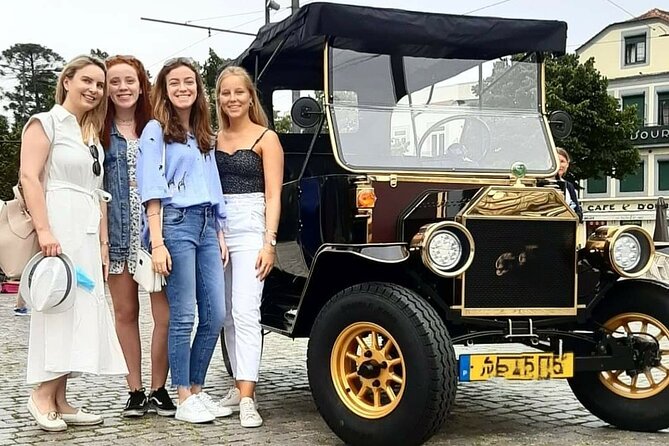
Crossing to Gaia is where the tour starts earning its keep. The Mosteiro da Serra do Pilar is a UNESCO World Heritage site and a standout because of the circular-plan church. It is also a 16th-century Mannerist architecture example, and it is perched high enough to deliver dramatic river views over Porto.
This stop is set for about 15 minutes, and the data says the admission ticket is free for that portion. Use the time like this:
- Pause for the skyline first.
- Then look at the church form and the way the viewpoint frames Porto.
- If your guide points out details in the cloister or church layout, take notes mentally, then come back later if you want a deeper visit.
And yes, this is one of those stops you will feel immediately when you return to street level. The monastery view explains a lot about Porto’s layout.
Luís I Bridge and the Douro: Eiffel-designed metal with big-city drama
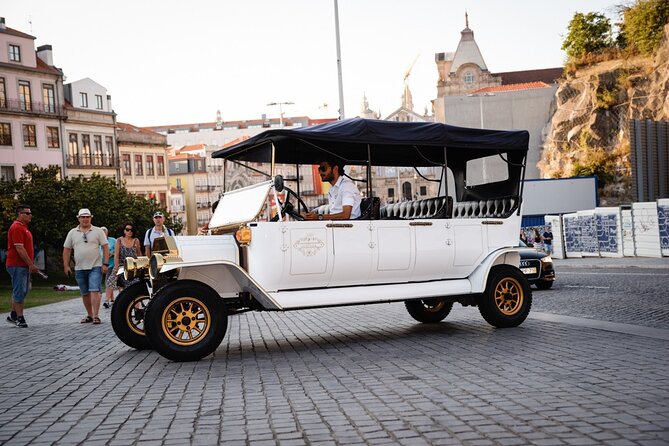
You cannot do Porto without talking about bridges. The Luís I Bridge is one of the most iconic, opened in 1886 and designed by engineer Gustave Eiffel. It links Porto and Gaia, and its two levels handle vehicle and pedestrian traffic.
In a short tour, the value of the bridge stop is not walking the whole thing. It is getting:
- the right perspective over the Douro, and
- the sense of how the city’s geography funnels movement and views
This is one of those places where Porto looks different depending on where you stand. A good guide will choose a spot that shows the bridge in context with the riverfront buildings.
Jardim do Morro: a sunset-prone viewpoint without the stress
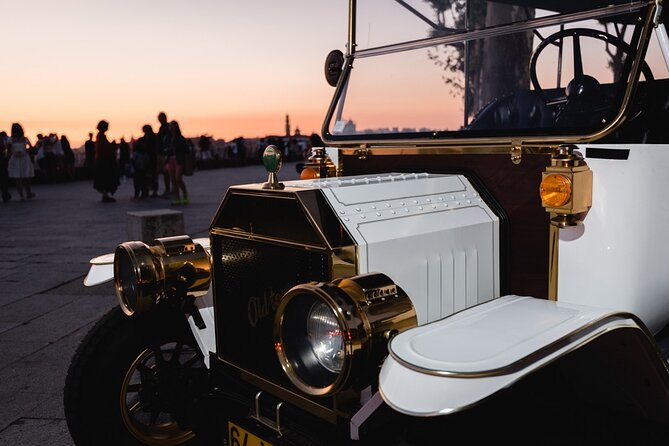
Between major landmarks, you are given a more relaxed break at Jardim do Morro. It is a starting point for exploring Gaia and gives access toward the Luís I Bridge and nearby attractions.
The practical advantage is simple: it is a place to breathe. And the timing can matter, especially in the evening when the garden becomes a good spot for sunset over Porto’s skyline. Even if your tour is not perfectly timed for golden hour, the garden stop helps you reset before the final stretches.
Maria Pia Bridge: industrial engineering you can actually see and feel
Next comes the Maria Pia Bridge, inaugurated in 1877. It is another Eiffel design and one of the earlier metal plate bridge examples, with a height of about 60 meters and a length around 350 meters.
Even if you are not an engineering nerd, you will appreciate what the guide makes you notice:
- the metal structure as a clear visual language, and
- the view over the Douro that shows why this bridge mattered for railway connection.
This stop gives Porto another layer. Not only is it a city of churches and squares. It is also a city that moved people and goods in big, bold ways.
Clérigos Tower and the Baroque church moments that slow you down
Back on the Porto side, the tour calls out the Clérigos Tower, sharing architecture and historical significance through your guide. The tower is one of those landmarks you can spot from multiple points, so seeing it via a viewpoint route makes your later self-guided exploring much easier.
You also get a church stop described as having a Baroque façade and a richly decorated interior with tiles. Your guide covers the history of the religious order and why the site matters. The key thing here is that this portion is about context, not a long guided lecture.
Then you visit the Cathedral area, where the focus is on Gothic and Romanesque architecture, plus the possible inclusion of cloisters. If the tour timing lines up with your schedule, you may get a chance to see those internal spaces. If not, you still get the big idea of how old Porto worship and power co-existed in the same footprint.
Miradouro da Vitória: the bridges-and-river finale
The tour ends with a payoff viewpoint at Miradouro da Vitória, where you can enjoy stunning views of the Douro River and Porto. This is where the bridges and colorful riverside buildings tend to look best, because the angle gives you depth and scale, not just a flat postcard view.
Miradouros are why Porto works so well for a short tour. You are not hunting for the best corner. Your guide is doing that math for you. And once you have this viewpoint in your head, returning later for dinner or a night walk makes more sense.
Price and value: is it worth $47.18 per person?
At $47.18 per person for about an hour, this is not a budget-only option. But it is also not overpriced in a city where taxis add up fast and where most quality sightseeing requires either walking uphill or hiring a guide for a longer block of time.
Here is where the value comes from:
- Private format with a car for your group, max 7 people per car
- Pickup and drop-off within the historic center area
- A route built around viewpoints, which are hard to assemble perfectly on your own in limited time
- A guide who can save you time by steering you to spots you might not find quickly
A detail that boosts value is the inclusion of 2 paragens de 10 minutos em miradouros. That is not “drive-by sightseeing.” You get actual look-time.
Also check what you do not pay for: tickets for other activities, museum and monument entries. In practice, that means you should decide ahead of time if you want a stop that is mainly exterior and viewpoint-focused, or if you want interior time. The tour includes a free short stop at Serra do Pilar for about 15 minutes, but other entries are not automatically covered.
Vehicle access limits in central Porto: the one thing to confirm
There is a real consideration here. City restrictions can limit whether classic cars and tuk-tuks can drive in Porto’s city center. One reported issue states that as of Oct 1, 2024 those vehicles are no longer allowed in downtown Porto, and the itinerary may therefore stay on the areas the vehicle can legally access. The operator response also says the itinerary describes what you will see and pass by before purchase.
So, what should you do?
- If entering specific parts of downtown is a must for you, message ahead and ask whether your exact dates allow full access.
- Treat the tour as a best-effort routing tool built around viewpoints and permitted streets, not as a guarantee of driving into every historic lane.
This matters because the tour still delivers the major river bridge angles, tower views, and miradouros, but the degree of driving deeper into the historic core can vary.
Who this Classic Ford T style tour is best for
This tour is ideal if you want:
- a first-day orientation to Porto
- less walking on steep streets
- a guided mix of big sights and lesser-known angles
- a relaxed pace with short viewpoint stops
It also suits couples and small families who want a shared experience without splitting up. If you have limited mobility, it can be easier than a full walking tour, and the operator lists service animals allowed and “near public transportation.”
If you are the type who wants to spend hours in museums, this will feel too short. You are buying transportation plus viewpoints plus storytelling, not a deep dive into interiors at every stop.
Book it, if you want a smart shortcut to Porto’s best angles
My take: book this tour if you want to see Porto’s highlights with minimal leg work and maximum viewpoint payoff. The best-rated part of the experience is the combination of fun transportation and guides who make the city click fast. Many people highlight that their guides were funny and informative, took great care of their group, and helped them with photo stops. That’s exactly what you want from a 1-hour plan.
I would not book it if your main goal is lengthy interior visits or if you absolutely require the car to enter the deepest downtown streets. In that case, confirm vehicle access before you pay, or plan on adding a separate walking block after the tour.
If you do book, show up with one goal in mind, skyline or architecture. Then use your last 10 minutes at the miradouro to decide what you will come back for tonight or tomorrow.
FAQ
How long is the Porto private tour in the Classic Ford T?
The tour is listed as about 1 hour (approx.).
Is this tour private, and how many people can ride in one car?
Yes, it is private, and the maximum is 7 people per car.
Do you offer pickup in Porto?
Pickup is offered, and the meeting point can be anywhere in the historic center or at one of the mentioned points. The vintage car is described as black, white, or dark green, and guides are identified with the name Oldtour.
What language is the tour offered in?
The tour is offered in English.
Are tickets included for monuments and museums?
Tickets for other activities and museum or monument entries are not included. The Mosteiro da Serra do Pilar stop is listed as 15 minutes with free admission.
Can I cancel for free?
Yes. You can cancel up to 24 hours in advance for a full refund. If you cancel less than 24 hours before the start time, you do not receive a refund.
Recently reviewed around Porto
- Tour Porto: Adventure in Electric Bike Tour★ 4.3 · 11 reviews
- Porto: Tuk tuk Tours with Port Wine Tasting★ 4.5 · 65 reviews
- Tour Porto: Classic Adventure in Electric Tuk Tuk★ 4.7 · 33 reviews
- Tour Porto: Classic Car + A Toast with Port Wine★ 5.0 · 3 reviews
- The Beautiful Story of Porto: Guided Tour with Entry Tickets★ 4.8 · 111 reviews
- From Porto or Aveiro: 516 Arouca Suspended Bridge Tour★ 5.0 · 3 reviews
- Self-Guided Bike to Surf”N”Food Pack★ 4.6 · 13 reviews
- Porto: Guide Boat tour with tasting of 4 Port wines★ 4.9 · 15 reviews
Historical Tours, compared.
Historical Sites, Wine Experience, Lunch & Cruise
Read our review →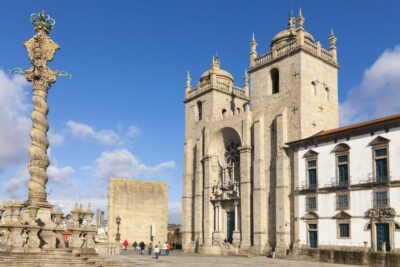
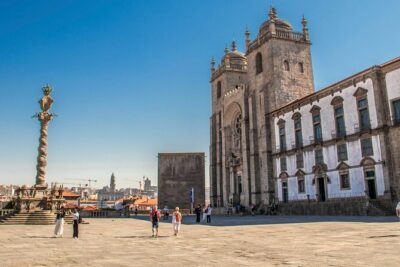
Historic Porto by Private Electric Tuk Tuk to Top Landmarks
Read our review →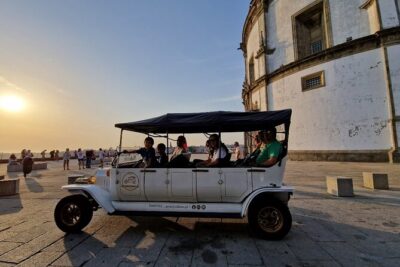
Private Tour of the Historic City in a Classic Ford T
Read our review →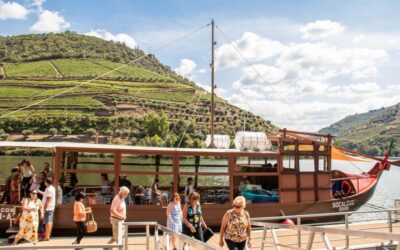
Douro Valley History & Wine Tour with Cruise & Lunch
Read our review →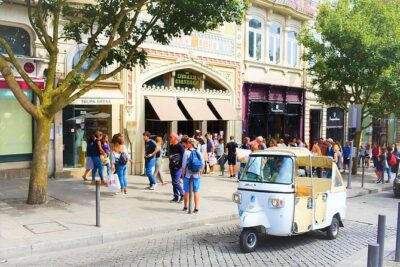
Porto Guided Tour to the Historical Center on a Tuk Tuk
Read our review →Browse the lists this tour appears in