
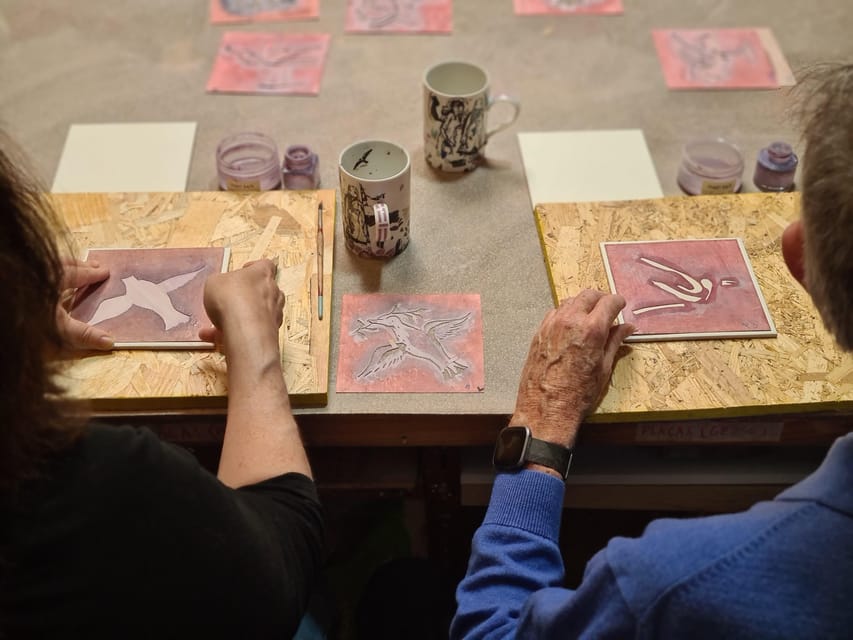
Reviewed · WORKSHOPS
Porto: Tile Painting Workshop with Tea and Port Wine
Porto has a special kind of street art. It hides in plain sight on façades, churches, and everyday homes, all in decorative tilework people call azulejos. This workshop takes that culture and turns it into something you can hold in your hands.
I especially like that you learn the why before you paint. And I really like the take-home payoff: you finish with two tiles, then they’re fired and returned to you the next day in proper packaging. One heads-up, the experience takes a full 2 hours, and you’ll have a 24-hour wait for firing, so it is not a quick souvenir.
Key things to know before you book
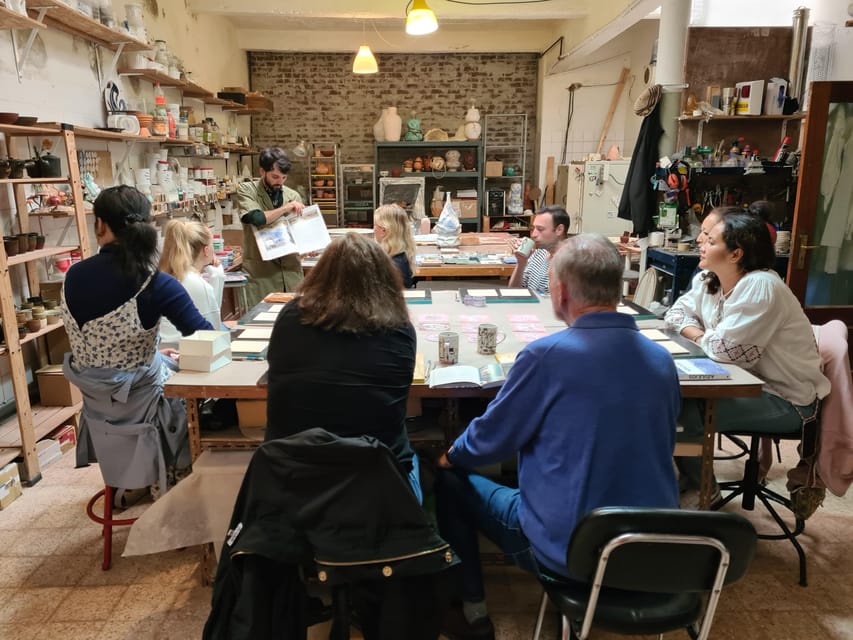
- You paint two tiles with traditional motifs, then get them fired so they come out looking finished.
- Azulejo history is part of the session, not an afterthought, tied to Porto and Portugal’s architecture.
- You get hands-on technique help while you work, including guidance and stencils.
- Small-group format keeps it more like a workshop than a lecture.
- Your tiles are ready in about 24 hours, with pickup around 11h to 12.30 the next morning.
- Tea and biscuits are included, and you can expect a friendly, real studio vibe.
Tile Painting in Porto: Azulejos, But Make It Yours
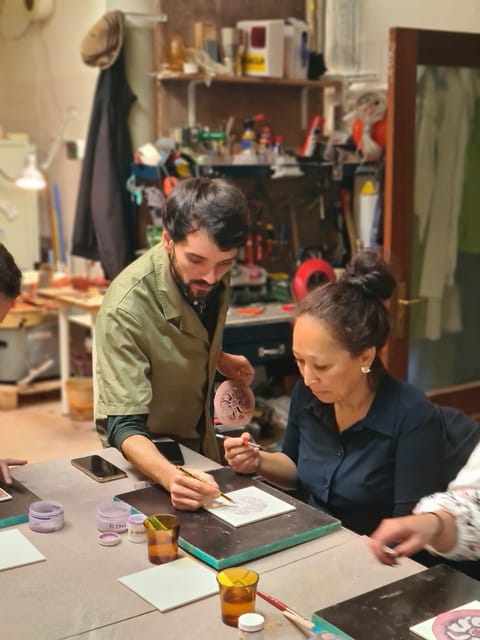
If you want a Porto souvenir that is more than a magnet, this is a great bet. You’re working in the language of the city, not just copying a pretty picture. Portuguese tiles are everywhere here, and once you understand what they were used for, your own motifs start to mean something.
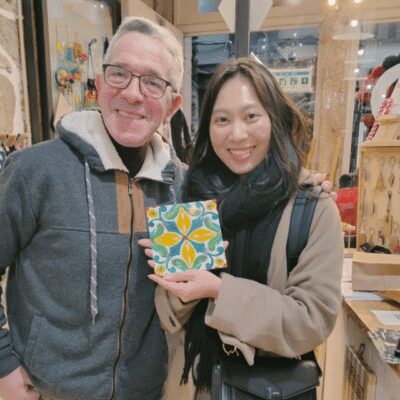
You’ll start with a history introduction that connects tiles to Porto and to monuments and homes across Portugal. Then you’ll paint with guidance so your designs feel grounded in traditional patterns, not random doodles. The best part is that you do not just leave with sketches. You leave with two finished pieces in a style that belongs in Portugal.
More port and wine tastings in Porto:
- From Porto: Douro Valley w/ Boat Tour, Wine Tasting & Lunch
★ 4.7 · 19,061 reviews - Complete Douro Valley Wine Tour with Lunch, Wine Tastings and River Cruise
★ 5.0 · 12,920 reviews - Porto: Live Fado Show with Glass of Port Wine
★ 4.8 · 6,498 reviews
Getting There Near Campanhã: Easy Transit, Tough Parking
The studio is right by the train station area and close to the new Bus station TIC, Terminal Intermodal de Campanhã. There’s also a school and a taxi square beside the station, so you have multiple landmarks for orientation. That matters in Porto, because streets around transit hubs can feel confusing if you only rely on one landmark.
If you’re arriving by transit, you’ll probably find this location convenient. If you’re arriving by car, plan for less convenience. One booking called out that the area is not parking friendly, so I’d treat this as a public-transit stop.
What a 2-Hour Small-Group Workshop Feels Like
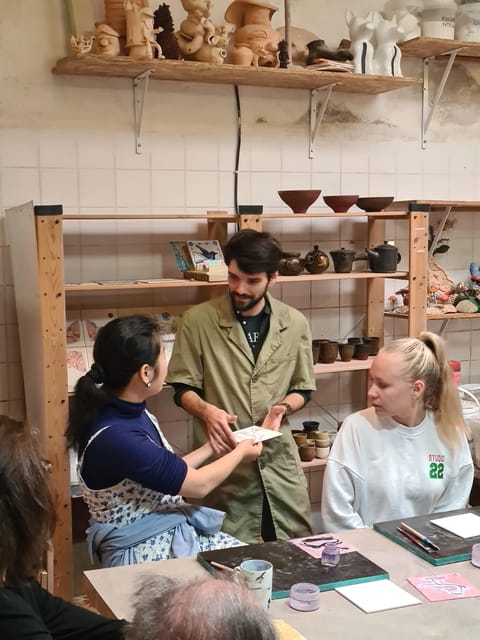
This is a 2-hour class in a small group. That time is long enough to learn the core steps, try your own designs, and still get real help while you paint. It is also short enough that you can fit it into a day without wrecking your schedule.
Language options include English, Japanese, and French. The instructor setup is designed for those groups, and there’s an extra note for Japanese or French speakers: you must indicate your language when booking. If you’re choosing between languages, English is usually the simplest, but the key is making sure the provider knows your preference ahead of time.
What to wear is straightforward: comfortable shoes and comfortable clothes. You’re working with materials at close range, so I’d go with something that can handle splashes and a little mess.
The Tile Story You Hear Before You Paint
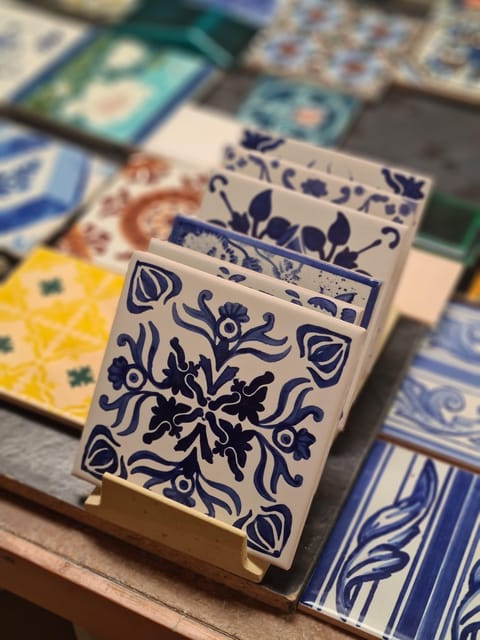
I like workshops where the lesson sticks because it matches what you’re doing. Here, the first chunk is about Portuguese tile history and why azulejos matter in Porto. You’ll hear how tiles became a prominent part of Portuguese visual culture and how they show up across the country in buildings you can recognize immediately.
This is where the session gets more than academic. Tiles are not just decoration. They carried stories, patterns, and style, and they became part of how places identify themselves. Once you connect that to what you see around you, you’ll look at Porto differently for the rest of your trip.
You may also meet the people behind the workshop directly. The experience provider is Francisco Pessegueiro, and at least one guide named David was highlighted as personable and knowledgeable. When the guide answers your questions while you’re painting, it makes the history feel practical, not just background noise.
A few other ways to explore Porto
- Porto: Pastel de Nata Pastry-Making Workshop
★ 4.9 · 1,542 reviews - Porto: Pastel de Nata Cooking Class with Port Wine – Sé
★ 4.8 · 888 reviews - Porto: Small Group Surf Lesson with Transportation
★ 4.9 · 594 reviews - Porto: Tile-Painting Workshop with Porto Wine – Bainharia
★ 4.9 · 526 reviews
Traditional Techniques in Plain Terms, Then You Start Painting
After the intro, you move into the part you came for: creating your own tiles. You’ll learn techniques used in traditional tile production, then apply that know-how to your own work. You’ll be painting two tiles inspired by traditional motifs, and the studio provides the materials you need.
Stencils are part of the process. That is a good thing. Stencils help you focus on color, layout, and brush control instead of spending the whole class trying to draw something from scratch. You still do the work yourself, though. The guidance is there, but the tile design stays yours.
The workshop rhythm usually goes like this:
1) You get a quick explanation of how the process works.
2) You choose or adapt a motif using the stencils and examples.
3) You paint, with an instructor and assistant nearby if you need feedback.
4) You finish your tiles and leave them for the firing step.
That firing step is why your tiles come out looking real rather than like a wet craft project.
Tea, Biscuits, and Creative Feedback While You Work
The included tea and biscuits matter more than you might think. In a workshop like this, a short break keeps your attention on painting, not on logistics. You’ll likely get herbal-style infusion tea, and it helps set a relaxed tone right at the start.
I also like that the studio feels welcoming and safety-minded. One family described the atelier as a warm and hearty, safe space where creativity could flow. For parents or adults who worry about slowing others down, that kind of atmosphere can make the difference between enjoying the class and feeling stressed.
You’ll get feedback while you paint, and it’s not just technical. The guidance can include creative suggestions, like how to place elements, how to refine lines, or how to build up your motif so it looks balanced on a tile.
One practical note: if you’re the type who wants maximum painting time, you might wish for less time spent on the intro portion. A couple of people wanted more brush time and less history and tea time. Still, for most visitors, the intro is the reason the finished tiles feel Porto-authentic.
Firing and Pickup: Your Tiles Are Ready the Next Morning
This is not a take-it-home-wet situation. Your painted tiles need to be fired, and they’re ready in about 24 hours. Pickup happens the next morning around 11h or 12.30.
The studio also provides packaging, so you’re not worrying about breaking a freshly fired souvenir in your bag. That is a big deal. Tile souvenirs have weight and edges, and Porto sidewalks are not always kind to fragile items.
When you pick up your tiles, check that everything is properly boxed and that you have your exact pieces. Then plan how you’ll carry them. Even with packaging, treat them like something you’d like to keep intact for the flight home or the next leg of your trip.
Value Check: Two Fired Tiles Plus Materials for About $53
Price for the workshop is listed at $53 per person, and I think it’s strong value because the cost covers far more than the painting session.
Here’s what you get included:
- all materials for tile painting
- tea and biscuits
- firing of your painted tiles
- packaging for your tiles
What is not included:
- transportation to and from the activity
- food and drinks
If you’ve ever tried to buy a decorative tile souvenir after the fact, you know you often pay extra for a piece that might look nice but doesn’t connect to a story. Here, you’re paying for the process, the firing, and the materials, plus the ability to say, I made this.
Also, the ability to reserve now and pay later helps if your schedule is still shaking out. If plans change, the workshop offers free cancellation up to 24 hours before, which gives you a bit of breathing room.
The main “cost” is time, not money. You invest 2 hours today, and you invest a small piece of your next morning waiting for pickup. If you can handle that, the value is real.
Who Should Book This Tile Workshop, and Who Might Not
Book this if you want a souvenir with a genuine Porto connection and you enjoy making something with your hands. It’s also a nice fit for families and mixed-age groups because the format is guided and structured, not a blank-canvas art panic.
It’s especially good for:
- people who love local culture and want to understand what they’re seeing
- travelers who prefer experiences over shopping
- couples or friends who want something memorable but not physically demanding
- anyone who likes process-based activities, where learning is part of the fun
Consider skipping it if:
- you need a souvenir the same day
- you want only painting time and not a history intro
- you have trouble with the 24-hour firing wait and next-morning pickup window
Should You Book the Porto Tile Painting Workshop?
Yes, I’d book it if you want a hands-on Porto memory that looks like it belongs here. You get a guided explanation of why tiles matter, then you paint two traditional-motif tiles and take them home after firing, not as a temporary craft. With tea, biscuits, materials, and packaging included, it’s a clean, efficient way to turn learning into something you can display.
If you want something immediate, shop for a classic azulejo tile postcard or magnet instead. But if you can plan for the 24-hour pickup, this is one of those experiences that ends with a real artifact, and it teaches you how to see Porto with better eyes.
FAQ
How long is the tile painting workshop?
The workshop lasts about 2 hours.
How many tiles will I paint?
You will paint 2 tiles during the class.
When can I pick up my tiles after the workshop?
Your tiles are fired and ready for pickup about 24 hours after the class, with pickup around 11h or 12.30 the next morning.
What’s included in the price?
The price includes all tile painting materials, tea and biscuits, firing of the painted tiles, and packaging for your finished tiles.
Do I get stencils or guidance while painting?
Yes, you can use stencils, and the instructor and assistant provide instructions and feedback while you work.
What languages are available for the instructor?
The workshop is offered with instruction in English, Japanese, and French.
Do I need to specify my language when booking?
If you choose French or Japanese, you must mention it during booking.
Where is the meeting point?
The store is located near the train station and near the new Bus station TIC, Terminal Intermodal de Campanhã, next to a school and a taxi square.
What should I wear or bring?
Wear comfortable shoes and comfortable clothes.
Is transportation or extra food included?
Transportation to and from the activity is not included, and food and drinks beyond the tea and biscuits are not included.
Recently reviewed around Porto
- Tour Porto: Adventure in Electric Bike Tour★ 4.3 · 11 reviews
- Porto: Tuk tuk Tours with Port Wine Tasting★ 4.5 · 65 reviews
- Tour Porto: Classic Adventure in Electric Tuk Tuk★ 4.7 · 33 reviews
- Tour Porto: Classic Car + A Toast with Port Wine★ 5.0 · 3 reviews
- The Beautiful Story of Porto: Guided Tour with Entry Tickets★ 4.8 · 111 reviews
- From Porto or Aveiro: 516 Arouca Suspended Bridge Tour★ 5.0 · 3 reviews
- Rent an Electric Bike with Bosch motor★ 4.5 · 3 reviews
- Self-Guided Bike to Surf”N”Food Pack★ 4.6 · 13 reviews
Workshops, compared.
Pastel de Nata Cooking Class with Grandma’s Recipe
Read our review →
Pastel de Nata Cooking Class with Port Wine – Sé
Read our review →

Tile-Painting Workshop with Porto Wine – Bainharia
Read our review →

Browse the lists this tour appears in