
Reviewed · HALF-DAY
Porto: Half-Day Jewish Tour
Porto’s Jewish story is not locked in a museum. It shows up in street names, old corners, and the way the city remembers people who were forced to hide, convert, and survive. This half-day walking tour gives you a guided map to those clues, from Sephardic roots to the long shadow of the Inquisition.
What I like most is the mix of place and context. You’ll see major landmarks like the Clérigos Tower, then connect them to Jewish-era realities, including the pressure put on “new Christians.” The other strong point is the guide style. In English, guides such as João can explain the big ideas without losing you on the street.
One thing to consider: it’s a moderate walking tour and not suitable for wheelchair users or people with mobility limits, so plan for steep cobblestones and a steady pace. Also, although it’s marketed as a private group, one past booking reported other people joining, so if true privacy matters, it’s smart to ask before you go.
Key things you will get from this Porto Jewish tour
- Toponymic and archaeological traces: you learn how the city still hints at Jewish life
- Street-level storytelling that ties the past to places like Ribeira, Miragaia, and viewpoints
- Synagogue connection through the Kadoori Mekor Haim Synagogue and the Portuguese Sephardic legacy
- Big historical anchors, including the 1496 King’s expelling order and the Inquisition pressure on “new Christians”
- Barros Basto’s story as the Portuguese Dreyfus, a hopeful counterpoint to the darker chapters
- Real local pacing, with guides adjusting to heat or weather when needed
Starting at Sé Cathedral, then walking into Porto’s hidden layers
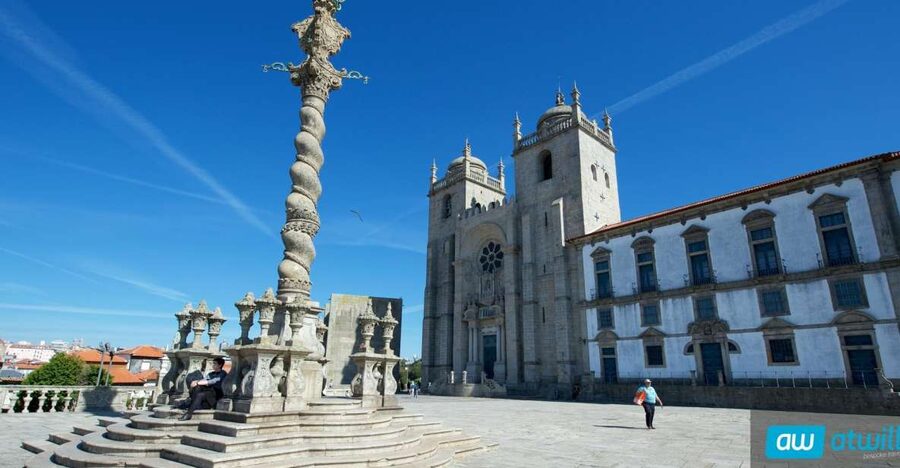
Your tour begins at Sé Cathedral (Terreiro da Sé), right next to the Vimara Peres statue. That’s a good choice because it drops you into old Porto fast, before your brain starts wandering toward the river views and away from the details.
From the first block, the guide focuses on how Jewish life shaped neighborhoods, even after people were pushed out or forced to conceal practices. Expect a walking rhythm of short segments with explanation, plus a few scenic breaks as you move through the city center.
This route is paced for a three-hour window, so you don’t get stuck on one stop for too long. It’s the kind of tour where you pick up names, phrases, and patterns you can later recognize on your own.
More of Porto that reviewers rate highly:
- The Unvanquished Tour in Porto City Center
★ 5.0 · 26,497 reviews - From Porto: Douro Valley w/ Boat Tour, Wine Tasting & Lunch
★ 4.7 · 19,061 reviews - Complete Douro Valley Wine Tour with Lunch, Wine Tastings and River Cruise
★ 5.0 · 12,920 reviews
Largo do Terreiro, Ribeira, and Miragaia: how street shapes tell stories
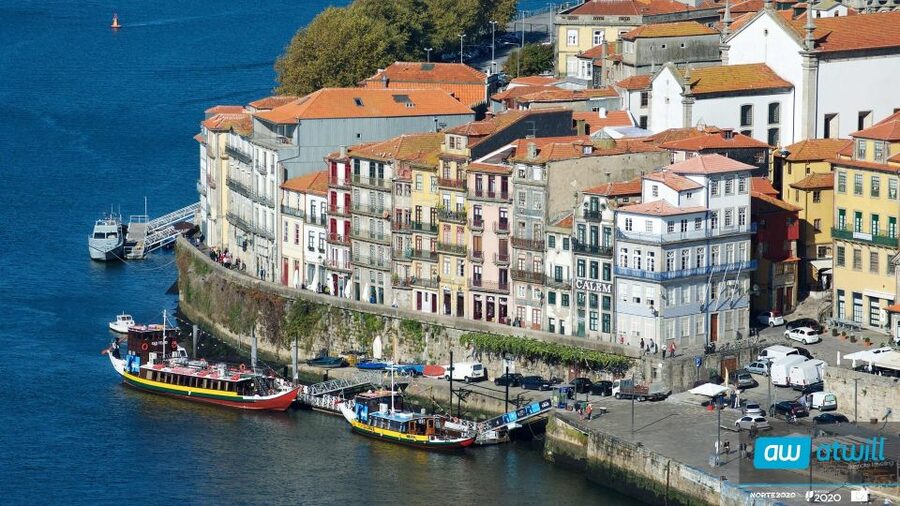
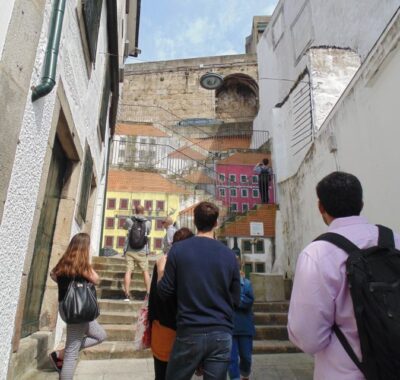
One of the most useful parts of this tour is how quickly it turns Porto into a text you can read. You’ll spend time on Largo do Terreiro, then head through older areas toward Ribeira and Miragaia.
These are the streets where you can feel why Jewish communities mattered beyond religion. The guide’s focus is on everyday life, trade, and the social pressure that later reshaped who could openly practice what. You’ll also hear how city naming and surviving physical traces can point to earlier Jewish presence, even when the community itself has been erased from public memory.
At Ribeira, the river-front energy is right there, but the guide will steer you toward the historical layer underneath it. At Miragaia, you’re walking through a part of town that often feels like it’s built for views and photos, yet the tour keeps the attention on the people who lived there and what they risked.
If you’re the type who likes to connect “what I see” to “why it exists,” this section is a win. It also helps you avoid the usual Porto problem, where you enjoy the sights but leave without knowing where the story actually lives.
Parque das Virtudes viewpoints and Sao Bento da Vitória: the past, then the panorama
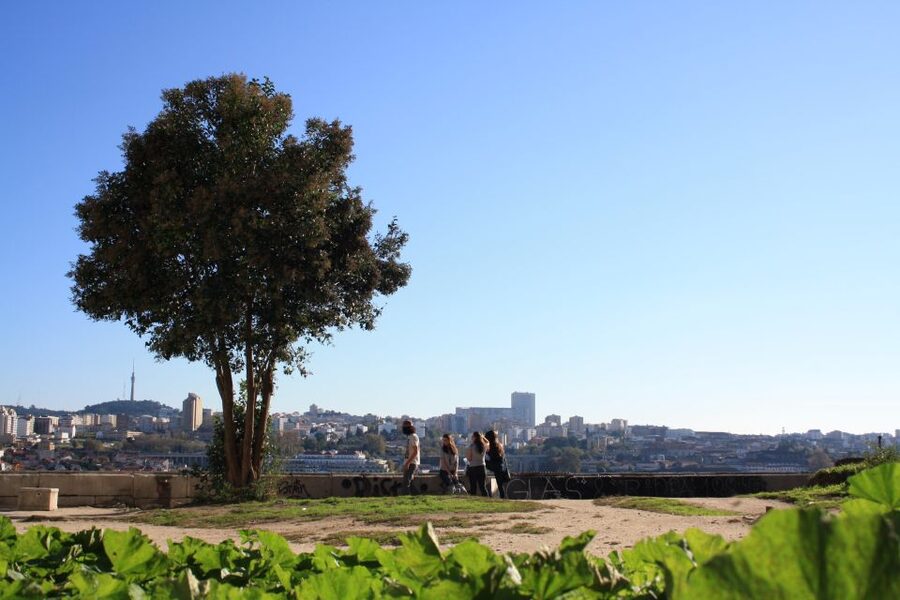
As you move toward Parque das Virtudes, the tour shifts from street archaeology to perspective. This is where you get scenic views on the way, and that matters more than it sounds, because it helps you understand Porto’s geography.
When you’re higher up, the winding streets and changes in elevation start making sense. Then the guide can link those physical realities to historical settlement patterns and how neighborhoods developed along the hills and valleys.
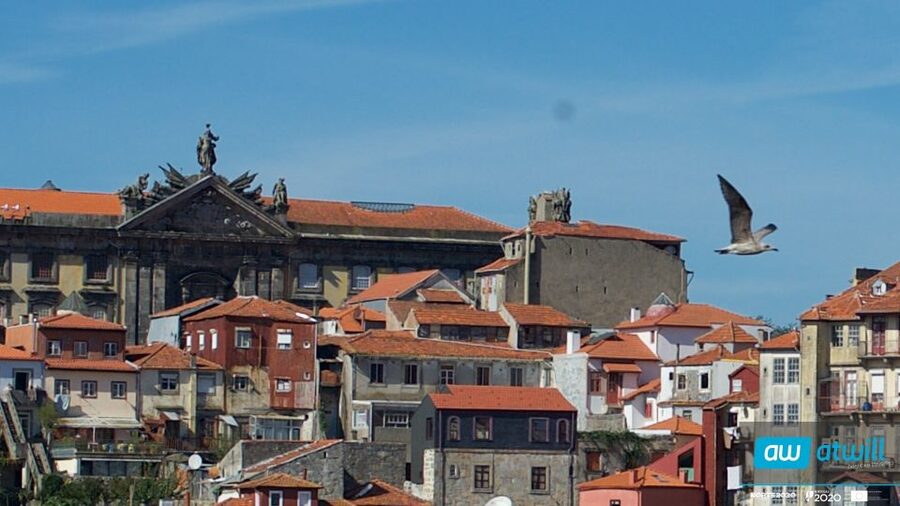
From there, you pass the Mosteiro de Sao Bento da Vitória. Even if you don’t go inside for an extended visit, the stop works well as a “context anchor.” You’ll see a major religious structure and connect it to the era when faith, power, and control were tied together in Portugal.
This section is also where the tour earns its “local tips” value. On hot days, a guide can keep the pacing sensible, using shade and water breaks when possible, so you don’t feel like you’re dragging yourself through a history lesson.
Clérigos Tower and Porto’s central monuments in the Jewish-era timeline
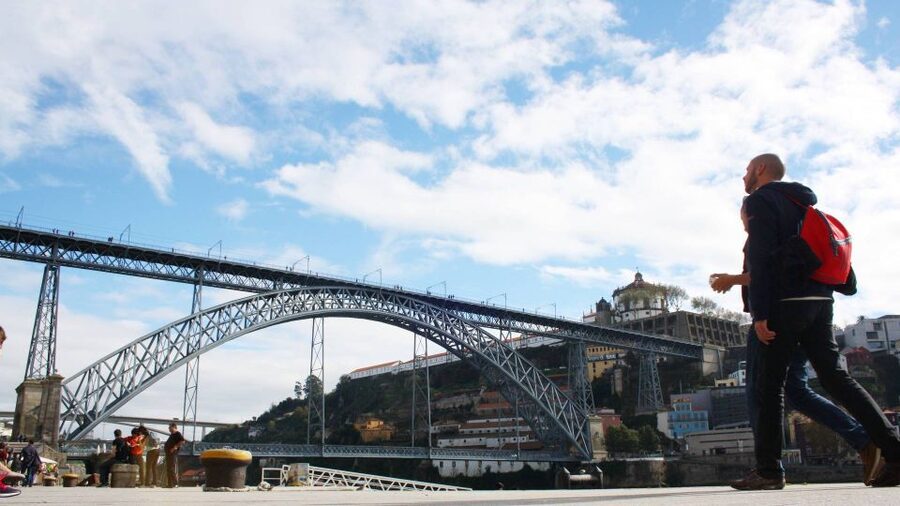
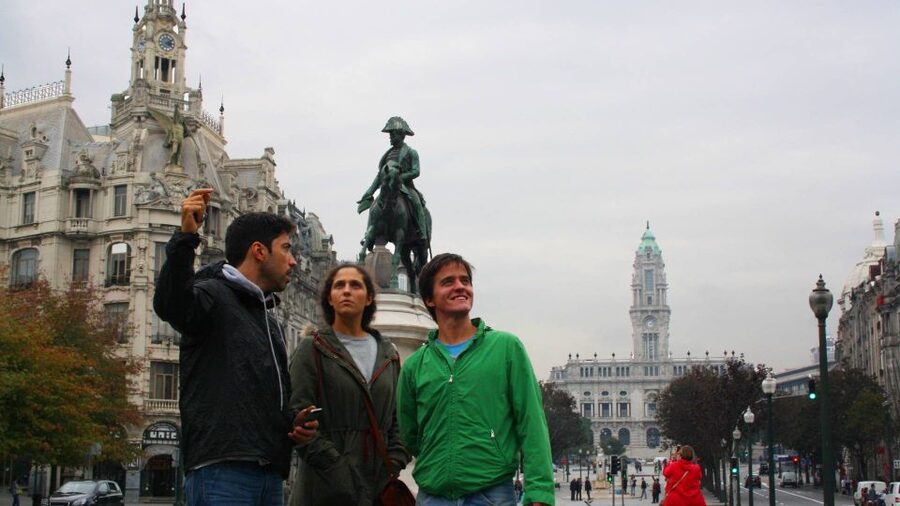
The Clérigos Tower is one of Porto’s biggest visual signals. On this tour, it’s not only about the landmark. It becomes a way to place the Jewish community’s story into the larger timeline of the city.
You’ll hear about the pressure that followed in the late medieval to early modern periods, including the Inquisition and the persecution of “new Christians.” The key is how the guide uses the city’s famous points of reference as timeline markers, so you don’t treat Jewish history as a separate, isolated chapter.
The walkthrough also keeps your attention on the enduring traces that survive when communities are scattered. That includes clues that are subtle enough you could walk past them without a guide, but obvious once someone points them out.
If you’re a history person, you’ll like how the tour connects religious policy to daily reality. If you’re not, you’ll still come away with a clear sense of cause and effect: what happened, what changed, and what it forced people to do.
Another way to spend your time in Porto:
- Porto: Live Fado Show with Glass of Port Wine
★ 4.8 · 6,498 reviews - Porto: 6 Bridges Douro River Cruise
★ 4.3 · 6,472 reviews - Porto: Torre dos Clerigos Entrance Ticket
★ 4.6 · 6,395 reviews - Douro Valley: Wine Tour with Lunch, Tastings & River Cruise
★ 4.6 · 6,081 reviews
Kadoori Mekor Haim Synagogue and the Jewish quarter focus
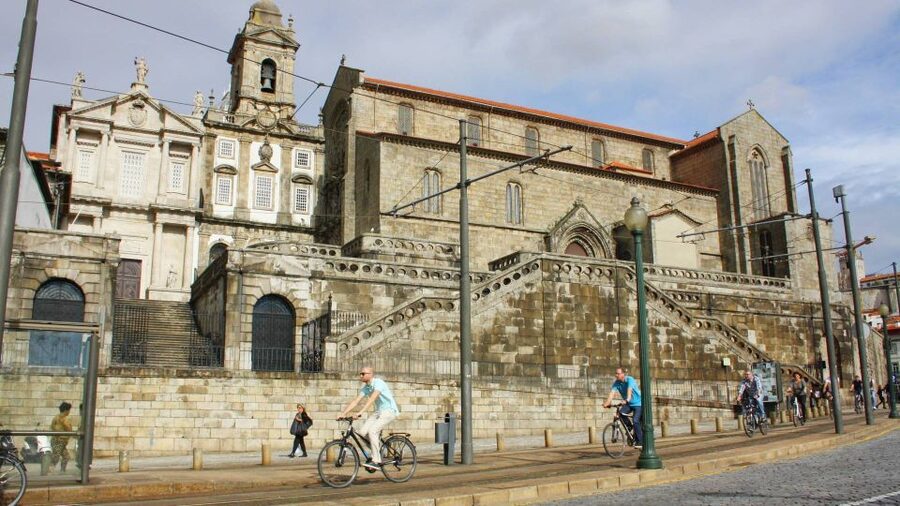
This is the section where the story turns from “traces” into living continuity. The tour includes learning about the Israeli Community and the Jewish Quarter, and it specifically highlights the Kadoori Mekor Haim Synagogue as a key site.
Even if your itinerary time is tight, the guide will treat it as more than sightseeing. You’ll connect the idea of Sephardic legacy to how communities maintain identity, remember origins, and rebuild after loss or forced conversion.
What makes this portion valuable is balance. The tour doesn’t only focus on persecution. It also points to cultural and religious rescue, including later chapters where people found ways to return to their heritage.
If you’re Sephardic, Jewish, or you simply have that ancestry curiosity, this is often the emotional high point. You get to see how history isn’t just what happened once, it’s what people carry forward.
1496 expelling order, hidden traditions, and Barros Basto’s rescue story
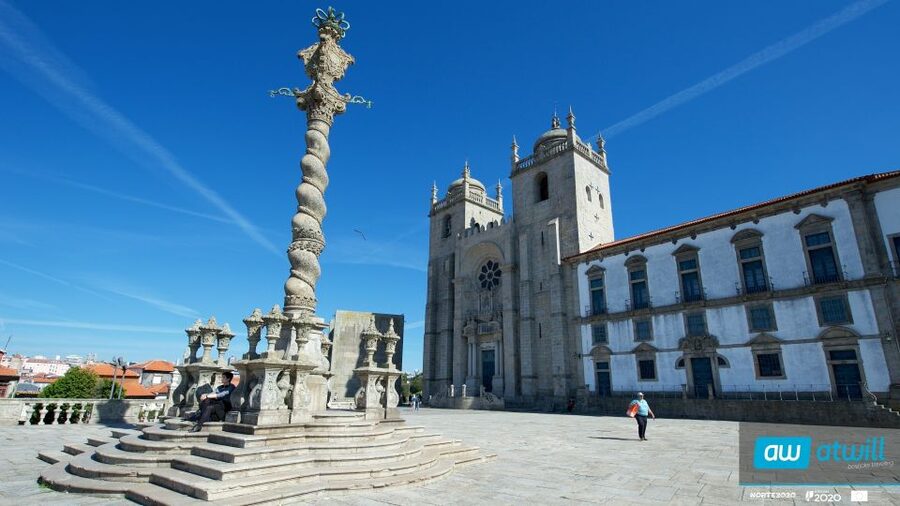
The heart of the tour’s historical arc is the way it explains the long stretch of pressure. You’ll learn about the 1496 King’s expelling order, the consequences that followed, and the way many people survived through concealment and conversion, then later faced renewed scrutiny under the Inquisition.
The guide also helps you understand the logic of “cover-ups” of Jewish traditions for centuries. Instead of saying the same dramatic line in a generic way, you’ll get the practical “why” behind it, which makes the historical part easier to hold in your head.
Then the mood shifts with the story of Captain Barros Basto, described as the Portuguese Dreyfus. This comparison is useful because it frames Barros Basto as a figure connected to injustice and later recognition, so the tour ends with a hopeful counterweight rather than stopping on fear.
For me, that matters. A tour that only lists oppression can feel heavy and flat. Here, you also get a sense of resilience and cultural recovery, which is what gives this tour staying power after you walk away from the last stop.
Why the route ends at Porto São Bento
You’ll finish at Porto São Bento. It’s not just a convenient endpoint, it’s a practical “reset” moment because São Bento is a natural place to pause, orient yourself, and keep exploring afterward.
From there, it’s easy to continue with your own plans, whether that means heading toward the river again for one more look or using what you learned to spot Portuguese-era religious and civic landmarks with fresh eyes.
Since this is a three-hour tour, ending near a central transport hub is part of the overall value. You get your guided story, then you can choose how to spend the rest of your day.
Price and value for a three-hour guided walk at $75
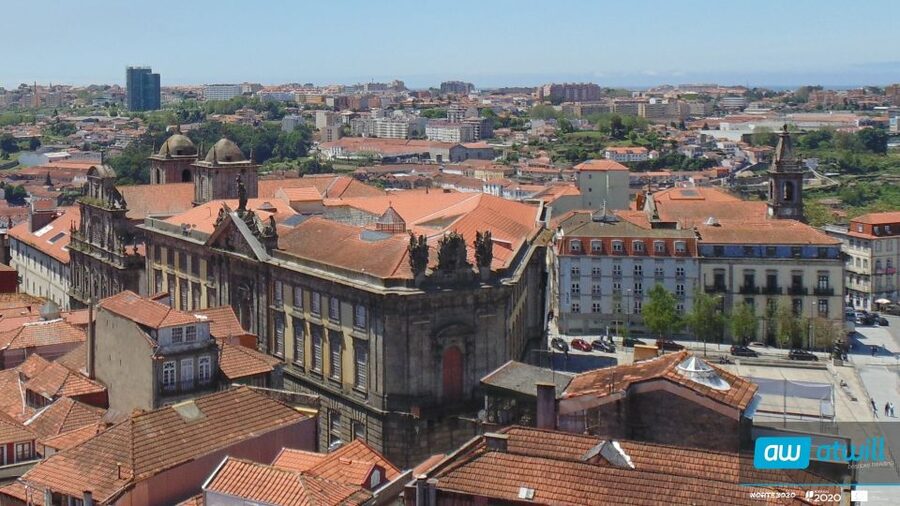
At $75 per person for about three hours, this is the kind of experience that can be very good value if you enjoy context and street-level guidance. You’re not paying for museum entry. You’re paying for a professional guide who can translate the city’s clues into a coherent story.
Two details affect value. First, entrance fees are not included, so you should expect mostly exterior learning and passing key sites. Second, the tour lasts long enough to build understanding, but short enough that you can still keep a flexible schedule for the rest of Porto.
The “private group” label also matters. In theory, it means you can ask questions without worrying that the guide is juggling a crowd. That said, because one prior booking reported the group was not as strictly private as expected, I’d treat this as a “confirm if it’s important” item rather than a guarantee.
Who this tour is for, and who should skip it
This tour fits best if you want to see Porto with your brain switched on. It’s ideal if you care about Sephardic legacy, Jewish life in Iberia, or how big historical events shaped small city streets.
It is not suitable for people with mobility impairments, wheelchair users, or those with low fitness. The pace and the walking time add up. Plan for cobbles, uneven ground, and stairs or hill segments, even if the guide keeps things manageable.
It also helps if you like asking questions. The guides in English, including João and others, tend to handle curious, detailed questions well, which makes the tour feel personal even when the group is small.
What weather and comfort look like on this walk
The tour operates in all weather conditions, so dress for rain and wind if forecasts call for it. That’s not a dealbreaker, but it changes how enjoyable the walking parts feel.
Bring comfortable shoes first, then layers. Porto’s weather can swing quickly, especially in coastal areas, so expect the guide to keep moving and keep the stops efficient.
If you’re the kind of person who gets wiped out by heat, it’s worth noting that guides can adapt, such as staying shaded and hydrated on hot days, based on past experiences with this route.
Should you book Porto’s Half-Day Jewish Tour?
Book it if you want a guided walk where Jewish history is tied to real streets, not just facts in a handout. The strongest reasons are the mix of Sephardic legacy, the explanation of persecution and forced conversion, and the meaningful end story about Barros Basto.
Skip it if you cannot do moderate walking, if you need strict accessibility, or if you prefer learning only through museums and indoor exhibits. This is a “walk and talk” experience.
My practical advice: if you care about privacy, ask in advance how the private group is handled on your date. And if you’re sensitive to weather, pack layers and grippy shoes. Do those two things, and you’ll get far more out of the tour than simply ticking off landmarks.
FAQ
How long is the Porto Half-Day Jewish Tour?
The tour lasts 3 hours.
What is the meeting point?
You meet at Sé Cathedral (Terreiro da Sé), next to the Vimara Peres statue.
Where does the tour finish?
The tour finishes at Porto São Bento.
Is the tour in English?
Yes, the live tour guide speaks English.
Is it a private group?
It is listed as a private group.
How much walking is involved?
There is a moderate amount of walking.
Are entrance fees included?
No, entrance fees are not included.
Does the tour operate in bad weather?
Yes, it operates in all weather conditions, so you should dress appropriately.
Who should avoid this tour?
It is not suitable for people with mobility impairments, wheelchair users, or those with low level of fitness.
What are the booking and cancellation options?
You can reserve now and pay later, and you can cancel up to 24 hours in advance for a full refund.
Recently reviewed around Porto
- Tour Porto: Adventure in Electric Bike Tour★ 4.3 · 11 reviews
- Porto: Tuk tuk Tours with Port Wine Tasting★ 4.5 · 65 reviews
- Tour Porto: Classic Adventure in Electric Tuk Tuk★ 4.7 · 33 reviews
- Tour Porto: Classic Car + A Toast with Port Wine★ 5.0 · 3 reviews
- The Beautiful Story of Porto: Guided Tour with Entry Tickets★ 4.8 · 111 reviews
- From Porto or Aveiro: 516 Arouca Suspended Bridge Tour★ 5.0 · 3 reviews
- Rent an Electric Bike with Bosch motor★ 4.5 · 3 reviews
- Self-Guided Bike to Surf”N”Food Pack★ 4.6 · 13 reviews
Half-Day, compared.


Porto Half-Day Guided Historical Tour with Port Cellar Visit and Tasting
Read our review →

Half-Day Small Group City Tour with port wine tasting
Read our review →Browse the lists this tour appears in