
Reviewed · WORKSHOPS
Porto Tile Painting Workshop in artist studio
Porto tile painting at an artist studio is interesting because you are not copying a postcard. You are making a real ceramic souvenir the way Portuguese tiles have been made for generations, with a pro artist guiding your hand. In a small group, I love that you get two techniques to choose from, and I love that even non artists can start fast using 10 ready stencils.
The one thing to weigh is timing. If you pick the traditional kiln-fired method, your tile needs time to be fired and then either picked up after about five business days or mailed with extra cost.
Quick Hits Before You Go
- Two ways to finish your tile: kiln-fired glazing for the traditional look, or quick-dry acrylics sealed for instant pickup.
- Beginner friendly design help: trace outlines from 10 classic stencil options, or make your own layout.
- Small group feel: capped at 15 people, in a real working artist studio.
- You learn the tile story while you paint: Portuguese tile history and common styles are part of the session.
- Real follow-through option: you can pick up later or have tiles mailed (with tracking and separate fees).
- English is supported: instruction is offered in English.
A Working Artist Studio, Not a Factory Souvenir
This workshop happens in an artist studio in Porto, starting at OKNAR. da Igreja de Cedofeita 27, 4050-181 Porto, Portugal. You end right back at the meeting point, which is helpful if you want an easy afternoon plan after class.
What makes this experience click is the pace. You are not sprinting. In about two hours, you get a short lesson, time to design, and time to paint. And because the group size is limited to 15 people, the instructor can actually help with brush technique and layout, not just hand out materials and hope for the best.
Also, the vibe seems to be calm and patient. In past sessions, the hosts have been described as making the class feel almost zen, which matters if you are the type who panics when paint touches something that can never be unpainted.
A few other ways to explore Porto
- Porto: Pastel de Nata Pastry-Making Workshop
★ 4.9 · 1,542 reviews - Porto: Pastel de Nata Cooking Class with Port Wine – Sé
★ 4.8 · 888 reviews - Porto: Small Group Surf Lesson with Transportation
★ 4.9 · 594 reviews
Your Two Tile Techniques, Choose the Right One
You basically get a fork in the road, and this is the core value of the class. You can pick either:
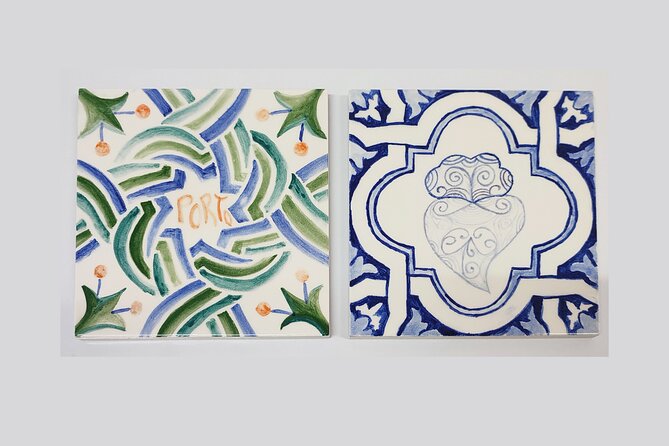
Kiln-fired traditional Azulejo glazing
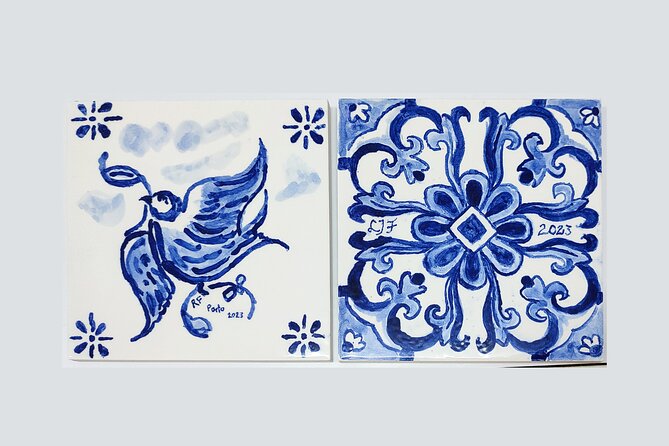
This is the classic method. You’ll paint and glaze your tile in a traditional way, and then it gets fired in a ceramic kiln. The payoff is that you are making a more authentic, traditional-style piece.
The tradeoff is waiting. Your finished tile is ready after five business days at the studio. After that, you can pick it up, or you can have it mailed.
Ready to go acrylic painting (instant pickup)
If you want your souvenir immediately, choose the acrylic option. You paint with fast drying acrylics, then your tile is sealed with a protective varnish. With this method, you can take the finished tile away right after the workshop.
This is the smart choice if you are on a tight schedule, planning to leave Porto soon, or you just want proof that you did it without waiting for international shipping.
Another way to spend your time in Porto:
- The Unvanquished Tour in Porto City Center
★ 5.0 · 26,497 reviews - From Porto: Douro Valley w/ Boat Tour, Wine Tasting & Lunch
★ 4.7 · 19,061 reviews - Complete Douro Valley Wine Tour with Lunch, Wine Tastings and River Cruise
★ 5.0 · 12,920 reviews - Porto: Live Fado Show with Glass of Port Wine
★ 4.8 · 6,498 reviews
How the 2 Hours Usually Unfold Inside OKNAR
There isn’t a long, complicated itinerary with multiple stops. Instead, the workshop is a smooth sequence of phases, all centered around design and painting.
Phase 1: Welcome and a quick tour of tile art
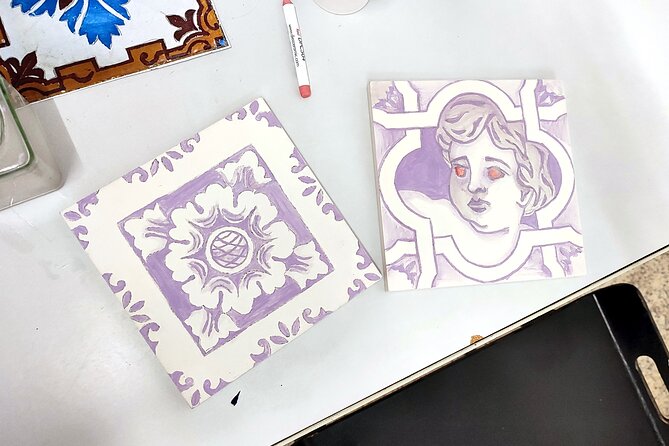
You arrive at the studio meeting point and get settled. A big plus here is that you are not only taught, you also see. In some sessions, the instructor has shown their own work first, so you can understand what good tile painting looks like before you start putting color down.
That helps a lot if you are nervous. You get a visual goal, not just instructions.
Phase 2: Learn Portuguese tile history and style basics
You spend part of your time learning about the history of Portuguese tiles and the difference between styles and techniques. You’ll also talk about design choices, like patterns that feel traditional versus layouts you build yourself.
Even if you keep it simple, this makes the tile more meaningful. You are not just making something pretty, you are participating in a real cultural craft.
Phase 3: Pick a design path, then start tracing or freestyle
Here’s where beginners get a major handhold. You can:
- Follow a traditional design, or
- Create your own
And if you are not artist confident, you can trace from 10 traditional stencils. The stencils are designed to take only a few minutes to trace, so you spend your time painting instead of staring at a blank tile and negotiating with your own brain.
Phase 4: Paint your tile with guidance
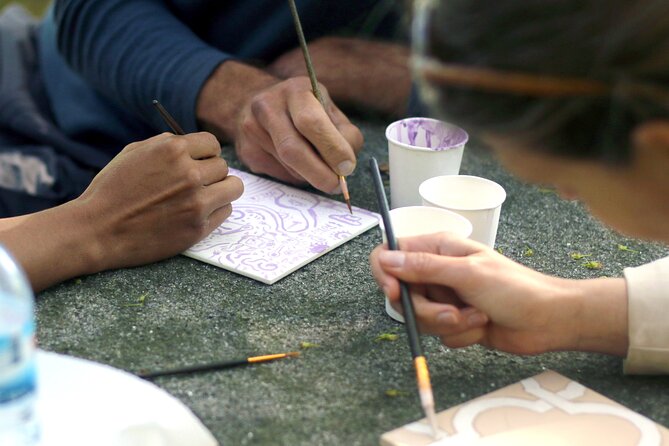
Now the fun part. You’ll have one tile per person and a set of colors to choose from. The instructor helps with technique and ideas while you work, so your result doesn’t look like a rushed school project unless you personally decide to paint like a rebel.
The class ends with your tile ready for the next step, either immediate pickup (acrylic method) or kiln firing (traditional method).
Traditional Azulejo Glazing: What You Gain and What You Must Plan
If you choose the kiln-fired glazing technique, you are choosing authenticity, but you are also choosing logistics.
What you gain
A kiln-fired tile has that true ceramic look. It’s the method connected with Portuguese azulejo traditions, and you’re learning the process, not just the end result.
Also, you get a stronger connection to the craft. You see your finished work go through firing, and later you pick up a tile that feels like a “real made” object, not a temporary painted souvenir.
What you must plan
You need a follow-up window. The tile can be picked up after five business days at the studio. If you cannot return, you can mail it.
And here’s the one consideration I really want you to think about: shipping is where timing can wobble for some destinations. In at least one situation, there were issues with mail from Portugal to the USA due to new tariff laws. Regular mail services were suspended temporarily, and the host indicated that some parcels were being held until shipping stabilized, with private courier options like UPS available at higher cost.
So if you are traveling with a strict timeline, kiln-fired + shipping overseas is not a “set it and forget it” option. Ask how shipping is being handled for your country, and confirm you will get tracking.
Acrylics for Instant Results, the Best Pick for Short Trips
If your goal is a finished souvenir you can carry home the same day, the acrylic method is the easy win.
What you get immediately
You paint using fast-drying acrylics, then your tile is sealed with a protective varnish. After the workshop, you can pick up the finished tile.
That means no waiting, no second trip, and no shipping stress.
Who acrylics suits
Acrylics make sense if:
- You have only a short time in Porto
- You are worried about international mailing time
- You’d rather spend your brain power on things like getting good seafood and finding viewpoints
It can also be a good first attempt. If you love the craft, you can always come back later and do kiln-fired next time.
Design Tips That Make Your Tile Feel Like You
The best part of this workshop is that it balances guidance with room for personality.
You can trace a stencil and still make it yours. Small choices add up:
- Which stencil you pick
- How you arrange pattern elements
- Which colors you choose
- The order you paint sections in
- How you let brush marks land
Some people find that traced designs remove the fear of messing up. Others like that the instructor provides examples but does not force everyone into identical outcomes.
If you want your tile to feel personal, choose one or two standout moments. Make those the cleanest and most intentional parts of your design. Everything else can stay looser. Tiles are meant to be decorative, not museum perfect.
Price and Value: What Your $40.01 Really Buys

The price is about $40.01 per person for roughly two hours in a small group with English instruction.
What you are paying for is not just “paint and leave.” You are buying:
- Instruction from a pro artist
- One tile per person
- Provided materials and color choices
- A structured design plan (stencils, techniques, and guidance)
- For kiln-fired, the firing process and the kiln step that you cannot do at home
If you choose kiln-fired and then pick up locally, your value is strong because the firing step is included and you avoid extra shipping fees.
If you need shipping, there is an added cost. Europe mailing is 15 € with tracking, and USA mailing is 25 € with tracking. Also remember that kiln-fired requires those five business days before your tile can be sent.
If you are choosing acrylics, the value is also solid because you get a finished, sealed tile immediately without extra wait time.
In plain terms: the class is worth it when you want a real craft souvenir and you like doing something with your hands, not just watching.
Where to Find the Studio and How to Fit It Into Your Day
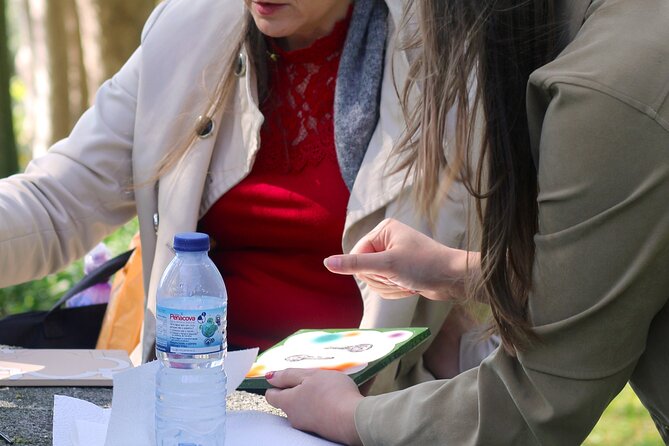
The workshop starts at OKNAR. da Igreja de Cedofeita 27. It’s near public transportation, which is a relief in Porto when you do not want to hike your way across hills just to reach a studio.
Because the class is about two hours, it’s easy to pair with other activities:
- Morning, then lunch nearby
- Late afternoon, then dinner afterward
- Or as a low-energy “cool down” activity if you’ve already walked a lot
One small reality check: if you pick kiln-fired, you must either plan to return after about five business days or pay to have it shipped. If you hate return errands, go acrylic.
Who This Workshop Fits Best
Based on how this workshop is run and the types of results people have shared, it fits best when you want a calm, guided creative activity.
It’s a great match if:
- You are a total beginner and need stencils and step by step help
- You want something more meaningful than the printed tile souvenirs sold in stores
- You like short classes with real instruction, not a long lecture
- You want a souvenir that comes from a local craft, not a generic souvenir stand
It also seems family friendly. One parent brought an 8-year-old and reported that the child enjoyed it. That tells me the pace and structure work for kids who can follow a simple visual plan.
For couples, it can also be a nice shared project. You each make something, then you talk about your choices after the workshop, rather than just taking photos next to a monument.
When Shipping Gets Messy, How to Protect Your Trip
Here’s the practical advice piece, because no one wants a surprise.
If you are doing kiln-fired and shipping:
- Confirm how many business days your tile needs before shipment.
- Confirm the shipping method for your destination.
- Make sure you’ll receive a tracking number.
- If you are shipping to the USA, ask about current mail conditions, since there have been temporary suspensions tied to tariff changes.
If you are the type who needs certainty, acrylic mode is the safest. You walk out with the tile the same day.
Should You Book This Porto Tile Painting Workshop?
I think you should book it if you want a hands on souvenir with real craft behind it. You’ll get guidance even if you are not an artist, and you’ll learn enough about Portuguese tile styles to make your choices feel intentional.
I would skip it or choose the acrylic method if:
- You cannot handle a follow-up trip for kiln-fired pickup, or
- International shipping timing would risk messing up your plans, especially for the USA
If you’re flexible and you like making things with your hands, this is one of those Porto experiences that turns into a memory you can hold.
FAQ
How long is the Porto tile painting workshop?
The session is about 2 hours.
Is the workshop offered in English?
Yes, it is offered in English.
What are the two tile techniques I can choose from?
You can choose either traditional Azulejo glazing, which is kiln-fired, or a ready-to-go acrylic painting option that lets you take your finished tile home immediately.
What if I am a beginner or not good at drawing?
You can trace outlines using 10 traditional stencils. You can also follow a traditional design or create your own, with help from the instructor during painting.
If I choose the traditional kiln-fired method, when can I get my tile?
Your glazed tile can be picked up after five business days at the studio. You can also have it mailed.
How much does shipping cost if I want the tile mailed?
Shipping is listed as 15 € for Europe and 25 € for the USA, both with tracking.
Where is the meeting point?
The workshop starts at OKNAR. da Igreja de Cedofeita 27, 4050-181 Porto, Portugal.
What is the group size limit?
The experience has a maximum of 15 travelers.
Can I cancel for a full refund?
Yes. You can cancel up to 24 hours in advance for a full refund.
Are service animals allowed?
Yes, service animals are allowed.
Recently reviewed around Porto
- BRAGA E GUIMARÃES Private Historic Tour from Porto★ 5.0 · 7 reviews
- Douro Valley in off road – Private Tour★ 5.0 · 3 reviews
- Porto: Private Tour on a Luxury Yacht on the Douro River★ 5.0 · 9 reviews
- Porto Private Walking Food Tour With Secret Food Tours★ 5.0 · 31 reviews
- Porto Private Custom Tour with a Local: Highlights & Hidden Gems★ 5.0 · 51 reviews
- Santiago de Compostela and Cathedral Private Tour From Porto★ 4.5 · 6 reviews
- Private Tour: Porto to Lisbon: visit Aveiro,Coimbra,Fatima,Obidos★ 5.0 · 5 reviews
- Porto, Private Tour in the Douro and Sea or Sunset★ 5.0 · 24 reviews
Workshops, compared.
Pastel de Nata Cooking Class with Grandma’s Recipe
Read our review →
Pastel de Nata Cooking Class with Port Wine – Sé
Read our review →


Tile-Painting Workshop with Porto Wine – Bainharia
Read our review →

Browse the lists this tour appears in