
Reviewed · DOURO RIVER CRUISES
Porto Douro River Cruise With Port Wine – Daytime or Sunset
Porto and Vila Nova de Gaia look great from land. This cruise is interesting because it puts you on the water, right where the city’s wine story and river scenery meet. I like the glass of port paired with real passing views of bridges and cellars, and I like that the crew keeps the route moving while pointing out spots like the Rabelo boats and the Douro Estuary. One consideration: if you book the sunset option, you still need decent weather, because clouds and wind can change what you see.
This is a short outing, about 2 hours, starting at Marina da Afurada in Gaia. The strongest part, based on what I learned from how people describe their time onboard, is the hosting. You might catch a team like Fernando and Miguel, or Junior and Lorraine, who are friendly and quick to answer questions. Group size can vary, and where you sit is assigned at random, so plan for a “mix of people, all together” vibe rather than picking your exact spot.
Key things I’d circle on your plan
- Port wine included: one glass onboard while you look at Porto and Gaia from the river
- Douro Estuary nature time: you get views of birds in a protected area with a migratory corridor
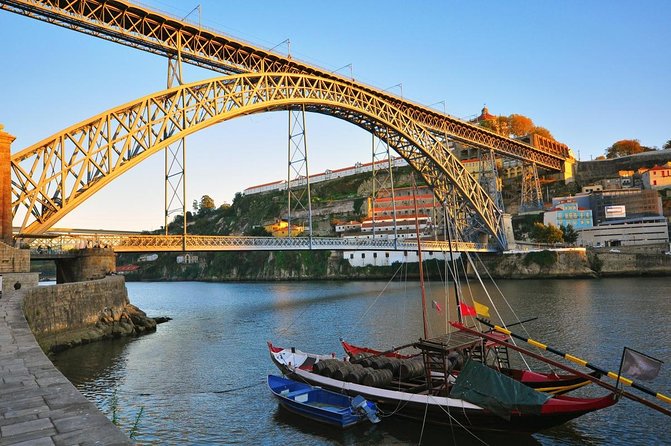
- Bridge engineering eye candy: from the Arrábida Bridge to Dom Luis I Bridge, it’s all on the river route
- Rabelo boat context: how barrels moved before rail and roads, explained as you pass the waterfront
- Comfort adds up: blankets can matter when the sun goes down and the breeze kicks in
- Sunset option can be dramatic: when conditions cooperate, the Atlantic-facing end of the cruise is the payoff
Why Sail the Douro From Vila Nova de Gaia
Most Porto sightseeing is either steep staircases, crowded viewpoints, or both. This feels like a reset. You start on the Gaia side, where the river trade used to do its real work, and you stay on the water long enough to see the city’s shapes in a way your feet usually cannot manage.
From the start area, the route lines you up with major river-crossing landmarks and the waterfront districts that shaped the wine business. The itinerary isn’t about museum stops. It’s about looking at Porto and Gaia as connected places, shaped by the Douro’s bends, currents, and docks.
You also get a built-in contrast: old-world centers like Ribeira and the wine cellars on the Gaia quay, set against bold infrastructure like the big arch bridge and metal spans. If you want a quick, practical break from walking, this cruise is one of the easiest ways to do it.
More Douro river cruises from Porto:
- Complete Douro Valley Wine Tour with Lunch, Wine Tastings and River Cruise
★ 5.0 · 12,920 reviews - Porto: 6 Bridges Douro River Cruise
★ 4.3 · 6,472 reviews - Douro Valley: Wine Tour with Lunch, Tastings & River Cruise
★ 4.6 · 6,081 reviews
2 Hours With Port Wine, Wi-Fi, and a Crew Who Makes It Easy
The tour clocks in at about 2 hours, which is perfect if you want something memorable without losing half a day. You’re also not on your own. Included Wi-Fi helps if you want to share photos right away, and the guide and crew are there to keep the story straight as you pass landmarks.
You’ll be handed a glass of port wine, and that matters more than it sounds. Drinking something local while the river trade context is fresh in your head turns it from a souvenir moment into a quick, satisfying ritual. It also makes the cruise feel like a “Portugal” experience, not just sightseeing from a boat.
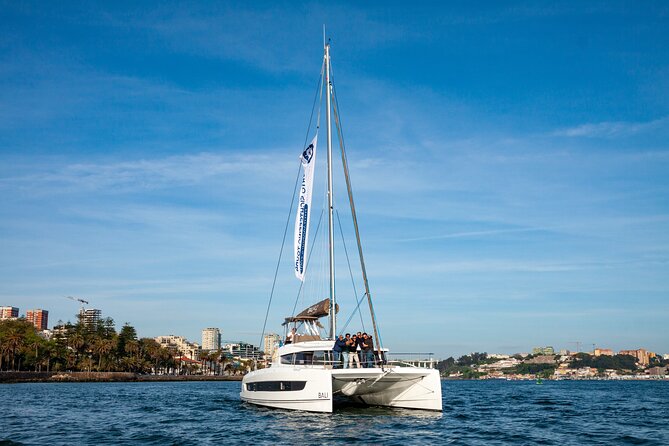
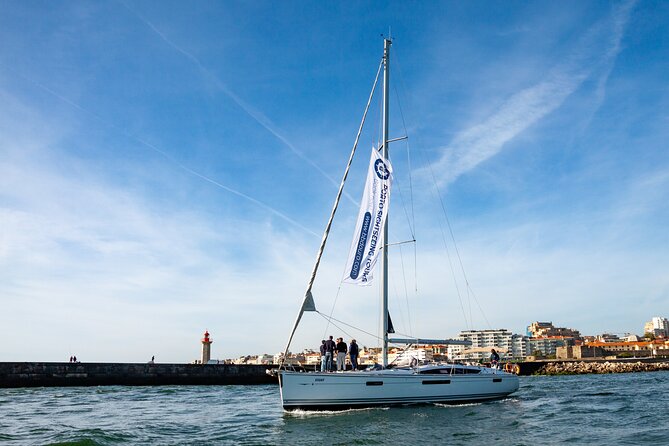
One practical detail to know: seating and placement on the boat happen in random order, and you can’t request a specific spot. If you care about motion, try to arrive early, ask crew members what they recommend for feeling steadier, and consider that boat size can differ by departure. Some passengers expected a larger catamaran based on photos and ended up on a smaller sailboat, so it’s worth mentally preparing for a range in feel.
The Douro River Views That Actually Change How You See Porto
The best moments are the ones that happen while the boat is moving, not while you stand still. As you head along the Douro, you get views tied to the wine economy and the city’s waterfront life.
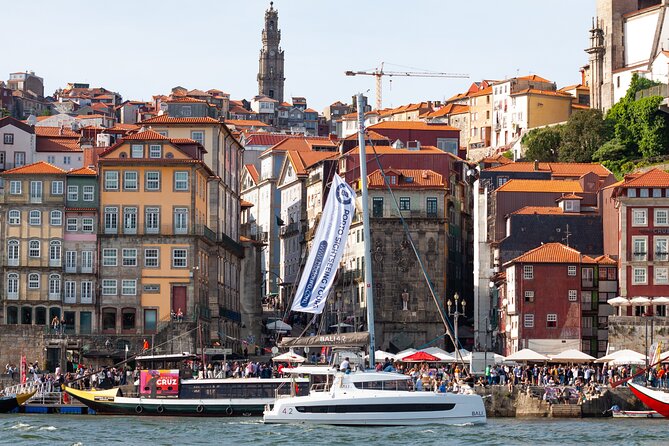
From the river, you’ll spot the areas linked to storage and shipping, including references to wine caves and the historic river bustle. You also get the viewpoint angle that makes the city look layered, with churches and older structures stacked above the waterline. One of the recurring details is the Clérigos area, including the iconic tower that you typically associate with Porto’s center, but here it’s framed by the river and the bridge lines.
You’ll also have a real “this is a working river” connection through the mention of Rabelo boats. These vessels used to carry barrel cargo from the north down toward the cellars in Gaia, when road and rail were not the main option. Even if you have only a general idea of that story, seeing the route from the water makes it stick.
Wildlife is another reason the Douro Estuary fits the cruise format. The estuary is part of the protected Reserva Natural Estuario do Douro, and the point is simple: birds use this migratory pathway, and you can often observe them from the water corridor while the boat passes nearby.
Ponte da Arrábida to Massarelos: Bridge Engineering Meets River-Level City Sights
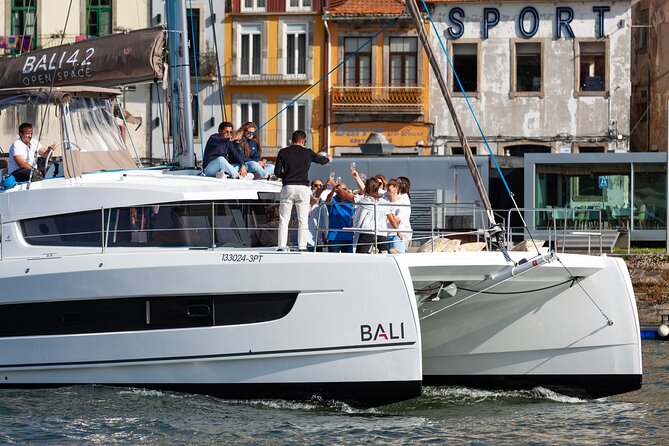
One of the cool things about this sailing route is how it hits big structures early. The Arrábida Bridge connects Porto to Vila Nova de Gaia, and it’s not just scenic, it’s historically specific. When it was inaugurated in 1963, it was tied to standout reinforced concrete engineering, and it originally included pedestrian lifts because crossing the river distance wasn’t easy.
This is the kind of detail you usually only get in a classroom or a guidebook. Here, it’s part of the view you’re already seeing, which makes it feel way more useful. The river gives you scale. The guide gives you the why.
From the Porto side, you also pass by or view the Massarelos area landmarks. That includes the Museu do Carro Electrico, housed in a building that used to be the Massarelos thermoelectric plant (built in 1915 for electric vehicle energy). Even if you never step inside, the fact that it’s tied to the city’s early rail and transport system gives you another angle on Porto’s development.
Close by is the Church of Confraria das Almas do Corpo Santo de Massarelos, built in 1776 with a tile-covered facade and a three-part facade layout. From water, you may not read every architectural element. But you do get the sense of how Porto’s religious and civic architecture sits right along the river approach.
Finally, you’ll also get views associated with the New Customs building, which was designed by French architect Jean Colson. The big idea here is contrast: this commercial-era iron-forward design sits in contrast to older waterfront buildings, and it helps explain why Porto’s riverfront looks like it has chapters.
More port and wine tastings in Porto:
- From Porto: Douro Valley w/ Boat Tour, Wine Tasting & Lunch
★ 4.7 · 19,061 reviews - Porto: Live Fado Show with Glass of Port Wine
★ 4.8 · 6,498 reviews - Douro Valley: Historical Sites, Wine Experience, Lunch & Cruise
★ 5.0 · 5,133 reviews - Authentic Small Group Douro Wine Tour with Lunch & River Cruise
★ 5.0 · 4,775 reviews
Clérigos Tower, Virtudes Terraces, and Ribeira’s Old-School River Life
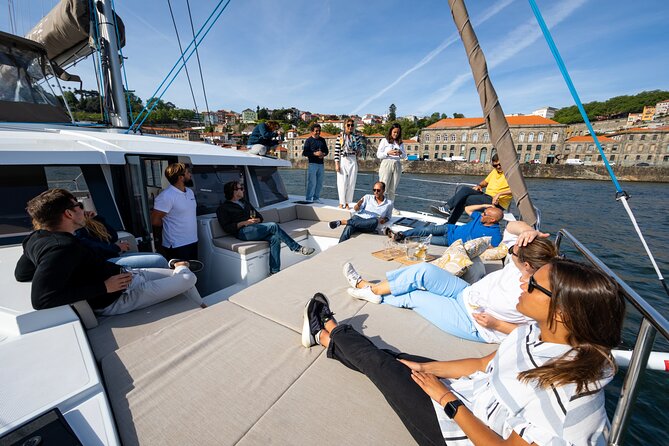
Porto looks best when you see it from multiple heights. This cruise does that for you. It strings together river-level landmarks with hilltop angles, without asking you to climb stairs between each one.
As you move, you’ll get views tied to Passeio das Virtudes, a vertical garden in terraces down the slope. The payoff is the sightline: you can often frame the Douro, Alfândega, and Vila Nova de Gaia from those levels. The cruise doesn’t put you in the garden, but it sets up the view and makes it easier to understand why locals come here for that panorama.
Next comes Torre dos Clérigos, completed in 1763 and designed by Nicolau Nasoni. You can hear about its 225-step climb and its role as an orientation point in earlier times, but from the water it reads as a shape in the skyline, almost like a marker for where you are in the city.
The cruise also points you toward Praca da Ribeira, one of the oldest squares in Porto’s historic center (UNESCO-listed). This area is tied to medieval river commerce and the city’s constant movement near the water. Even if you only glance at it while cruising, it helps connect the city’s personality to the river’s function.
And if you like parks with views, the route also includes Jardim do Morro, with its open-air setup and a belvedere overlooking Porto and the Douro River area. Think of it as the kind of place you would stop for a quick breath if you were doing this day on foot. Here, it’s wrapped into the river glide.
Dom Luis I Bridge and Serra do Pilar: Two Icons, One River View
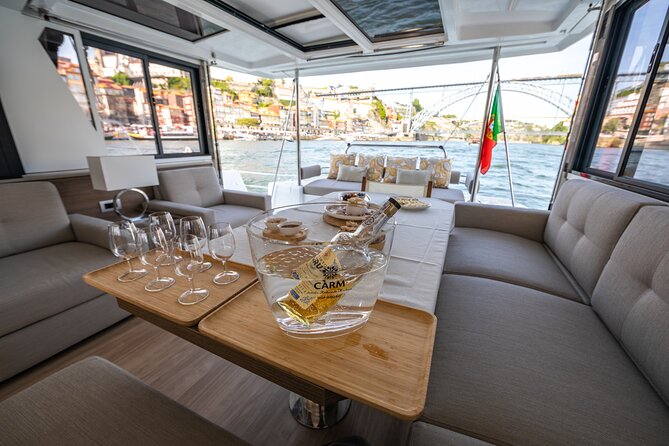
Two major landmarks tend to define Porto and Gaia’s mental map, and this sailing gives you both.
First is Dom Luis I Bridge, completed in 1888. It’s metal, it’s long, and it has two decks linking Porto and Vila Nova de Gaia. The bridge design is tied to Théophile Seyrig, and it follows the architectural style of his mentor, Gustave Eiffel, which makes the structure feel like it belongs to a wider European engineering story. From the river, the bridge isn’t background. It’s the frame for everything else you see.
Then there’s Miradouro Serra do Pilar, with the Serra do Pilar Monastery nearby. This is where the tour shifts into “wow, architecture can be powerful” mode. The monastery’s circular plan and imposing hemispherical vault are standout features, and it’s also a UNESCO World Heritage Site.
Here’s the extra value: the location mattered during major historical conflicts. The site was used as a military base in the early 1800s during Napoleonic invasions and later during liberal struggles. That kind of detail helps the monastery stop being just a photo opportunity.
Gaia Quay, Port Cellars, and How the River Fed the Wine Trade
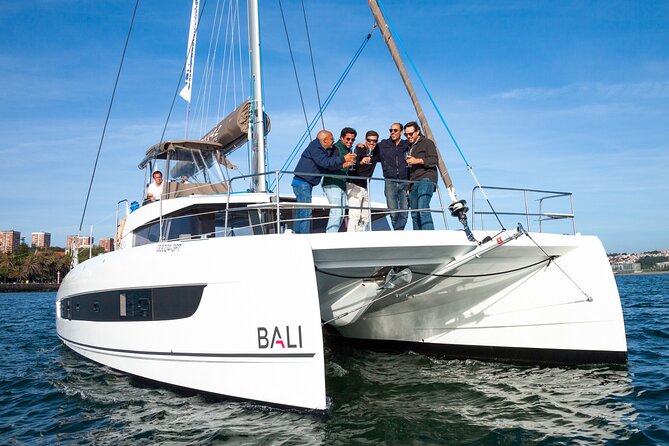
Gaia’s waterfront is the heart of the wine connection. The cruise route brings you toward Cais de Gaia, where port wine and shipping shaped the city for centuries. This quay is famous because it was historically where river port activity happened before the broader logistics network took over.
You’ll also hear the connection to the Rabelo boats again, because that’s the exact reason the waterfront developed. Before dams changed the river’s behavior and before roads and rail became practical for barrel transport, sailing this cargo required experienced sailors and careful navigation through narrows and gorges. The last voyage linked to that traditional role is commonly cited as happening in 1964, which gives the story a clean end point.
If you’re a port wine person, Gaia’s role will click fast. This is where the barrels get aged in the cellars of the wine companies along the quay. There are dozens of cellars in the area, and many offer tours and tastings. The cruise itself doesn’t replace a cellar visit, but it sets you up perfectly for one later by giving you the “why” behind the “what.”
This section of the route also highlights the transformation of working waterfront into leisure space. Gaia Quay gained a public-space tourism award tied to a refurbishment that ended in 2003, and that matters because it explains why the area feels easier to explore after your cruise.
Riding Toward the Estuary and Ending With Atlantic Air
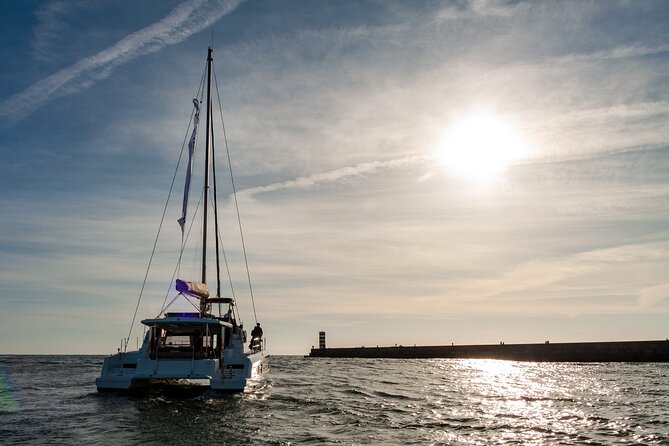
The route includes time linked to the Reserva Natural Estuario do Douro on the south bank near Afurada, with the reserve spanning about 66.35 hectares. The big point is birds. The estuary sits along the “East Atlantic Route,” and that migratory pathway makes it an important stop for wildlife.
You can visit parts of the area freely via a suspended walkway, but on this cruise you’re seeing the reserve as a river ecosystem. That’s valuable because it widens the trip beyond architecture and into the natural rhythm of the coast.
As for the end of the cruise, some departures take you closer to the Atlantic Ocean, turning the final stretch into that “cap it off” feeling people love. If you do the sunset option, this timing can make a real difference, because sunset light off the water is more dramatic than city light alone.
One thing to expect: sailing may be mostly motor on some departures, and sails might stay down. Either way, the cruise is usually quiet enough to enjoy the scenery, and some captains even provide blankets when the temperature drops.
Daytime vs Sunset: Choosing the Right Moment
If you can pick, I’d choose based on what you want the photo to look like and how sensitive you are to temperature and motion.
For daytime:
- You’ll still get the same core sights, like bridges, riverfronts, and the cellars context.
- It’s often easier to enjoy without bundling up as much.
For sunset:
- When skies cooperate, you get a real “water glow” effect, and the Atlantic-facing angle can be a highlight.
- It can get chilly fast after sunset, and blankets are sometimes offered, which makes the cruise feel more comfortable.
Weather matters either way. The experience depends on good conditions, so cloudy or windy days can mean less dramatic light or shorter, more cautious adjustments.
If you’re prone to motion sickness, a larger boat can help in general. But because boat size can vary by departure, I’d treat this as a “pack for comfort” choice. Bring your usual motion tools, and sit where you feel the smoothest ride.
Price and Value: Why This Is a Good Use of Your Porto Time
At about $54.42 per person for a roughly 2-hour cruise, this isn’t a bargain like a free viewpoint. But it is good value for what you get.
You’re paying for three things that are hard to replicate cheaply:
- A guided boat outing with a port wine inclusion
- Commentary that connects landmarks to how the city worked, especially around shipping and the wine trade
- A built-in transport solution over water, which saves you from doing the steep, tiring parts on foot
What’s not included is food and drinks beyond the single port glass. So if you’re hungry, you’ll need to eat before or after. Also, you’re not getting a full day of excursions. This is a concentrated “best views, fast story, time on water” format.
Compared to piecing it together yourself, you gain time and context. Compared to a long day tour, you gain flexibility and lower commitment. For many people, that balance is exactly why it earns such strong feedback.
Who This Cruise Is For (and Who Might Want to Skip It)
This cruise fits best if you want:
- A scenic break from Porto’s hills
- A quick, guided way to understand why the river matters to wine and city life
- A fun time on the water with a crew that makes it easy to ask questions
- A shot at a standout sunset, plus Atlantic air at the end
It may not be ideal if:
- You’re expecting a huge, panoramic vessel every time and care a lot about boat size (some departures may be smaller)
- You want a long, multi-hour program with lots of stops on land
- You’re trying to bring your own snacks and drinks onboard, because for shared tours you’re not allowed to bring outside food or drinks and crew will not permit access
Should You Book This Douro and Port Wine Sail?
I think this is an easy yes for most first-timers to Porto who want a water-based view without turning the day into a marathon. The port wine touch is simple but effective, the river route gives you bridges and waterfront history in a way that feels practical, and the best part tends to be the people onboard, with captains and crew who keep the experience friendly and smooth.
If you’re choosing between daytime and sunset, go sunset if you love photo light and you can handle cooler air after dusk. Go daytime if you want the same scenery with fewer weather surprises and less cold.
My final advice: book it as a “set-piece experience,” then build the rest of your day around it. Use the cruise to get your bearings and your wine context, then spend your extra time on land where you can go slow, linger, and explore at your pace.
FAQ
How long is the Porto Douro River Cruise with Port Wine?
It runs for about 2 hours.
Where does the cruise start, and where does it end?
It starts at Marina da Afurada (R. da Praia 430, 4400-554 Vila Nova de Gaia, Portugal) and ends back at the meeting point.
What’s included in the price?
Wi-Fi, a glass of port wine, and the boat tour are included.
What language is the tour offered in?
The tour is offered in English.
Do I need to bring food or can I buy snacks onboard?
Food and drinks are not included. For shared tours, you are not allowed to bring food or drinks from outside, and the crew will not permit access.
What’s the meeting point procedure at Douro Marina?
When you arrive at Douro Marina, you should wait at pier D gate for a skipper with BBDouro equipment to make your check-in and accompany you to the boat.
Is this cruise dependent on weather?
Yes. The experience requires good weather. If it is canceled due to poor weather, you’ll be offered a different date or a full refund.
What is the group size like?
This activity has a maximum of 58 travelers. Client distribution on the boats is done in random order, and no preference can be specified at booking.
More Evening Experiences in Porto
- Porto: Bridges Cruise with Wine Cellar Tour or Sunset Option
★ 4.1 · 2,758 reviews - Porto: Douro River Party Boat with Sunset Option & 6 Bridges
★ 4.7 · 2,040 reviews - Porto: 6 Bridges Cruise & Port Wine with Sunset Option
★ 5.0 · 997 reviews - Porto: Daytime or Sunset Douro River Sightseeing Cruise
★ 4.7 · 626 reviews
More Douro River Cruises
- Porto: Guided Tour by Tuk-Tuk & Optional Douro River Cruise
★ 4.5 · 5,980 reviews - Porto: River Douro 6 Bridges Cruise
★ 4.3 · 4,168 reviews - Douro Valley Small-Group Tour with Wine Tasting, Lunch and Boat
★ 5.0 · 3,642 reviews - Douro Valley Tour: 2 Vineyard Visits, River Cruise, Winery Lunch
★ 5.0 · 3,542 reviews
Recently reviewed around Porto
- Tour Porto: Adventure in Electric Bike Tour★ 4.3 · 11 reviews
- Porto: Tuk tuk Tours with Port Wine Tasting★ 4.5 · 65 reviews
- Tour Porto: Classic Adventure in Electric Tuk Tuk★ 4.7 · 33 reviews
- Tour Porto: Classic Car + A Toast with Port Wine★ 5.0 · 3 reviews
- The Beautiful Story of Porto: Guided Tour with Entry Tickets★ 4.8 · 111 reviews
- From Porto or Aveiro: 516 Arouca Suspended Bridge Tour★ 5.0 · 3 reviews
- Rent an Electric Bike with Bosch motor★ 4.5 · 3 reviews
- Self-Guided Bike to Surf”N”Food Pack★ 4.6 · 13 reviews
Douro River Cruises, compared.
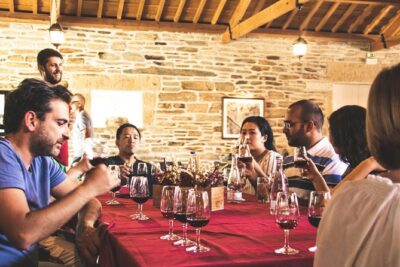
Complete Douro Valley Wine Tour with Lunch, Wine Tastings and River Cruise
Read our review →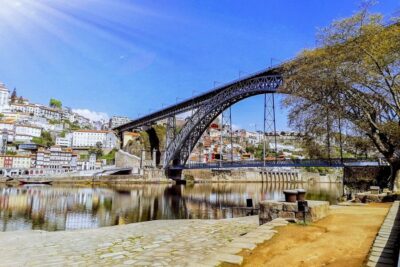
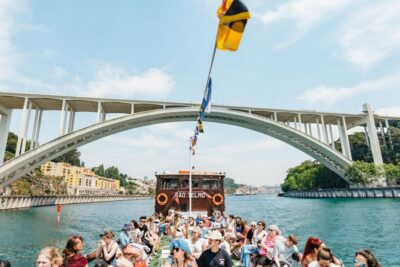
Wine Tour with Lunch, Tastings & River Cruise
Read our review →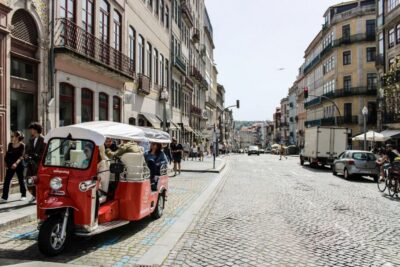
Guided Tour by Tuk-Tuk & Optional Douro River Cruise
Read our review →
Authentic Small Group Douro Wine Tour with Lunch & River Cruise
Read our review →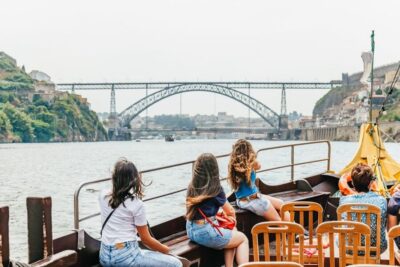
Douro Valley Tour: 2 Vineyard Visits, River Cruise, Winery Lunch
Read our review →Browse the lists this tour appears in