
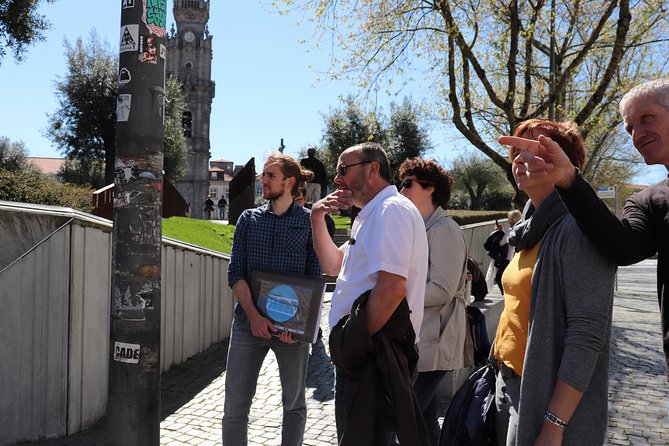
Reviewed · HISTORICAL TOURS
City tour through historic center of Porto with many insider tips 3 1/2 hrs.
This experience is interesting because it mixes classic Porto sights with the stuff you usually miss, how people live, what feels normal, and what not to waste time on. I love the clear, engaging German explanations that help you connect the dots, from port wine to colonial routes and everyday social questions. I also like the small group size (max 12), which keeps the walk lively and makes it easy to ask follow-ups on where to eat tonight or how to spot tourist traps. The main drawback is simple: it is still a walking tour, so plan for cobblestones and some uphill sections if you have moderate mobility limits.
The vibe is practical, not museum-y. You might be led by guides such as Nicolas, Gabriella, Olivia, Eleonor, Iris, or Gabriel, and the common thread is how they turn Porto into something you can actually understand and navigate after the tour.
Key reasons this Porto tour is worth your time
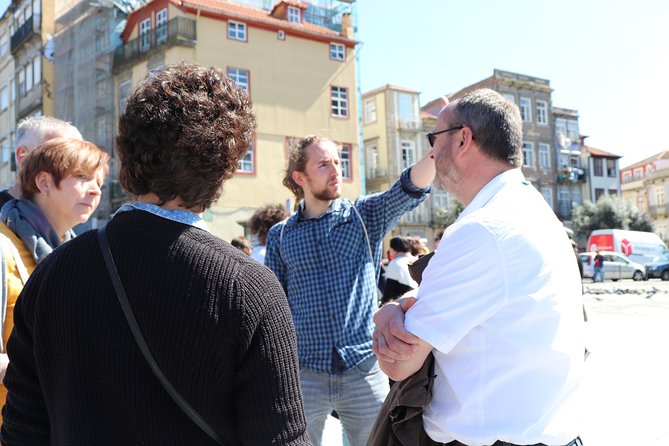
- Max 12 people, so you are not lost in the crowd and you can ask questions without waiting.
- German-led storytelling with real-life topics, like pensions, empty prime buildings, and how Porto works today.
- Free-to-see viewpoints and landmarks, with stops that focus on understanding, not ticket lines.
- Big picture meets street level, from Seafarer symbolism at Torre dos Clérigos to the water and bridges at Ribeira.
- Restaurant and cafe guidance built into the route, so you leave with plans for that night.
A historic-center tour that explains how Porto actually works
Porto can feel confusing at first. Streets twist, neighborhoods overlap, and every corner seems to shout a different angle of the city. This tour helps you read the city quickly, because it explains what you are looking at and why it matters, without making you research anything on your phone.
What I like is the balance. You get the obvious highlights, but you also get context for the less obvious parts of town, like how Portugal’s social reality shapes everyday life, and why certain buildings in prime spots can sit empty. That kind of commentary makes the walk feel useful, not just scenic.
A few other ways to explore Porto
- Douro Valley: Historical Sites, Wine Experience, Lunch & Cruise
★ 5.0 · 5,133 reviews - Porto: Historic City Center Walking Tour
★ 4.7 · 1,172 reviews - Porto: An Intimate Fado Show in a Historical Tavern
★ 4.8 · 1,093 reviews
Where you start and how the 3.5 hours keep your momentum
The tour meets at Monumento a Almeida Garrett on Av. dos Aliados, then finishes at Porto Cathedral (Terreiro da Sé). The total time is about 3 hours 30 minutes, which is a sweet spot: long enough to get a real sense of the center, short enough that you do not burn your entire first or last day.
The pacing matters here. The plan is built around short explanations at each stop, plus time for photos and a breather now and then. You will be walking between squares, viewpoints, and a few uphill moments toward the cathedral area, so it helps to wear supportive shoes.
Also, the group is small, and the route intentionally uses landmarks and viewpoints as “anchors.” That means you remember the order of things, and you do not feel like you just drifted through the center.
Freedom Square: Portuguese identity in the first 25 minutes
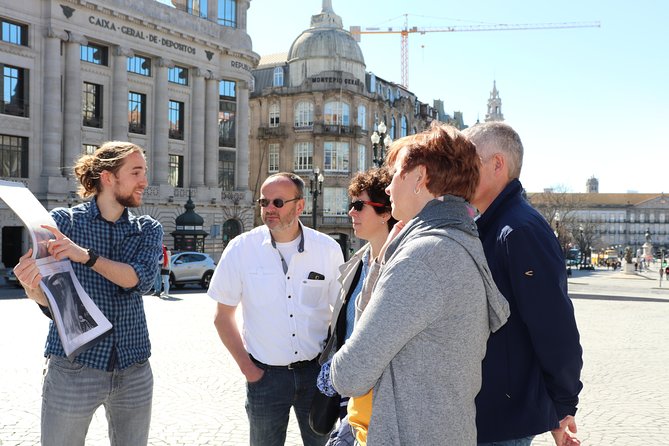
Your first stop is Praça da Liberdade (Freedom Square). This is a strong opener because it sets the tone. Instead of starting with a random monument, you start with Portuguese history and culture in a way that helps you understand what you are about to see around Porto.
This is the kind of knowledge that pays off later. When you hear why certain buildings and institutions matter, you start spotting the same themes in other stops: power, trade, education, and the push-pull between the past and the present. Even if you normally tune out “intro history,” this first segment is explained in a way meant to stick.
Carlos Alberto Square: where to eat, plus how Portuguese dining culture works
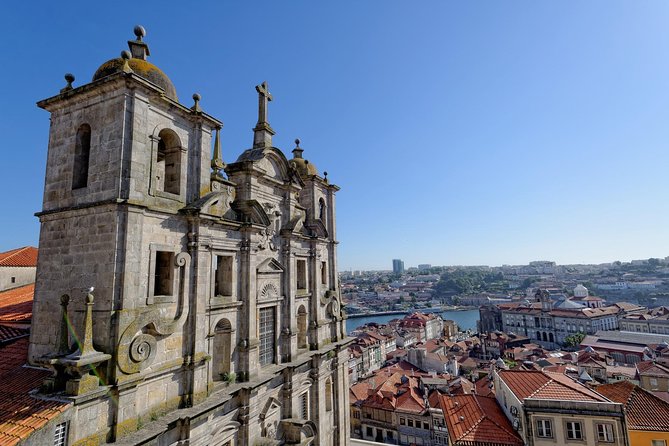
Next is Praça de Carlos Alberto, a square surrounded by restaurants, cafes, and bars. This stop is practical. You get talk about Portuguese cuisine and culture, plus guidance on where you might want to eat that night.
This part is not only about food. It also helps you learn a simple traveler skill: distinguishing tourist traps from places that feel like typical Portuguese hangouts. You do not need to memorize restaurant names right now, but you do learn how to judge menus, pricing, and what kind of crowd you see.
If you love eating well but hate wasting time hunting for a good spot, this is a major value add.
Another way to spend your time in Porto:
- The Unvanquished Tour in Porto City Center
★ 5.0 · 26,497 reviews - From Porto: Douro Valley w/ Boat Tour, Wine Tasting & Lunch
★ 4.7 · 19,061 reviews - Complete Douro Valley Wine Tour with Lunch, Wine Tastings and River Cruise
★ 5.0 · 12,920 reviews - Porto: Live Fado Show with Glass of Port Wine
★ 4.8 · 6,498 reviews
Gomes Teixeira Square: university stories and the bookshop connection
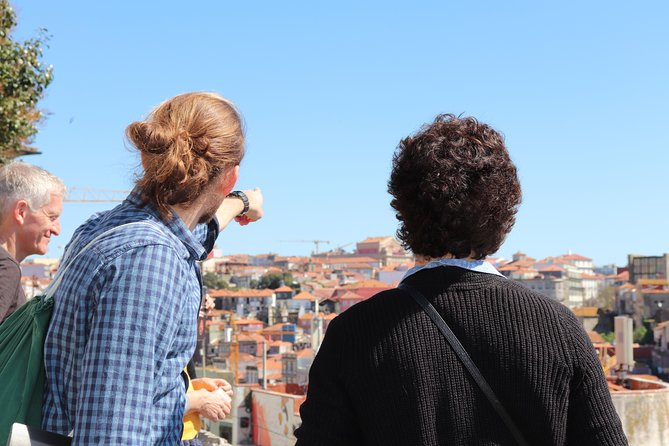
Then you reach Praça Gomes Teixeira, a point tied to the history of the university and student life. The tour also references how students were involved during the dictatorship period, which adds weight to the area beyond its buildings.
You also get a specific cultural pop-corner: the nearby connection to Livraria Lello, the famous bookstore often associated with the Harry Potter story. The key is that it is not treated as a theme park stop. It becomes a doorway into how books, universities, and culture overlap in Porto.
One tip for you here: if you want to visit the bookstore later, you are already primed to notice what makes it special, and you will understand why people care so much.
Torre dos Clérigos from outside: 76 meters of seafarer symbolism
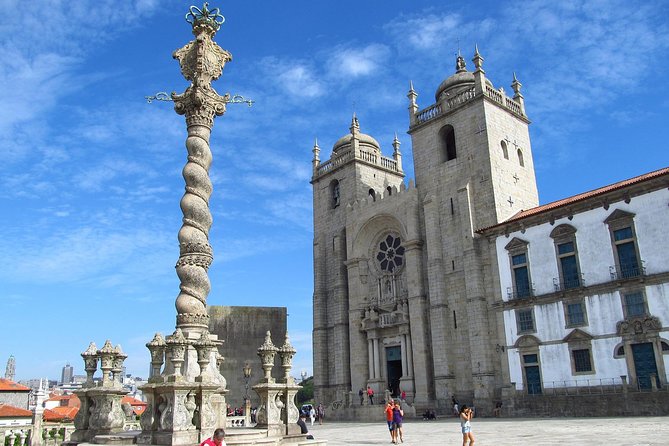
You then look toward Torre dos Clérigos, Portugal’s tallest tower at 76 meters, taken from outside. Even without going inside, the guide’s explanation connects the tower to Porto’s seafaring importance and the city’s architectural identity.
This stop is also an orientation moment. Porto’s center can feel like a maze of streets, but landmarks like this give you a mental reference point. Once you understand why a tower rises where it does, you stop seeing it as just a photo backdrop.
A garden stop in the middle: a calmer moment to digest the story
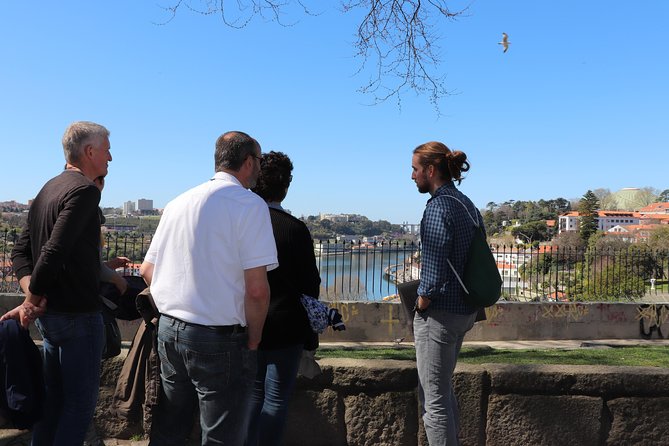
The route includes a garden in the middle of the city, described as a central place to start talking. This sounds small, but it works well. You get a pause between heavier topics and more viewpoint time.
In practice, this is where you can relax, ask questions, and get a feel for what you want to prioritize next. It also makes the tour less stressful if the streets are busy around the squares.
Miradouro da Vitória: viewpoint plus port wine context
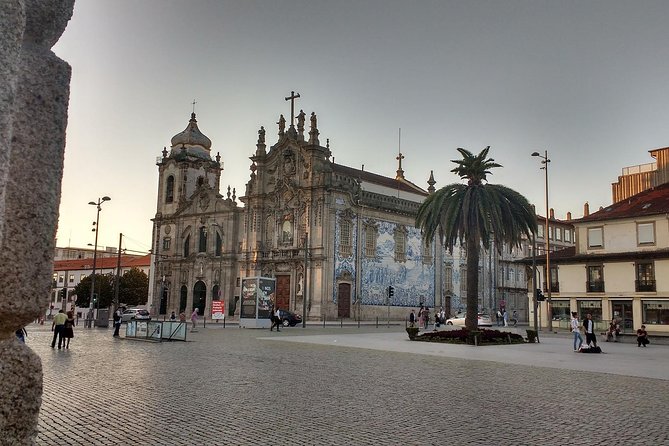
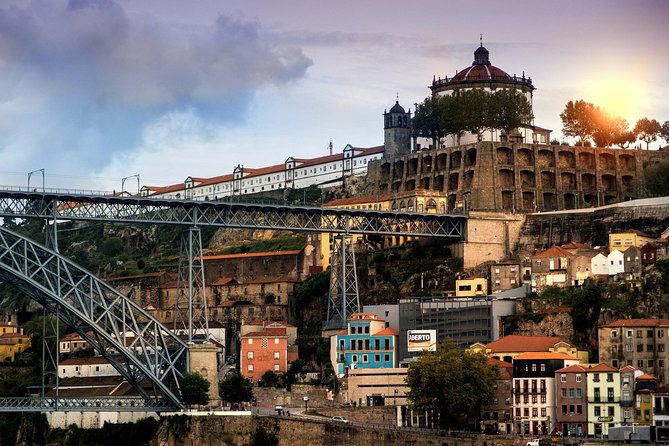
Next up is Miradouro da Vitória, one of the best parts of Porto for seeing the city from above. You get a spectacular view, and the guide ties it to the story of port wine and why it mattered, and still matters, today.
This is not just “look at the river.” The explanation includes visual support, so the connection between the viewpoint and the port economy feels clear. If you plan to visit a wine lodge later, this stop gives you a framework to understand what you are seeing and why it evolved.
Practical note for you: viewpoints can be breezy. Bring a light layer if the weather feels chilly, even in a mild season.
Palacio da Bolsa from outside: Heinrich the Navigator and Portuguese reach
At Palácio da Bolsa, you meet the story of Heinrich the Navigator from outside, with time for a pause. The tour connects Porto to Portugal’s former colonial territory and explains why that history is important for Porto’s identity and the spread of the Portuguese language.
This is a smart stop because it bridges two things travelers often separate. People see Portugal as Portugal, but Porto is also a city built from trade networks, ships, and overseas connections. The explanation helps you see the city as a node in a much larger story.
Praca da Ribeira and the bridge views: goods moved here, people relax here now
Then you arrive at Praça da Ribeira, where the tour explains the shift from a loading area for goods to today’s role as a place to relax by the water. This is where Porto starts to feel extra alive, not in a chaotic way, but in a “people actually live near the river” way.
You also discover famous bridges from the area and continue through narrow streets that feel hidden even in the historic center. That “small streets” segment is valuable because it reduces the chance you just hop between the big landmarks and miss the texture of the city.
If you enjoy slow wandering, you will appreciate that this portion is guided. The guide helps you spot the rhythm of streets and buildings, so it feels like a route, not random roaming.
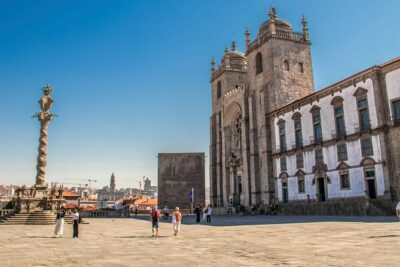
Catedral do Porto at the top: fortified faith and the old town perspective
The final major sights section centers on Catedral do Porto, viewed from outside. The tour notes a moment where you take a look over Porto’s old town and the Douro, then you turn toward the fortified cathedral next to the Bishop’s Palace.
This stop works as a grand finale. You finish with a skyline view, then with a religious and architectural anchor that ties back to the earlier context on culture and institutions. It also helps you remember the layout of the center because you end right where you can keep exploring on your own afterward.
Moderate fitness note: there are steps and changes in elevation around this area. If you are comfortable with walking for several hours and short climbs, you should be fine.
The real value of this tour: insider tips that change what you do next
A lot of city tours give you history and landmarks, then send you off with a vague recommendation to eat nearby. What I like about this one is how the insider tips are woven into the walking rhythm.
You get answers to practical questions like:
- Which restaurant to try tonight
- How to distinguish tourist traps from typical Portuguese places
- What social conditions are like in Porto and Portugal, including what life looks like on a €280 pension that some people actually receive
- Why some houses in prime locations can be empty
That last point matters because it prevents a common tourist misunderstanding. Porto is not just “beautiful old city.” It is also a real housing and economic situation, and empty buildings can signal deeper issues. Once you learn to look for that, the city feels more honest.
Also, the guide approach is interactive. There is space for questions during the tour, and the guides clearly have long-time familiarity with Porto.
Price and what $33.18 buys you in Porto time
The price is $33.18 per person for about 3 hours 30 minutes. On paper, that sounds like a lot for a walking tour, but here is why it can be good value.
First, you get a guided route through multiple major landmarks: squares, a tower viewpoint, viewpoint time, river area, and the cathedral zone. Second, the tour includes frequent explanation stops, not one long lecture. Third, many of the stop entries are effectively free because you see key places from outside or at free public viewpoints.
Also, the group is capped at 12, and you get mobile ticket support plus group discounts. For many people, the biggest value is not just “what you learn,” it is how the guide saves you time and helps you decide what to do next.
If you hate spending your limited Porto hours trying to figure out where to go and what matters, paying for this kind of guidance can feel like a shortcut to better days.
How to get the most out of the route
This tour is most rewarding if you show up with one goal: leave with a plan. During the walk, use the built-in opportunity to ask your guide what to prioritize, especially for food and the next part of your sightseeing.
Here are a few ways to make it click for you:
- Wear shoes that handle cobblestones. Porto does not do cookie-cutter sidewalks.
- Bring water, especially if you are visiting in warm weather.
- Keep your questions simple, what and where. The guide can turn those into a full answer.
- Take photos at viewpoints, but also listen. The explanations make the images more meaningful.
Who should book this Porto city tour
This fits best if you:
- Want an orientation walk through Porto’s historic center
- Prefer your history explained in clear, conversational German
- Like practical recommendations, especially for restaurants
- Appreciate small groups and the chance to ask questions
It may be less ideal if you want a fully independent self-paced day. Since the tour follows a set order of squares and viewpoints, you will not be roaming at your exact pace.
But for most first-timers and for anyone who thinks Porto is more than its postcard shots, it is a strong match.
Should you book this tour?
Book it if you want structure plus local perspective in one afternoon. You will walk from Av. dos Aliados to the cathedral zone, with viewpoints like Miradouro da Vitória and landmarks tied to seafaring and port wine. The insider tips, including how to find typical Portuguese places and what to ask for tonight, are the kind of help that keeps paying off after the tour ends.
Skip it only if you already have Porto fully mapped out and you do not need a guide to decide what matters. Otherwise, this is the kind of tour that helps you stop guessing and start enjoying the city more confidently.
FAQ
How long is the Porto historic center city tour?
It lasts about 3 hours 30 minutes.
Is the tour in German?
Yes, it is in German.
Where does the tour start and end?
It starts at Monumento a Almeida Garrett on Av. dos Aliados 291 and ends at Porto Cathedral at Terreiro da Sé.
Do I need to pay admission tickets for the sights?
The stops listed are shown with free admission tickets, and many of the major landmarks are viewed from outside.
What is the maximum group size?
The tour has a maximum of 12 travelers.
What fitness level do I need?
A moderate physical fitness level is recommended.
Are service animals allowed?
Yes, service animals are allowed.
Recently reviewed around Porto
- Porto Best-Of Private Tour – A Customizable Experience★ 5.0 · 9 reviews
- Porto Half-Day Private Tour with Tuk Tuk and Lello Bookstore★ 5.0 · 50 reviews
- Porto: Douro River Party Boat with Sunset Option and 6 Bridges★ 4.5 · 136 reviews
- Douro Valley – Relaxed Departure from Porto★ 4.5 · 128 reviews
- Food Tasting Tour★ 4.5 · 7 reviews
- Douro Discovery Tasting★ 4.5 · 46 reviews
- Porto: Craft Beer Tasting Tour with Local Snacks★ 5.0 · 5 reviews
- Fado Concert in one of Porto’s most beautiful houses!★ 5.0 · 40 reviews
Historical Tours, compared.
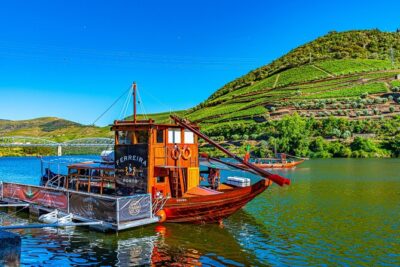
Historical Sites, Wine Experience, Lunch & Cruise
Read our review →
Historic Porto by Private Electric Tuk Tuk to Top Landmarks
Read our review →
Private Tour of the Historic City in a Classic Ford T
Read our review →
Douro Valley History & Wine Tour with Cruise & Lunch
Read our review →
Porto Guided Tour to the Historical Center on a Tuk Tuk
Read our review →Browse the lists this tour appears in