
Reviewed · BRAGA DAY TRIPS
Roman Heritage of Braga: Self-Guided Puzzle Adventure
Roman Heritage of Braga is a self-guided puzzle adventure built for a walk through the older streets of Braga. Instead of following a guide, you follow a story on your phone, solving clues that point you from place to place.
I like the Roman-focused stops that go beyond the obvious highlights. I also like that it uses the Questo app style of play, so you can start when it suits you and pause whenever your feet need a break.
One possible drawback: the story instructions can be a bit tricky to follow, and if you skip a lot of the questions you may feel less connected to the route. Also, a few spots can be hard to pinpoint, so keep your phone directions handy and take your time at the first locations.
Key things to know before you play
- A phone-led scavenger story through Roman Braga sites and city squares
- Start fast, go slow with a walk that is roughly 1 hour 9 minutes to 1 hour 39 minutes
- Most stops are free to visit, with the Roman Thermae of Maximinus likely needing a separate ticket
- Roman Thermae, Domus da Escola Velha da Sé, and Braga Cathedral anchor the route
- An Isis inscription is part of the narrative, giving you a different angle on Roman life
- Troubleshooting matters if you want a smooth experience, because some directions require careful attention
Why Roman Braga feels different as a puzzle walk
Braga is one of those Portuguese cities where you can feel layers of time without hopping between museums all day. This experience turns that idea into a walking game. You do not just look at buildings. You read clues, connect details, and let the next stop show up on your phone.
What makes it appealing is the pacing. Each stop is designed to take only a few minutes, but you are not forced to keep a strict timer. That means you can do the minimum to keep the story moving, or you can linger when a facade or inscription catches your eye.
The best part, for me, is the way it blends three things: a sightseeing walk, an outdoor escape-game style prompt system, and a treasure-hunt feel. You get the city, but with a reason to slow down and notice what you might otherwise pass by.
More Braga and Bom Jesus trips:
- Braga: Tuk Tuk City Tour
★ 4.8 · 156 reviews - From Porto: Wonders of Braga & Guimaraes Private Day Trip
★ 4.3 · 46 reviews - Full-Day Braga & Guimarães Guided Semi-Private Tour with Lunch from Porto
★ 5.0 · 43 reviews
Starting at Balneário Pré-Romano de Bracara, then getting your bearings
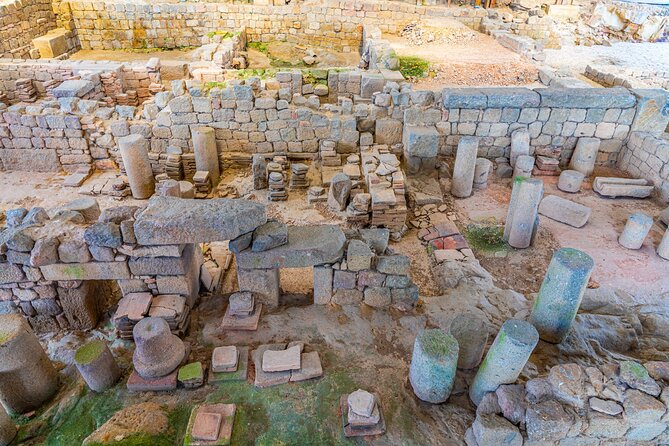
Your adventure begins at Balneário Pré-Romano de Bracara, where you receive the first clue. The good news is that the start point is a concrete landmark, not some vague street corner. This matters because the whole game depends on you moving from one location to the next with phone directions.
You only need a short initial push, then the story carries you onward. The first segment is meant to get you comfortable with how the clue flow works: read, solve, then follow what your phone tells you next. If you rush this first step, you can end up confused later when directions change.
A practical tip: when you start, give yourself a few extra minutes to verify you are in the right place and your phone is working properly. This is one of those experiences where having a smooth start reduces a lot of friction later.
The “street-to-stops” rhythm in central Braga
After the first location, you continue through short blocks in central Braga. Several stops are on streets and addresses that likely feel ordinary at first glance, but that is part of the design. You are encouraged to study what is in front of you, then answer questions that connect those details to the story.
You will pass through places like:
- R. Andrade Corvo 26
- Rua da Violinha
- R. Dom Diogo de Sousa 124
- R. de Nossa Sra. do Leite 16
Each of these moments is built around quick clue checks, typically around five minutes. That is ideal if you want a light activity that still feels engaging. It is also helpful if you are walking with people who want to keep moving, but not at breakneck speed.
Where this can get a little annoying is the navigation. One pattern to watch for is that some addresses and streets can be harder to pinpoint than major landmarks. Keep your phone directions open, and zoom in enough that you can match the location with what you see on the street.
Braga Cathedral: a major landmark with a story purpose
Next you reach Braga Cathedral. This is one of the bigger “anchor points” in the route, and it helps you orient the game in the real city. You will get the next clue here, and the cathedral context makes the puzzle feel more grounded, not just like a random scavenger hunt.
If you like Roman-era layers, you are in the right area. Even when the clue questions do not take you deep into scholarly detail, you get to stand in a place that has shaped how people moved through Braga for centuries.
For the best experience, do not skip the Cathedral questions even if they feel small. The clue system is what keeps the story chain tight. When people ignore many of the prompt questions, it is easier to lose track of why you are stopping where you are.
A few other ways to explore Braga
- Braga: Flexible Walking Tour in Historic Center
★ 4.7 · 19 reviews - Douro Valley: Historical Sites, Wine Experience, Lunch & Cruise
★ 5.0 · 5,133 reviews - Porto: Historic City Center Walking Tour
★ 4.7 · 1,172 reviews - Porto: An Intimate Fado Show in a Historical Tavern
★ 4.8 · 1,093 reviews
Largo squares: where the story slows down and you can breathe
Later, the route shifts from streets to open squares. You will spend time at:
- Largo de São João do Souto 3
- Largo de Santiago
- Largo de São Paulo
- then you finish toward Largo Paulo Orósio
Squares are great puzzle locations because you can see around you. You are not only hunting for text on a wall. You can also line up views, architecture details, and street alignments, which makes the clue solving feel more natural.
Another small win: the game allows you to stop as long as you like at several points. That means you can take a short break, grab a drink, or just enjoy the old-city feel while still keeping the story active.
If you get tired, this is where you can recover without breaking the plan. The route is short enough to be flexible, and squares help you reset your pace.
Domus da Escola Velha da Sé: turning street sights into a Roman home feeling
One of the most interesting named stops is Domus da Escola Velha da Sé. You will receive the next clue here, and the site’s theme helps connect your route to Roman Braga in a more “lived-in” way than a major monument alone.
Even if you are not a Roman-architecture expert, the clue format does a good job of pushing you to look closely. Instead of treating the ruins or preserved spaces like a checklist, you are nudged to match story details to what you can see.
If descriptions feel hard to follow, slow down here. This is where taking an extra minute to read carefully pays off. One of the most common frustrations with self-guided clue games is not the difficulty of the puzzles, but the clarity of instructions. If you get stuck at Domus, take a breath, check you are at the right entrance or viewpoint, then try again.
Roman Thermae of Maximinus: the one spot that may need a separate ticket
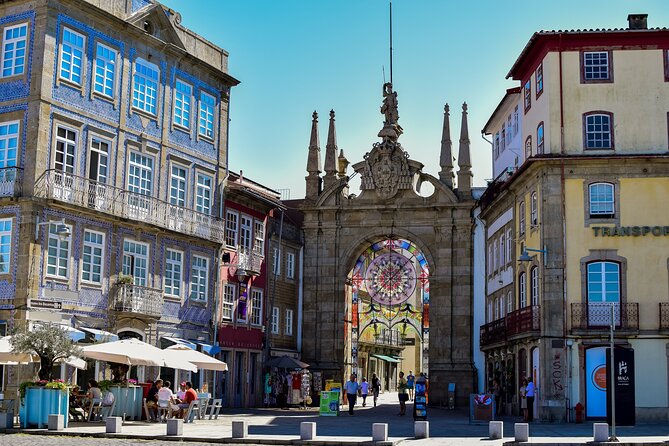
The story then points you to Roman Thermae of Maximinus. This stop is explicitly marked as admission ticket not included, which is important for your expectations.
What that means in real life is simple: the game can guide you to the area, but you may still need to plan for entry costs or rules for that particular site. If you want a smooth experience, treat this as your “ticket decision” moment.
Also, this is the best place to match the story to the Roman theme. Baths are one of the most iconic Roman public spaces. Even if you only spend a short time here, it is a strong setting for the clues.
And there is a narrative detail to keep in mind: the adventure includes an inscription that evokes the cult of the Egyptian goddess Isis. Whether you spot it quickly or only after careful reading, this is the kind of detail that makes the route feel more specific to Braga instead of generic Roman styling.
How long it takes, and how to pace it without rushing
The duration range is about 1 hour 9 minutes to 1 hour 39 minutes. That is a big enough window to matter. Some people will finish in the lower end if they move quickly between stops and answer clues without getting stuck. Others will naturally take longer if they pause for views or re-read directions.
A helpful approach is to treat the first half as your learning stretch. If you figure out the clue rhythm early, the rest feels smoother. If you get confused, do not force it. Pause at a square or a wider open spot, then re-check where the game thinks you are.
Remember: the route is short, and several stops let you continue exploring at your own pace. So it works well as either a stand-alone activity or a compact addition to a longer Braga day.
Price, value, and what you get for $7.27
At $7.27 per person, this is priced like a budget-friendly activity. What you are paying for is not an escorted lecture. You are paying for a structured walking story, delivered through the mobile ticket and played on your phone.
The value comes from a few things:
- No scheduling stress because it is available 24/7
- Flexibility because you can start, take breaks, and continue
- Route guidance that reduces the need to guess which streets connect the sites
- A narrative structure that turns normal city walking into “do something” time
One small note on groups: there are group discounts, and the description says you can share a phone, though it recommends each user buys a ticket for the best experience. If you are traveling as a couple or a small group, decide whether you want everyone to participate fully. Sharing can work, but the full effect is tied to individual play.
Getting the most out of it, especially if the clues feel confusing
Here is the key lesson from the format: the story questions are not filler. If you skip a lot of them, you may still walk the route, but you can lose the “why” behind each stop and feel like you are just following addresses.
Also, self-guided puzzle experiences can trip people up in two ways:
- Finding the correct spot when the location is a street number or a less famous corner.
- Following clue descriptions if the writing is dense.
You can reduce both issues by using a simple habit. Before moving on, double-check your current stop on the map and make sure you are looking at the building or area the game is implying. Then read the clue text slowly, not like a chat message.
And because this is a phone-led experience, your practical checklist is short:
- Bring a charged phone
- Keep the app directions visible
- Wear shoes you can walk in comfortably, since it is open air and you are moving between nearby stops
Who this works best for (and who might not love it)
This is a great fit if you like city walking, want Roman-era context, and enjoy solving small challenges along the way. It also suits families or friend groups who want something active but not exhausting, especially because the route is relatively short.
It is also ideal if you prefer avoiding crowds. Since it is self-guided and open air, you are not tied to a set tour time where everyone funnels into the same viewing moment.
You might not love it as much if you strongly dislike puzzle questions or if you prefer a traditional guide who explains everything clearly on the spot. In that case, the “phone instructions” aspect could feel like more work than reward.
Should you book Roman Heritage of Braga?
Book it if you want a Roman-themed walk that feels like a game, with a clear route and a short time commitment. The combination of Braga Cathedral, Domus da Escola Velha da Sé, and Roman Thermae of Maximinus gives you variety, and the story detail about Isis adds a memorable twist.
Think twice if you know you will skip most questions or if you hate figuring out locations by phone. Some parts can be a little hard to follow, and the experience is best when you actually play along.
If you like the idea of learning by noticing, not by listening, this one is a smart use of an hour or so in Braga.
FAQ
Is this a guided tour with a live guide?
No. This is self-guided. You use the Questo app on your phone to follow the story and directions.
How much time should I set aside?
The experience takes about 1 hour 9 minutes to 1 hour 39 minutes.
Where does the adventure start and end?
It starts at Balneário Pré-Romano de Bracara and ends at Largo Paulo Orósio.
Do I need to buy tickets for the attractions?
Most stops list admission ticket free. Roman Thermae of Maximinus is marked as ticket not included, so you may need a separate ticket for that stop.
Can I start at any time?
Yes. It is listed as available 24/7, every day of the year, with opening hours running from midnight to 11:30 PM.
What app do I use on my phone?
You play it through the Questo app. After booking, you receive an email with instructions on how to download and play.
What is the cancellation policy?
You can cancel for a full refund for free up to 24 hours in advance of the experience start time. If you cancel within 24 hours, the amount paid is not refunded.
Recently reviewed around Braga
- 4X4 Tour – Discovering Serra d´ Arga★ 5.0 · 3 reviews
- Stand Up Paddle Tour★ 5.0 · 6 reviews
- Private Stand Up Paddle Experience in Vila do Conde★ 5.0 · 11 reviews
- River Trekking/soft canyoning through wild lagoons and Waterfalls★ 5.0 · 8 reviews
- Paintball Experience★ 5.0 · 4 reviews
- KAYAK TOUR: Descend the Beautiful Lima River★ 5.0 · 82 reviews
- Peneda-Gerês National Park – A Time Travel Through The Mountains –★ 5.0 · 3 reviews
- Nozzle Horn Protected Landscape Area★ 5.0 · 3 reviews
Braga Day Trips, compared.
Best of Braga and Guimaraes Day Trip from Porto
Read our review →
Guimarães & Braga Tour with Entry Tickets and Lunch
Read our review →
Braga & Guimarães Small Group Tour: Lunch & All Tickets Included
Read our review →
Guimaraes & Braga Small Group Tour with Lunch and Tickets
Read our review →
Browse the lists this tour appears in