
Reviewed · CYCLING TOURS
7-Day The Way of St James Bike Tour- The Coast Path – Camino to Santiago
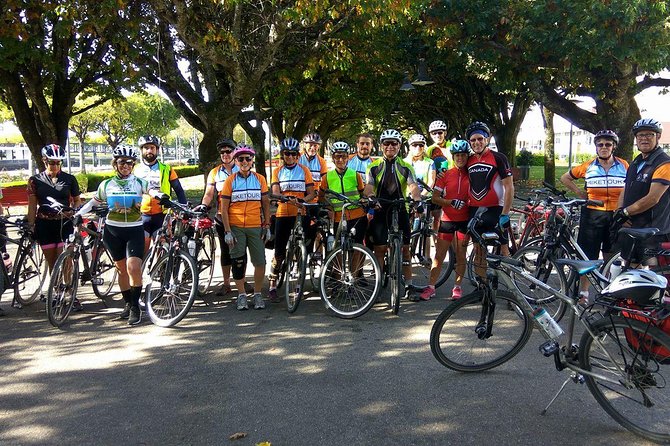
This is an interesting twist on the Way of St James, because you get the pilgrimage spirit without the blisters of all-day walking. You ride the coast line between Portugal and northern Spain on modern mountain bikes, with the big finale in Santiago de Compostela.
I especially like that this route mixes coastal towns with real “pilgrim road” feeling, not just sightseeing. I also love the practical setup, bike rental plus GPS routing and luggage transfer, so you spend energy on the ride, not logistics. One thing to consider up front, it is easy to moderate but there are some hills, and in peak summer you will want to start early and manage heat and water.
Key things I’d bank on before you go
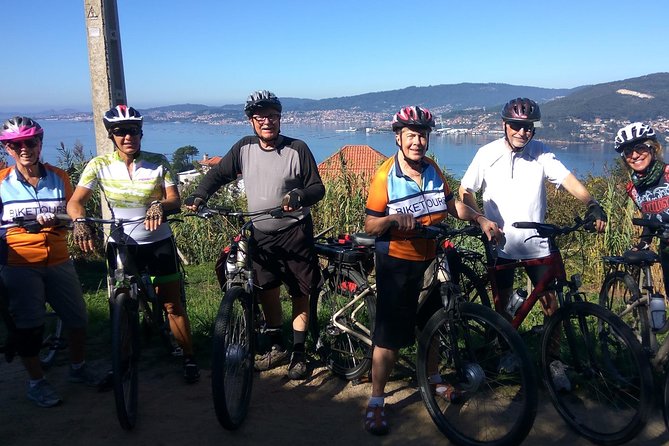
- Modern Trek mountain bikes + helmet, so you start with the right gear for tarmac and rural roads
- GPS route and road book, helpful when you are riding self-guided at your own rhythm
- Coastal towns with food payoffs, especially the oysters around Arcade
- Crossing into Spain by bike, with an ending in Bayona and then a steady run toward Santiago
- Santiago arrival at Obradoiro, where the Baroque cathedral is the moment you remember
Why this Coast Path feels like a “real” Way, not just a bike trip
The Way of St James is famous for its walking tradition, but the spirit is bigger than shoes. Here, you trade daily hikes for daily pedals, and that changes the experience in a good way. You still follow a route threaded through pilgrimage culture, you still arrive with that sense of building toward something.
The coast version adds another layer. You get salty air, long sightlines, seaside towns with ship history, and meal stops that make sense for riders. The route also avoids the hardest “full pilgrimage” reality by design. It is easy to moderate, which means you can enjoy the places instead of suffering for every kilometer.
Still, call it what it is: a long biking journey. Even on an easy to moderate plan, you should expect some hills and you should plan to carry water. If you hate heat, come early or adjust your pace, because July, August, and September can get intense.
A few other ways to explore Porto
- Porto: City Highlights 3-Hour Guided Electric Bike Tour
★ 4.8 · 3,092 reviews - Porto: 3-Hour Old Town & Riverside Bike Tour – Guided Experience
★ 5.0 · 481 reviews - Porto: Riverside Panoramic E-Bike Tour
★ 4.6 · 312 reviews
Porto briefing at Rua João das Regras, start at 8:00 am
Your trip begins in Porto at Rua João das Regras nº 62, 4000-290 Porto. The briefing is set for 8:00 am, and that timing matters. You will get oriented before you roll, then you can focus on rhythm, not route panic.
This is also a good point to mentally shift into “small trip mode.” The group size is capped at 2 travelers, so this tends to feel calmer and more personal than the big-tour chaos. That matters when you are self-guided and you might want quick clarification if something feels off.
From a value perspective, this early start plus local transfers is a quiet convenience. You do not spend your energy figuring out where to be. You show up, get your bike and route support, and you start.
Your bike and navigation: Trek mountain bicycles, GPS, and road book
You ride Trek mountain bicycles and you get a helmet. That choice is practical for a coast route where you might hit a mix of bike paths, tarmac, and rural streets. You are not on skinny-tyre pavement bikes that feel sketchy when the surface changes.
Navigation is handled in a rider-friendly way. You get a GPS with the route, plus a road book. That combo is ideal for people who want freedom but still like a safety net. You can follow the line without staring at a phone screen all day.
Then there is the part that makes this easier than most self-guided tours: luggage transfer. Your main bag moves while you ride. That means you can keep your daypack light, and it makes snack stops and quick village detours more realistic.
Day 1 setup and why you’re not hauling stress
Day 1 is really about getting everything organized and rolling smoothly on Day 2. You will have the briefing in Porto, then the tour moves into its coastal momentum.
If you are the type who packs too much, this kind of setup helps you avoid that trap. Because the luggage transfer is included, you do not need to bring a heavy kit “just in case.” Bring the basics for cycling and warm weather, then rely on the route support.
Another way to spend your time in Porto:
- The Unvanquished Tour in Porto City Center
★ 5.0 · 26,497 reviews - From Porto: Douro Valley w/ Boat Tour, Wine Tasting & Lunch
★ 4.7 · 19,061 reviews - Complete Douro Valley Wine Tour with Lunch, Wine Tastings and River Cruise
★ 5.0 · 12,920 reviews - Porto: Live Fado Show with Glass of Port Wine
★ 4.8 · 6,498 reviews
From Porto to Esposende and Vila do Conde: fishing towns and Discoveries ports
Day 2 pushes north to Esposende, and along the way you get “Portuguese rivieras” style seaside views and small towns. This is a strong first biking day because the scenery is doing the work. It keeps the ride feeling like travel, not effort.
Esposende brings you into the culture of the coast, and the route then includes Póvoa de Varzim, a place tied to fishing traditions and fish-based gastronomy. You are not just passing scenery. You are moving through a network of old working ports.
Then comes Vila do Conde, which matters historically. It was part of the maritime era when the Portuguese Discoveries shaped trade and shipbuilding. Even if you only pause for a short look, it gives context to why these coastal cities mattered, not just how they look on a map.
Practical note: coastal towns can mean wind. If you feel it, adjust your pace and save energy for stops. The ride is designed for easy to moderate fitness, but comfort comes from managing effort.
Viana do Castelo to Caminha: the Minho River, green heritage, and downhill joy
On Day 3, you reach Viana do Castelo, another port city that was important during the Discoveries period. The route framing here is specific: ships bound for Brazil, India, Africa, and other colonies were developed in this kind of place. That turns your ride into something with backstory.
Your ride then ends in Caminha, on the shore of the river Minho. Caminha is known for a “green heritage,” with viewpoints, waterfalls, beaches, and a camping area. That mix is good for a ride where you might be thinking, okay, where do I stretch when I stop?
If you like contrast, this is where you get it. You’re not only cycling past ocean edges, you’re also ending near a river landscape that feels different. After days like this, Santiago later hits harder, in a good way.
Crossing into Spain via Bayona: Romans, medieval growth, and Francis Drake lore
Day 4 is your first full shift into Spain, and it ends in Bayona. That’s not just a border moment. It’s a historical and cultural landing.
The route description ties Bayona to Pontevedra politically, and the city mixes sea air with an old center you can get lost in. It has Roman origins and grew toward the coast through the Middle Ages. Then the Catholic Church influence becomes part of the picture.
And then there is the fun historical hook. During the 16th century, Bayona was raided by British ships led by Francis Drake, who was looking to set up a commercial and merchant point. If you enjoy history, that is exactly the sort of story that makes streets feel less anonymous.
Cycling-wise, crossing into another country can feel like a mental refresh. The day keeps moving along the coast, so it stays scenic, but you get the reward of a new language environment and new flavors.
Arcade and the oysters day: seaside roads with pilgrimage links
Day 5 is dedicated to the coast stream that brings you to Arcade and ends near San Simon’s bay, with watery views that are made for slowing down at overlooks.
The star here is food: the day is all about oysters in Arcade. You get monuments and sights linked to Santiago’s culture, including the church of Santiago in Arcade, dated to the 12th and 13th centuries. Even better, the route includes roads and paths that point toward the pilgrimage destination.
This is one of the most “feel-it” days for pilgrims. You are eating local seafood in the same region where pilgrims would have heard and passed along Santiago-linked routes. The coast becomes the story.
There is also an event note worth planning around if your travel dates line up. During the first week of April, there is a festival called Fiesta de la Ostra, and the city fills with tourists and pilgrims.
A rider tip: oysters and seaside strolling are great after you park the bike. Do not start the day chasing every viewpoint like it’s a museum. Ride, stop to breathe, and save your longer walking for after you arrive.
Caldas de Reis and the hot springs reset: pilgrim origins in a relaxing town
On Day 6, you head to Caldas de Reis, in the Pontevedra province. This stop has a built-in recovery vibe. The town is associated with hot springs, with early communities tied to that water.
It also has pilgrimage roots. The name Caldas de Reis is connected to the Middle Ages pilgrimage path to Santiago de Compostela, and the route mentions Afonso VII in this historical context.
Food culture returns too, with local items like empanadas of lamprey and traditional Spanish bread. This day gives you what riders really need before the final approach: a calmer place to walk a bit, eat well, and let legs reset.
If you are traveling in warm weather, this is a smart day to pace yourself. Save energy for the last run into Santiago, and treat Caldas de Reis as both a cultural stop and a functional recovery zone.
Arriving in Santiago de Compostela: Obradoiro square and the Baroque moment
Day 7 ends in Santiago de Compostela, one of the major pilgrimage centers in Western Europe. The ride culminates at the Square of Obradoiro, where you see the Baroque cathedral and the remains of the apostle.
This is the day that changes your mood. On biking days, you think about distance and turns. On the final day, the route becomes a narrative, and Santiago feels like the final chapter.
Also, your endgame has support. You do not just arrive and fend for yourself. The tour includes a pick up back to Porto city in van after your Santiago time, using the tour’s ticket bus approach. Then the trip connects with Porto transfers as included.
It is a comfort for anyone who wants the feeling of arriving at a pilgrimage place, without the final-day logistics stress.
Price and logistics: what $2,990.44 includes, and what you still plan for
The price is $2,990.44 per person. The value comes from what is bundled, not just the headline cost.
What you do get:
- 7 nights accommodation
- Bike rental and helmet
- GPS routing plus a road book
- Luggage transfer
- Porto arrival and departure airport transfers
- Santiago pickup back to Porto city by van
- Breakfast included for the full set of days listed
What you do not get:
- Lunches and dinners
- Alcoholic beverages
- Travel insurance, with guidance that insurance is only mentioned as available in guided bike tours
So you should budget for meals that are not included, plus whatever you want to drink. The good news is breakfast coverage makes it easier to start smart, and the included transfers prevent the usual cost blowups that happen when you start adding trains, taxis, and private shuttles on your own.
If you are comparing value, this is one of those tours where you pay for reduced friction. You are paying to be handed the bike, the route tools, and the movement between cities.
Pace, hills, and heat: how to ride comfortably on an easy to moderate route
The tour is described as easy to moderate difficulty, with some hills. That is a key phrase. Easy to moderate usually means you can ride confidently if you are not elite-fit, but you are still riding multiple days in a row.
Two practical things you should take seriously:
- Bring enough water at all times
- If you travel in July, August, and September, start cycling early because of heat
Also, the route uses bike paths when available, plus tarmac and rural streets. That mix is normal for a coastal route, but it also means you will want a bike setup that is comfortable for varied surfaces. The Trek mountain bikes and helmet pairing is a good sign here.
Finally, give yourself permission to ride at a calm pace. The best version of this trip is not racing to tick off checkpoints. It is getting in a steady rhythm, stopping for food, and letting the coastal towns sink in.
Small group comfort and support when something goes wrong
This tour has a maximum of 2 travelers. That matters because it usually makes the experience calmer and helps staff respond faster when you need help.
There’s also support quality baked in. One past rider described the staff as friendly, with fast help when a bike problem popped up. That is exactly what you want from a self-guided style tour, because self-guided only works if support is real when you need it.
So, even though you are following GPS routing, you are not fully on your own in the way some budget DIY tours make you feel.
Who should book this Coast Path bike tour, and who should skip it
This is a strong fit if:
- You want to experience Santiago’s pilgrimage finale without walking every day
- You like coastal rides and want towns with real food culture
- You prefer small group dynamics and self-guided flexibility
- You want transfers and lodging handled, so you can focus on riding
You might think twice if:
- You hate hills and heat, even if the ride is rated easy to moderate
- You want a fully guided day-by-day narration, since this is built around self-guided GPS and a road book
- You have dietary needs and don’t want to plan for lunch and dinner expenses, since those are not included
Should you book it? My take on value versus effort
Book it if you want the Way of St James feeling with a practical coast route, modern bikes, and a low-stress setup. The combination of GPS routing, luggage transfer, and included accommodation and transfers is what makes the trip feel worth the price.
Skip it or plan extra carefully if your biggest goal is minimal physical effort. Even easy to moderate days add up, and the heat advice for summer is not decoration. You will ride far enough that you should take water and timing seriously.
If you like your travel with a steady rhythm and your destination defined by arrival at a landmark like Obradoiro, this tour makes a lot of sense. You will pedal through history and coast, then end in Santiago with a sense of closure.
FAQ
Where does the tour start, and what time is the briefing?
The meeting point is Rua João das Regras nº 62, 4000-290 Porto, Portugal, with a start time of 8:00 am.
What kind of bikes do I get?
You get Trek mountain bicycles and a helmet.
Is the tour self-guided or guided?
It is self-guided with GPS routing and a road book. The route uses bike paths when available, plus tarmac and rural streets.
Does the tour include luggage transport?
Yes. Luggage transfer is included.
How hard are the rides?
The difficulty is listed as easy to moderate. You should expect some hills and a moderate physical fitness level is recommended.
What food is included?
Breakfast is included. Lunch and dinner are not included, and alcoholic beverages are not included.
Are there any seasonal tips for the weather?
Yes. During July, August, and September, it is recommended to cycle early due to hot weather, and you should carry enough water at all times.
What if I need to cancel?
This experience is non-refundable and cannot be changed for any reason. If you cancel or ask for an amendment, the amount you paid will not be refunded.
Recently reviewed around Porto
- Porto: Electric Bike Rental from 1 to 4 Days★ 4.0 · 14 reviews
- Private Douro Valley Wine Tour★ 5.0 · 110 reviews
- Douro Valley Luxury Wine Tour: 3 Estates, Cruise & Gourmet Dining★ 5.0 · 42 reviews
- Private Tour to Arouca 516 Bridge and Passadiços do Paiva★ 5.0 · 9 reviews
- Douro Valley Wine Tour Private Group, 1h Cruise, Lunch from Porto★ 5.0 · 22 reviews
- E Bike Porto Downtown and Sightseeing bike tour★ 5.0 · 17 reviews
- DOURO VALLEY: Lunch in a winery, tastings & 1-h private boat tour★ 5.0 · 106 reviews
- Douro and Port Wine Tasting in Vila Nova de Gaia★ 5.0 · 35 reviews
Cycling Tours, compared.
City Highlights 3-Hour Guided Electric Bike Tour
Read our review →
3-Hour Old Town & Riverside Bike Tour – Guided Experience
Read our review →
Porto Highlights in 3 Hours E-Bike Tour – Historical, Sightseeing
Read our review →
Porto Private E-Bike Tour: Douro River, Parks & Beaches
Read our review →Browse the lists this tour appears in